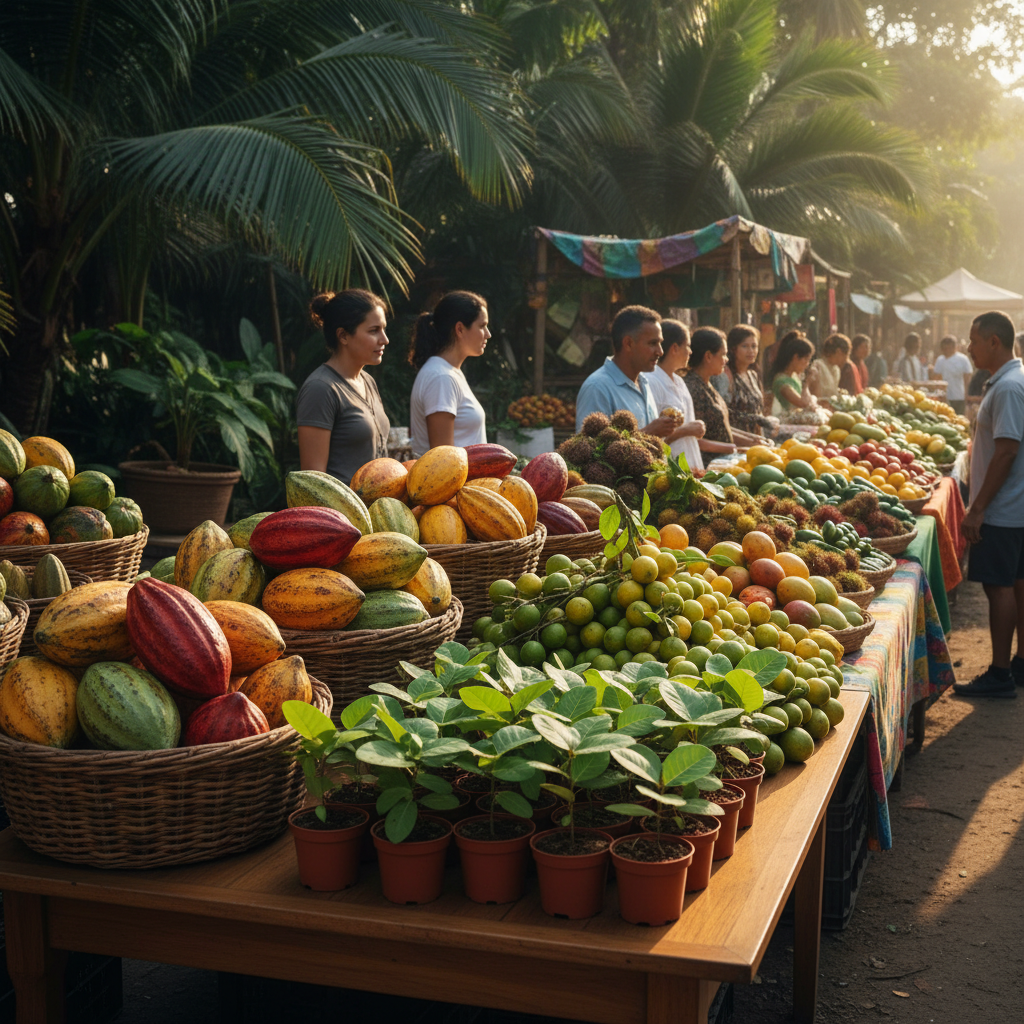
Exotic Tropical Fruit for Trade: What Buyers Want
If you’re listing exotic tropical fruit for trade, you’re already halfway to a deal. The other half is clarity. In late November, when growers are planning winter grafting and spring plantings, a precise, buyer-focused availability post can turn interest into immediate swaps or sales. In this guide, we’ll show you exactly how to present your species so your message doesn’t get lost in the shuffle.
We’ll share a practical checklist of what buyers want to see, spotlight high-demand species like cacao, Spanish lime (quenepa), and cashew, and cover packing, shipping, and phytosanitary musts. Whether you’re trading scions, seeds, or potted plants, these tactics will help you move your exotic tropical fruit for trade quickly and confidently.
“The fastest way to a yes is clarity. The second fastest is proof.”
Build a Buyer-Ready Availability List
A vague “I have cacao, Spanish lime, cashew” raises interest. A detailed list closes deals. Use this structure to answer a buyer’s first five questions before they ask.
What to include for each species
- Species and cultivar: Use the botanical name plus known cultivar or type (e.g., Theobroma cacao ‘Trinitario’). If unknown, state “seedling from [parent/source].”
- Plant form and size: Seed, rooted cutting, air-layer, grafted plant, plug, bare-root, or potted; include pot size and approximate height.
- Provenance and parentage: Source location, fruiting history, and any notable traits (sweetness, pulp quality, fiber level, dwarf habit).
- Climate and culture notes: Cold tolerance estimate, sun/shade needs, humidity needs, and rootstock if grafted.
- Pollination info: Self-fertile or needs cross-pollination; for dioecious species, specify sex where known.
- Fruiting window: Typical harvest season in your climate; time to fruit from seed or graft.
- Quantity available: Exact counts prevent overpromising.
- Health status: Pest/disease observations; treatments applied; pesticide-free or organic practices if relevant.
- Photos and proof: Clear images of the plant and, if possible, the parent fruit.
- Trade terms: What you want in return; sale price if open to selling; shipping options and DOA policy.
Format that increases responses
- Use a clear, scannable list with bullet points per species.
- Group by category (seeds, scions, rooted plants) to match buyer needs.
- Add a one-line “What I’m looking for” wish list to guide inbound offers.
- Post an updated timestamp and keep counts current to signal reliability.
Species Spotlights: Cacao, Spanish Lime, and Cashew
These three are consistently requested in collector circles and small farms. Here’s what buyers typically ask—and what you should provide.
Cacao (Theobroma cacao)
- Why it trades well: Beloved for bean-to-bar experiments and as a showpiece understory tree in greenhouses. Demand is steady year-round.
- What buyers ask:
- Shipping and propagation notes:
Spanish Lime / Quenepa / Genip (Melicoccus bijugatus)
- Why it trades well: Nostalgic fruit for Caribbean and Latin American communities; strong collector interest for sweet-fleshed types.
- What buyers ask:
- Shipping and propagation notes:
Cashew (Anacardium occidentale)
- Why it trades well: Dual-use crop (cashew nut and cashew apple). Dwarf, early-bearing selections are in demand for container growers.
- What buyers ask:
- Shipping and propagation notes:
Logistics That Protect the Deal: Packing, Shipping, and Compliance
Great plants can be ruined by poor logistics. A smooth process lowers buyer anxiety and increases repeat trades.
Packing steps that work
- Water lightly 12–24 hours before shipping; avoid soggy media.
- Secure the root ball with stretch film or paper wrap; bag to retain moisture.
- Brace the stem with a cardboard collar; immobilize the pot to the box base.
- Use breathable sleeves for foliage; add kraft paper void fill (not loose peanuts).
- For cold routes, add heat packs and an insulating layer. For hot routes, add ventilation holes and consider a cool gel pack separated from foliage.
- Label outside: “Live Plants—This Side Up.” Include an inside care card and your contact.
Timing and carrier strategy
- Ship early in the week to avoid weekend holds.
- Avoid major holiday crunch windows where delays are common.
- Choose services with tracking and predictable delivery times.
- Offer local pickup when feasible to reduce risk.
Phytosanitary and regulatory basics
- Know the rules for your origin and destination: some regions restrict soil, specific species, or require inspection.
- Clean plants: remove visible pests, fallen leaves, and soil splatter; disclose any recent treatments.
- Keep records: species list, quantities, ship dates, and buyer details for traceability.
Pricing, Negotiation, and Trust Signals
Buyers pay for genetics, proof, and predictable delivery. Structure your offer to reflect all three.
Pricing frameworks
- Seeds: price by freshness, rarity, and count; note collection date.
- Scions: price per stick with a minimum order; state diameter and length.
- Rooted/grafted plants: price by cultivar, rootstock, pot size, and readiness (hardened vs. fresh).
- Include packing and shipping separately to keep plant pricing transparent.
Trust builders that convert
- Clear photos: plant, roots (if safe to show), and parent tree/fruit.
- Track record: number of successful trades or brief testimonials.
- DOA policy: define what qualifies, time window to report, and photo requirements.
- Fast responses: acknowledge inquiries within 24 hours, even if final details follow later.
Negotiation tips
- Post a “bundle and save” line to encourage larger orders.
- For trades, list priority wants; offer fair substitutions if items sell out.
- Be upfront about limits (weather holds, quarantine zones) to avoid disappointments.
Timely Tips for Late-Season Trading (Nov–Jan)
As temps dip and shipping lanes get busier, small adjustments can make or break live plant shipments.
- Use heat packs for routes dipping below 50°F; avoid placing them directly against foliage or stems.
- Double-box for delicate species like cacao; humidity matters more than airflow in cold weather.
- Communicate ship dates clearly; give buyers a delivery window and tracking once printed.
- Offer a weather hold option; serious buyers appreciate caution over speed.
- Share acclimation instructions specific to winter arrivals: gradual light increase and stable, warm roots.
Finally, package your listing with a polished, repeatable format. A concise availability template saves time and creates trust at a glance.
Quick-Start Template: Your Availability Snapshot
Copy this structure into your next post or message:
- Species (Botanical) — Cultivar/Type:
- Form & Size (seed/scion/air-layer/grafted; pot size; height):
- Quantity Available:
- Provenance & Notes (parent fruit traits, rootstock, climate):
- Pollination & Fruiting Window:
- Price or Trade Wants:
- Shipping Details (days you ship, packing, heat packs on request):
- Photos Available (yes/no; on request):
- Last Updated (date):
When you put your exotic tropical fruit for trade into this format, you reduce back-and-forth, signal professionalism, and win the buyer’s confidence.
Conclusion: Turn Interest into Action
Clarity, proof, and reliability are the three levers that move rare plants quickly. Lead with a tight availability list, document what makes your genetics special, and back it up with careful packing and clear policies. Your cacao, Spanish lime, and cashew will stand out in any trade thread.
Want to accelerate your next swap or sale? Reach out to request our free species availability template and a quick checklist for winter shipping. What rare species are you adding to your list this season—and how will you present them so buyers say yes on the spot?