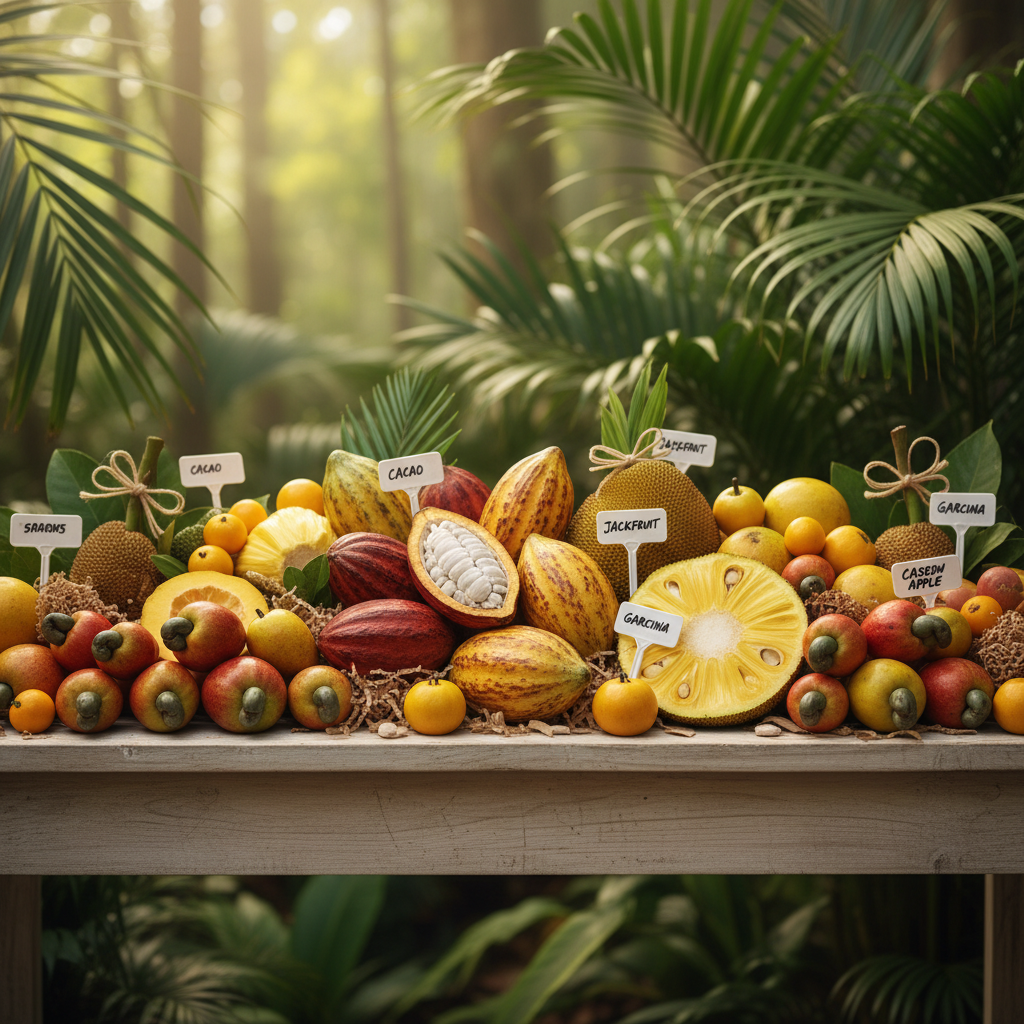
Exotic Tropical Fruit Trade: Cacao, Cashew, More
As holiday gifts and winter planning season arrive, the exotic tropical fruit trade is heating up. Whether you’re swapping scionwood, buying seedlings, or selling fresh seed, a smart strategy now sets you up for strong spring growth and flavorful summer harvests. In this guide, we’ll turn a simple wish list—cacao, Spanish lime, cashew, jackfruit, and garcinia—into a practical roadmap for sourcing, shipping, and growing with confidence.
If you’re new to the exotic tropical fruit trade or looking to scale your trading network, this article breaks down the essentials: what to look for in each species, how to protect plant material in cold weather, and the best ways to evaluate quality and build trust. Use it as your checklist to avoid costly mistakes and accelerate your orchard goals.
Why Exotic Tropical Fruit Trading Is Heating Up
Curiosity about bold flavors and climate-smart gardening has sparked a surge in home and micro-orchard projects. Gardeners in Zones 9–11 are pushing boundaries with microclimates and protected structures, while growers in cooler regions use greenhouses and indoor grow lights to bring the tropics home.
What’s fueling demand now
- Flavor exploration: Cacao for bean-to-bar experiments, jackfruit for plant-based cooking, and citrus-bright garcinias for fresh eating.
- Resilience and biodiversity: Diversifying beyond common fruit trees supports pollinators and food security.
- Seasonal timing: November–February is prime for planning, trading scionwood, and reserving spring-ready stock.
The opportunity
For buyers and traders, well-timed moves—preorders, insulated shipping, and clear provenance—translate into higher take rates, faster fruiting, and fewer losses.Spotlight on Five In-Demand Tropicals
Below are practical snapshots for each species—what makes them special, how to source, and what to watch when trading.
Theobroma cacao (Cacao)
Cacao is an understory evergreen best in filtered light and high humidity.- Flavor & use: For small-batch chocolate, nibs, or ornamental pods.
- Climate & culture: Thrives in warm, humid conditions; protect from cold and wind. Indoors, pair with humidity control and gentle air movement.
- Propagation & trade: Seeds are recalcitrant—do not dry. Best shipped fresh and moist, sown within days for high viability. Grafted clones can stabilize flavor and yield.
- Trade tip: Request “harvest date” on pods/seeds and ask for moist packing (e.g., damp paper or sphagnum in breathable wrap). Avoid long weekend transits.
Melicoccus bijugatus (Spanish Lime, Quenepa)
Beloved for tangy-sweet pulp and summer nostalgia across the Caribbean and Latin America.- Flavor & use: Tart, aromatic flesh around a large seed; eaten fresh.
- Climate & culture: Warm climates; full sun once established. Often dioecious—male and female flowers on separate trees.
- Propagation & trade: Grafted female trees assure fruiting; seedlings are variable. Fresh seed should be sown promptly.
- Trade tip: If buying seedlings, confirm sex history of the mother tree and consider purchasing two or securing a grafted female.
Anacardium occidentale (Cashew)
A compact tropical standout offering both the cashew “apple” and the nut.- Flavor & use: Juicy apple for fresh juice; nut for roasting. Note: raw shells contain caustic compounds—handle with care.
- Climate & culture: Heat-loving, drought-tolerant once established; good choice for sandy, well-drained soils.
- Propagation & trade: Seed-grown plants are common; dwarf selections can fruit earlier. Vegetative propagation maintains desirable traits.
- Trade tip: When trading nuts for planting, verify they are unsalted, unroasted, and fresh; request recent harvest dates.
Artocarpus heterophyllus (Jackfruit)
The world’s largest tree-borne fruit with rich culinary versatility.- Flavor & use: From savory “pulled jack” at immature stages to sweet, aromatic bulbs when ripe.
- Climate & culture: Warm, protected sites with good drainage; wind protection helps.
- Propagation & trade: Seeds lose viability quickly; ship fresh and moist. Named cultivars (via grafting) provide predictable texture and flavor.
- Trade tip: For scionwood, ask for pencil-thick, disease-free material from known cultivars and confirm the compatible rootstock.
Garcinia intermedia (Lemon Drop Mangosteen)
A compact garcinia known for zesty, citrus-like sweetness.- Flavor & use: Bright, sherbet-like pulp; excellent fresh.
- Climate & culture: More container-friendly than many tropicals; appreciates filtered sun and regular moisture.
- Propagation & trade: Recalcitrant seeds—ship fresh and moist. Seedlings can be vigorous; some garcinias show variable sex expression.
- Trade tip: Choose multiple seedlings or a grafted selection to improve odds of reliable fruit set.
Sourcing, Trading, and Shipping Safely
Strong trades start with clarity and compliance.
Verify legality and plant health
- Confirm domestic vs. cross-border requirements; some destinations require permits or phytosanitary certificates.
- Ask for pest/disease status and recent inspections when buying larger plants.
- Quarantine new arrivals 2–4 weeks away from your collection.
Packaging for late fall and winter
- Use insulated liners; add 40–72 hour heat packs when nighttime lows are below 45°F.
- Keep recalcitrant seeds (cacao, garcinia, jackfruit) slightly moist in breathable wraps; avoid sealed, soggy conditions.
- Ship early in the week to prevent weekend holds; request tracking and “hold for pickup” when temperatures are extreme.
Proof and policies
- Request harvest or cutting dates, clear photos, and labeling with species/cultivar/collection location.
- Establish DOA (dead-on-arrival) policies before shipping: what qualifies, time limits, and photo evidence.
Pro tip: In the exotic tropical fruit trade, speed and moisture management matter more than fancy packaging. A fresh, well-labeled, quickly shipped seed beats a beautifully boxed but desiccated one every time.
Growing Guide by Climate and Space
Whether you grow outdoors in Zone 10 or under lights in Zone 7, match species to your microclimate and infrastructure.
Outdoor growers (Zones 9–11+)
- Site selection: Warm, wind-sheltered, well-drained spots; use south-facing walls and thermal mass to buffer cold snaps.
- Layering: Place cacao or garcinia in dappled shade beneath taller canopies; keep jackfruit in sunnier, protected areas.
- Cold events: Have frost cloth and stakes ready; water the day before a freeze to reduce stress.
Greenhouse and indoor setups
- Light: 12–14 hours of bright light for seedlings; filtered light for cacao and garcinia to prevent leaf scorch.
- Humidity & airflow: Maintain 60–80% RH for cacao; combine with gentle fans to prevent fungal issues.
- Containers: Use fast-draining mixes with organic matter; up-pot gradually to prevent waterlogging.
Soil and nutrition
- Mix: Well-drained with added perlite or pumice; incorporate slow-release fertilizer and trace minerals.
- Feeding: Moderate, frequent feeding during active growth; reduce in cool, low-light months.
- Biology: Inoculate with mycorrhizae at planting to support root health and nutrient uptake.
Pricing, Barter, and Community Etiquette
A healthy marketplace runs on transparency and respect.
Set fair, transparent terms
- Provide cultivar names when known; disclose if seed is open-pollinated.
- Share parent tree traits (taste, yield, disease tolerance) and collection details.
- For scionwood: specify length, thickness, leaf removal, and wrapping method.
Sample pricing anchors (will vary by region)
- Fresh recalcitrant seeds: priced by freshness and rarity; bundle discounts for quick sowing.
- Grafted plants: premium for named cultivars and hardened stock.
- Scionwood: priced per stick; volume discounts for larger sets.
Build trust
- Communicate quickly, package thoughtfully, and follow through on DOA policies.
- Offer swaps of equal value; if in doubt, add a bonus cutting or extra seeds to balance the trade.
Trade-Ready Checklists
Buyer/swapper checklist
- Confirm species and cultivar, harvest/cutting date, and quantity.
- Align on shipping window, temperature protections, and DOA policy.
- Request photos of mother plant and labeled materials.
- Prepare your quarantine space before arrival.
Seller/trader checklist
- Harvest or cut as close to ship time as possible.
- Pack recalcitrant seeds moist and breathable; label clearly.
- Use insulation and heat packs if lows <45°F; ship early week.
- Send tracking promptly and include care instructions.
Quick case example
A Zone 10 grower trades jackfruit scionwood from a known cultivar for two cacao seedlings. They align on early-week shipping, use insulated mailers with heat packs, and exchange photos of labeled materials. Both parties report >90% scion take and zero transit losses—a textbook win.Conclusion: Make Your Next Trade Your Best One Yet
With smart timing, careful packing, and honest documentation, the exotic tropical fruit trade can deliver vigorous seedlings, true-to-type scionwood, and long-term relationships. Focus on freshness for recalcitrant seeds, clarity on cultivar provenance, and climate-appropriate growing plans.
If you’re ready to move on cacao, Spanish lime, cashew, jackfruit, or garcinia, assemble your checklist today and line up early-week shipments. Want help building a seasonal sourcing plan or a curated wishlist? Reach out to request our winter availability sheet and a personalized trade strategy. What will be the standout tropical you introduce to your orchard this season?