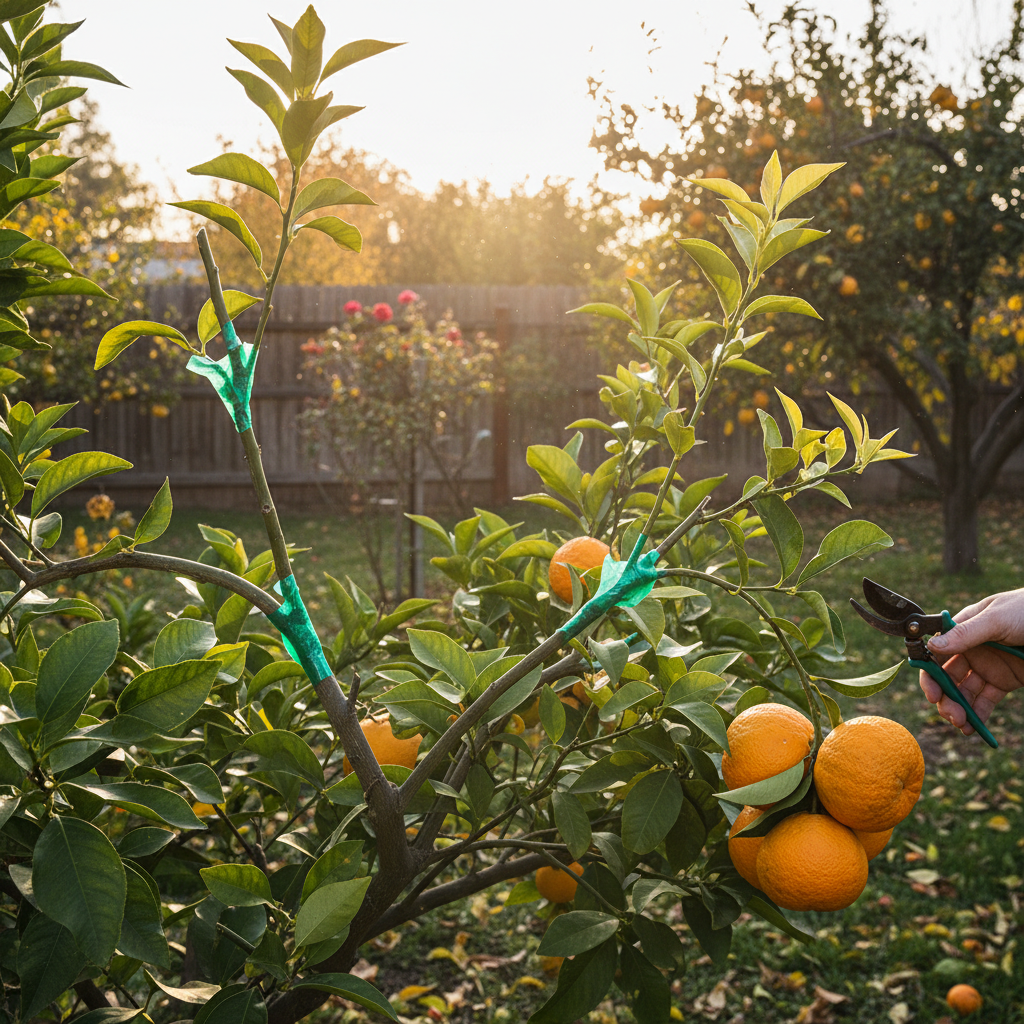
Grafting Citrus on Lemon Rootstock: Sweetness Facts
As holiday citrus starts to glow on backyard trees this November, many growers are eyeing their vigorous lemons and wondering: could that trunk carry a more exciting variety like a Gold Nugget mandarin? The idea is tempting—and timely. Winter is planning season and prime time to map out spring grafting projects.
But there’s a persistent claim that gives people pause: grafting citrus on lemon rootstock produces less sweet fruit. If you’re considering topworking a lemon into a multi-variety “fruit salad” tree, you need clear, practical guidance. This article unpacks the science, the tradeoffs, and the grower decisions that lead to truly flavorful mandarins.
We’ll explain how rootstocks influence flavor, what specifically happens when grafting citrus on lemon rootstock, and how to set up Gold Nugget (often called “Golden Nugget”) for top-tier sweetness. Expect actionable steps, not myths.
“Grafting citrus on lemon rootstock produces less sweet fruit.”
Rootstock vs. Scion: Who Decides Sweetness?
Rootstock and scion behave like partners. The scion (your variety, such as Gold Nugget mandarin) determines fruit type and potential flavor profile. The rootstock (your existing lemon) influences vigor, yield, fruit size, maturity timing, and the sugar/acid balance.
The levers that rootstocks pull
- Canopy vigor and leaf-to-fruit ratio, which impact carbohydrate supply to fruit
- Water uptake and transpiration, influencing dilution or concentration of sugars
- Nutrient uptake efficiency, especially potassium (linked to higher soluble solids)
- Maturity timing and peel characteristics, affecting harvest window and taste
In flavor terms, we often talk about SSC (soluble solids, a proxy for sugar or “Brix”) and TA (titratable acidity). Delicious citrus is all about the SSC:TA ratio. A rootstock can nudge both numbers—and that ratio—by a small but noticeable margin.
What “less sweet” usually means
“Less sweet” rarely means a night-and-day difference. In many trials across citrus, more vigorous rootstocks tend to yield slightly lower SSC (often by ~0.5–2.0 °Brix) and sometimes higher acid at the same calendar date. That can make fruit taste tarter or less rich until it fully matures. Good management can close much of this gap.
Lemon Rootstock Under the Microscope
Not all lemons are equal as rootstocks. Backyard growers commonly topwork onto an existing true lemon (like Eureka or Lisbon) simply because it’s already in the ground. Commercially, “lemon-type” rootstocks like Rough lemon and Volkamer lemon are known for vigor and yield.
Pros of lemon-rooted trees
- Strong vigor: quick canopy fill and fast healing after grafting
- Early bearing and heavy crops
- Generally good drought and heat tolerance
- Excellent for topworking an established trunk
Cons that can touch flavor
- Vigor can push larger fruit with slightly diluted sugars
- In some climates, fruit may color later and mature a bit slower
- Without crop load and irrigation control, SSC can run lower at early harvest
Put simply, lemon-rooted trees are powerful engines. That power is wonderful for filling space and producing fruit, but it needs steering if your goal is premium sweetness.
Gold Nugget Mandarin: What to Expect on Lemon
Gold Nugget mandarin is prized for rich, late-season flavor, a pebbly rind, and strong sweetness potential (often 12–16 °Brix when fully mature). On lemon rootstock, the variety remains Gold Nugget—same aroma, rind, and internal structure—but the engine underneath can slightly shift timing and concentration.
Typical outcomes
- Sweetness: expect equal or slightly lower °Brix at the same date compared to a quality trifoliate-hybrid rootstock. With later harvest, the difference often narrows.
- Acidity: may read a touch higher early; it balances with time on the tree.
- Fruit size: can run larger; sometimes a plus for visual appeal, but monitor for puffiness late.
- Maturity: may be a bit later in cool zones; in warm sites with good light, differences shrink.
Management to maximize flavor
You can steer lemon-rootstock vigor toward sweetness:
- Sunlight management: prune to open the canopy and keep fruiting wood well lit.
- Crop load: thin clusters early; a reasonable fruit count drives higher SSC per fruit.
- Water strategy: avoid chronic overirrigation. Employ mild regulated deficit irrigation as fruit colors, if your climate and tree health allow.
- Potassium-forward nutrition: maintain adequate K to support sugar accumulation; don’t neglect micronutrients like Fe, Zn, and Mn on high pH soils.
- Harvest timing: taste before you pick. Gold Nugget improves with hang time; later-season harvests are typically sweeter.
With these steps, many growers report Gold Nugget on lemon competing admirably with trees on Carrizo or C-35 for eating quality.
Considering Alternatives: Rootstocks for Higher Sweetness
If you’re planting from scratch rather than topworking an existing lemon, you have other choices that tend to favor fruit quality.
Common alternatives
- C-35 citrange: balanced vigor, good quality, often higher SSC than lemon-types.
- Carrizo citrange: vigorous but typically better flavor metrics than lemon-types.
- Flying Dragon (trifoliate dwarf): compact tree, high-quality fruit; ideal for containers or small yards.
- Sour orange (where tristeza risk is low): historically good flavor, but disease considerations apply.
Quick selection guide
- Prioritize sweetness and manageable size: Flying Dragon or other trifoliate hybrids.
- Balance yield with quality in the ground: C-35 or Carrizo.
- Max growth on poor soils or heat: lemon-type rootstocks, coupled with strict canopy and water management.
If you already have a healthy lemon trunk, topworking it remains the fastest path to fruit. Just apply the vigor-handling practices above.
How to Topwork Your Lemon with Gold Nugget This Spring
Planning now sets you up for success. In many regions, late winter to early spring—when sap begins to rise and bark slips—is prime time for grafting.
Before you graft
- Choose clean, true-to-type budwood from a healthy, disease-free source.
- Select sunlit, pencil-thick scion wood with well-formed buds.
- Sanitize tools between cuts; citrus diseases spread easily.
Grafting methods that work
- Cleft graft: ideal for larger lemon stubs after heading back limbs.
- Bark (inlay) graft: useful once bark slips; good cambial contact on big wood.
- Whip-and-tongue: excellent on smaller diameter shoots for precise unions.
- T-budding or chip budding: reliable once temperatures rise and bark slips consistently.
Secure grafts with grafting tape and seal exposed cuts. Label each variety and date.
Immediate aftercare
- Shade tender grafts lightly in hot, dry weather; protect from wind.
- Rub off rootstock suckers promptly below the graft.
- Maintain even moisture—neither drought stress nor constant saturation.
- Once grafts push 12–18 inches, tip to encourage branching and a balanced canopy.
Year 1 flavor setup
- Keep a modest crop: remove most blooms to build structure and leaf area.
- Train for light: a pyramid or open center with layered scaffolds boosts sun exposure and sugar.
- Feed for quality: maintain potassium and micronutrients; avoid excessive quick-release nitrogen.
Grower FAQs and Troubleshooting
Will fruit taste like lemon if I graft onto lemon?
No. Fruit flavor is determined by the scion. Rootstock influences vigor and balance but won’t turn a mandarin into a lemon.
How do I know when sweetness is ready?
Taste is king. For precision, use a handheld refractometer to measure °Brix. Track readings with dates to learn your site’s maturity curve.
My Gold Nugget tastes tart. What should I adjust?
- Wait two more weeks; late-season hang time is powerful for Gold Nugget.
- Thin fruit next season to reduce competition for sugars.
- Improve light penetration with selective pruning.
- Review irrigation—aim for steady but not excessive moisture as fruit colors.
Container vs. in-ground?
Containers favor dwarfing rootstocks like Flying Dragon for control and sweetness, but topworking a potted lemon can still succeed with strict water and nutrition management.
Is the “less sweet on lemon” claim true?
It’s partly true in many contexts: lemon-type rootstocks can slightly depress SSC and delay balanced flavor at a given date. With informed management and proper harvest timing, most home growers can still achieve excellent sweetness.
Bottom Line: A Smart Path to Sweet, Homegrown Mandarins
Grafting citrus on lemon rootstock is a practical, fast route to diversify your backyard orchard, especially if you already have a vigorous lemon in place. While lemon rootstocks can dial sweetness down a notch at the same harvest date, canopy light, crop load, water discipline, potassium nutrition, and patient harvest timing close the gap.
For growers chasing peak flavor from Gold Nugget, you have two great options: manage a lemon-rooted tree with intention, or choose a flavor-forward rootstock like C-35, Carrizo, or Flying Dragon for new plantings. Either way, the prize is within reach.
Ready to plan your spring grafts? Draft your scion list now, sketch your canopy cuts, and assemble clean tools and budwood sources. If you’d like a quick, printable Rootstock–Flavor Checklist and a seasonal grafting calendar, reach out and we’ll send it over. Sweet, late-winter citrus is closer than you think.