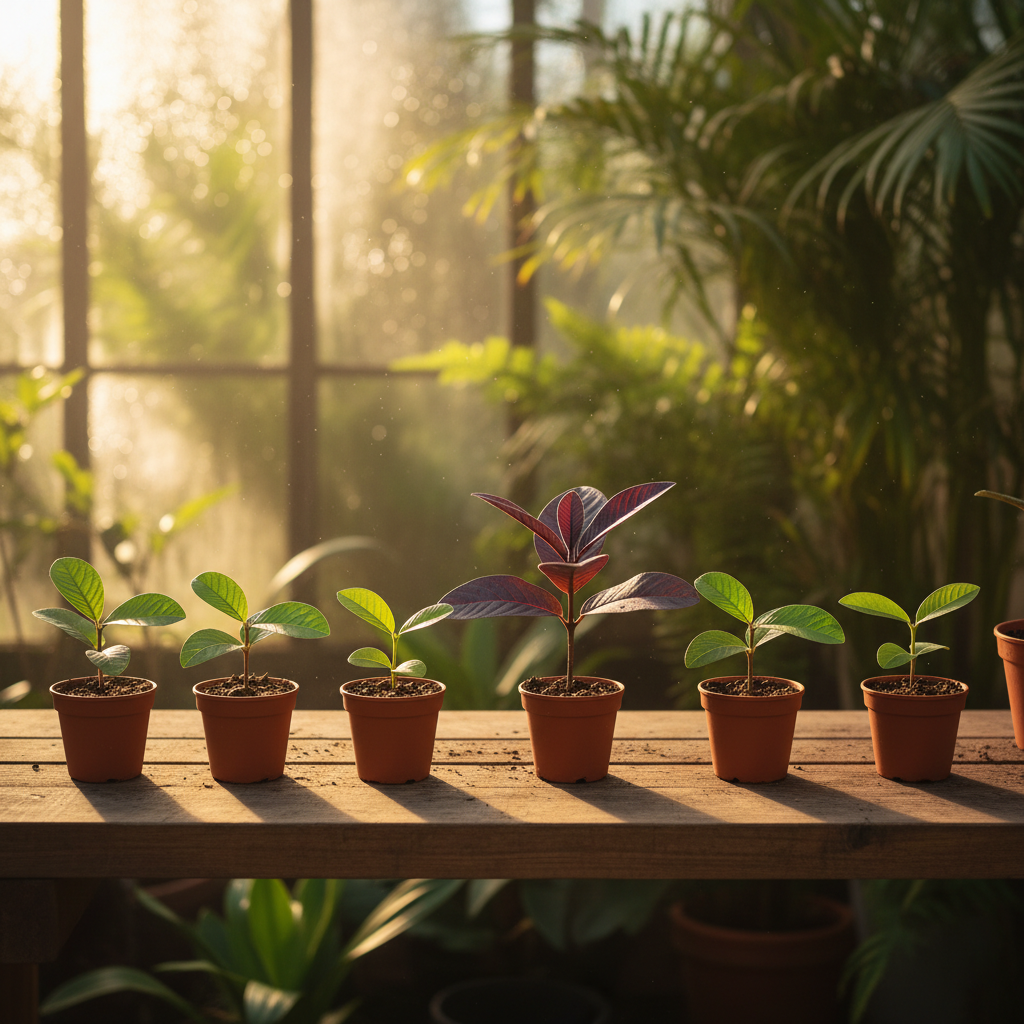
As any tropical fruit fan knows, the journey from seed to fruit can be full of surprises. One grower recently noticed that six seedlings from a single guava fruit developed differently—five with classic green foliage and one with striking purple leaves. Even more exciting, the purple plant was the first to bloom.
If you’ve ever raised a guava seedling and wondered why your plants don’t match, you’re not alone. This post unpacks what’s happening genetically and environmentally, how to care for diverse seedlings, and how to coax earlier flowers and fruit. You’ll also get timely, late-fall tips for overwintering and indoor setups, so your guava keeps growing strong through the cooler months.
“From one guava fruit I got six seedlings. Five are green and one is purple—the purple one just bloomed!”
Whether you’re germinating your first guava seeds or selecting standout plants to propagate, you’ll leave with a clear, practical plan to nurture vigorous seedlings and turn them into productive trees.
Why Guava Seedlings Look Different (Including Purple Leaves)
Guava (Psidium guajava) is genetically diverse. Seeds from a single fruit are often the result of cross-pollination, so each seed is its own genetic roll of the dice. That’s why seedlings from one parent can vary in vigor, leaf shape, branching habit, fruit quality—and leaf color.
Genetics vs. environment
- Genetics: Some guava lines express higher anthocyanin levels—the pigments responsible for red, purple, and bronze hues in new growth. Certain red-fleshed or purple-leafed types pass more of this trait to offspring.
- Environment: Cool nights, intense sun, or nutrient imbalances can all boost anthocyanin expression. A plant with borderline phosphorus or magnesium availability, for instance, may show deeper coloration in young leaves.
Is purple a problem?
Purple foliage is not automatically a deficiency. Look for context:
- Healthy purple leaves with glossy texture and normal growth: likely genetic or mild, non-harmful stress (e.g., cooler weather).
- Purpling with stunting, interveinal chlorosis, or leaf curl: investigate pH, phosphorus availability, and root health.
- New growth purple, maturing green: common and often normal as pigments fade with leaf age.
The takeaway: a purple guava seedling can be a perfectly healthy standout—sometimes even more ornamental and, as our anecdote shows, potentially earlier to bloom.
From Seed to First Bloom: Timelines and Triggers
Guava seedlings typically flower within 2–4 years, though particularly vigorous or dwarf types can bloom in 12–24 months under excellent conditions. Early bloomers often combine strong light, warmth, balanced nutrition, and consistent care.
What encourages flowering
- Light: 6–8 hours of direct sun outdoors or strong indoor lighting. Indoors, aim for bright, full-spectrum light 12–14 hours daily.
- Temperature: Guava grows best between 65–90°F (18–32°C). Brief dips below 55°F (13°C) can slow growth and deepen leaf pigments.
- Nutrition: Moderate nitrogen for growth, then emphasize potassium and micronutrients as plants mature to support flowering and fruit set.
- Stress timing: Mild, controlled water stress followed by a return to regular watering can encourage floral initiation in well-established plants (avoid stressing young seedlings).
Signs your seedling is ready
- Woody stems and well-branched structure
- Leaf size and internode spacing stabilizing
- Consistent flushes of new growth without stall-out
Once flower buds appear, indoor plants benefit from gentle air movement and hand-pollination (a soft brush between flowers) to improve fruit set.
Guava Seedling Care: Soil, Light, Water, and Nutrition
Healthy, consistent care evens out seedling variability and lets true genetic potential shine. Here’s a practical framework.
Soil and containers
- Medium: A fast-draining mix such as fine bark or coco coir + perlite + quality composted material. Target pH 5.5–7.0.
- Potting-on schedule: Start in 3–4 inch pots. Move to 1–2 gallon after roots fill the container, then to 5–7 gallon within the first year if growth is vigorous. Avoid oversized pots that stay wet.
Light
- Outdoor: Full sun with gradual acclimation to prevent leaf scorch.
- Indoor: Place near a bright south-facing window or under LED grow lights. Aim for bright, even coverage; provide 12–14 hours daily through winter.
Watering
- Keep evenly moist but never waterlogged. Allow the top 1–2 inches of medium to dry before watering again.
- Use containers with ample drainage holes. Empty saucers after watering.
Nutrition
- Young seedlings: Light, regular feeding every 3–4 weeks with a balanced fertilizer at half strength.
- Maturing plants: Shift toward higher potassium and adequate calcium/magnesium; include micronutrients (iron, manganese, zinc) to prevent chlorosis.
- Avoid heavy nitrogen pushes late in fall—focus on steady growth rather than lush, vulnerable foliage.
Health checklist
- Inspect weekly for scale, mealybugs, aphids, and whiteflies. Treat early with horticultural soap or oil; isolate new or infested plants.
- Prune out dead twigs to improve airflow and reduce fungal pressure.
- Maintain gentle airflow indoors to reduce pests and mildew.
Selecting, Training, and Propagating Standout Seedlings
When you start multiple seedlings from a single fruit, selection is your superpower. Keep records and tag each plant.
What to select for
- Vigor and branching: Compact, well-branched seedlings often support better yields in containers.
- Leaf traits: Distinct color or thicker leaves can signal durability or ornamental value.
- Early flowering: Track which seedlings bloom first and whether flowers set fruit.
- Disease resistance: Favor plants that stay clean under identical care.
Training and pruning
- Tipping: Pinch or cut back terminal growth at 6–8 leaves to encourage branching.
- Structure: Aim for an open center or layered scaffold branches to maximize light penetration.
- Height control: In containers, keep the canopy balanced to prevent wind-rock and improve indoor manageability.
Propagation once you find a winner
- Cuttings: Semi-hardwood cuttings root in warm, humid conditions. Use a sterile medium and maintain high humidity.
- Air layering: A reliable way to clone a specific branch while it remains on the mother plant.
- Grafting: If you have a vigorous seedling with great roots, graft scions from your best performer to clone traits while leveraging strong rootstock.
Label all clones with dates and source plant to maintain a clear lineage as your collection grows.
Seasonal Strategies: Overwintering and Indoor Pollination
With late fall here, guava growers in cooler climates should pivot to winter mode. Seedlings and young trees are more sensitive to cold and erratic watering.
Overwintering basics (November–March)
- Temperature: Keep above 55°F (13°C), ideally 65–80°F (18–27°C).
- Light: Supplement with LEDs to deliver long days and reduce legginess.
- Water: Reduce frequency slightly as growth slows; never let roots sit in cold, wet media.
- Humidity: Aim for 40–60% to reduce leaf drop. A small humidifier near plants can help.
Encourage winter blooms indoors
- Provide strong, consistent light and moderate feeding.
- Hand-pollinate open flowers with a soft brush in the morning.
- Maintain airflow with a small fan to mimic outdoor conditions and discourage pests.
Spring re-entry plan
- Begin hardening off 1–2 weeks after your last frost—incremental outdoor exposure to sun and wind.
- Up-pot if roots are dense, refresh the top inch of mix, and resume a growth-forward feeding schedule.
Putting It All Together
A guava seedling can surprise you—sometimes with purple leaves, sometimes with early flowers, often with unique fruit. Genetic diversity is the rule, not the exception. By dialing in light, warmth, drainage, and balanced nutrition, you’ll showcase each seedling’s best traits and accelerate the path to blooms.
If you’re starting a batch this season, create a simple trial: sow multiple seeds, track their progress, select the top performers, and clone the standout. Want a head start? Get our free Guava Seedling Starter Checklist and seasonal care calendar—perfect for winter growers building momentum for spring.
Your next great guava might already be in the tray. Which seedling will you champion this winter?