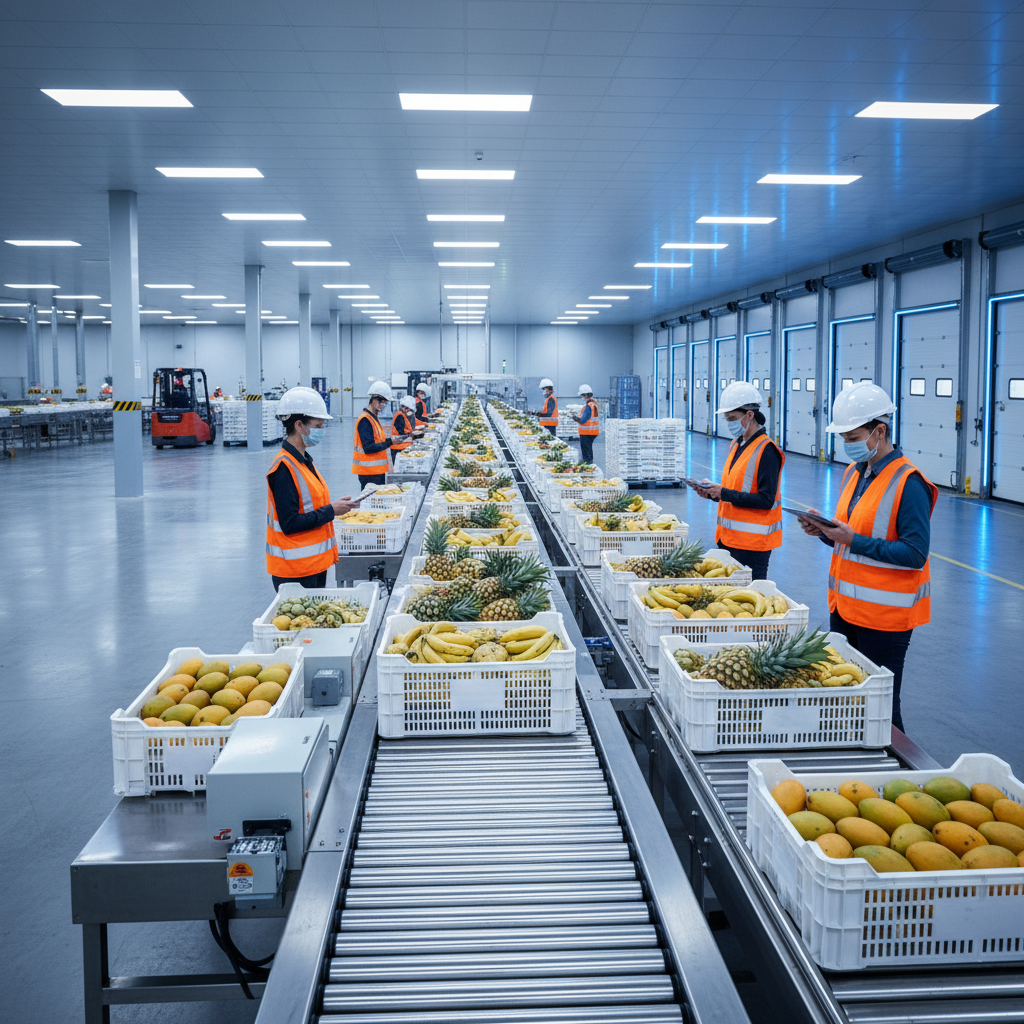
Handpickd’s $15M for fruits and vegetables supply chain
A fresh round of funding is ripening the future of produce. Handpickd, the fresh commerce startup founded by Milkbasket’s Anant Goel and formerly known as Sorted, has raised $15 million in Series A funding—an important signal for how the fruits and vegetables supply chain will evolve next. For retailers, distributors, and growers in tropical fruits, this is more than a headline; it’s a roadmap to reduce waste, improve margins, and meet soaring consumer expectations for quality and speed.
Why does this matter now? As we head into the holiday surge and plan for early-2026 demand, the fruits and vegetables supply chain is under strain from price volatility, climate shocks, and fragmented middle-mile logistics. Platforms like Handpickd promise to knit together demand forecasting, farm procurement, cold chain, and last-mile with data-driven precision—turning perishable chaos into process.
In this post, we unpack what Handpickd’s raise could unlock, how a modern fresh-commerce stack actually works, and the practical playbooks you can deploy in the next 90 days to win in tropical fruits.
How $15M can move the needle in fresh commerce
Series A capital in fresh commerce typically goes into four levers that directly impact performance in perishable categories:
1) Demand-driven procurement
- Smarter buy-plans tuned to store- and city-level sell-through
- Dynamic assortment that accounts for seasonality in mango, banana, pineapple, and papaya
- Vendor allocation engines that route orders to the most reliable, nearest suppliers
2) Cold chain and ripening consistency
- Temperature-controlled consolidation hubs to stabilize quality from farm to dark store
- Standardized ripening protocols for bananas and mangoes to hit precise eating windows
- Route optimization to minimize dwell time and reduce temperature abuse
3) Quality, grading, and traceability
- Uniform grading on arrival, with digital rejection workflows that protect margins
- Batch-level traceability for rapid issue resolution and brand trust
- Photo-based QC and AI-assisted defect detection to reduce subjective calls
4) Last-mile accuracy and speed
- Slotting and micro-fulfillment for peak hours and festival weeks
- Substitution logic that preserves basket value without disappointing customers
- Returns minimization with tighter cutoffs and predictive ETA communication
The payoff is tangible: lower shrink, higher on-shelf availability, more predictable gross margins, and better customer lifetime value—especially in premium tropical fruit lines where consumers will pay for reliable quality.
What a modern fruits and vegetables supply chain looks like
A next-gen fresh stack is built on a simple principle: buy what you can sell, move it quickly, and maintain quality throughout.
Demand-led planning and assortment
- Use rolling forecasts that blend historical seasonality, weather, and neighborhood demand signals.
- Align SKU count with operational reality. A tight core assortment in bananas, mangoes, and pineapples with rotating seasonal features often outperforms an oversized catalog.
- Calibrate MOQ and delivery cadence to store cluster velocity, not vendor convenience.
Cold chain and handling standards
- Define standard operating procedures from farm gate pickup through cross-dock to store or dark store.
- Use time-in-transit targets and lane heatmaps to spot routes that consistently break the cold chain.
- Stabilize ripening windows via controlled environments rather than “fixing” color in the last mile.
Quality control and traceability
- Grade on arrival with objective criteria and photo evidence; codify acceptance thresholds for key defects.
- Tag batches to lot IDs and record handoffs. When issues arise, trace back quickly and adjust vendor scorecards.
- Capture net landed cost at the batch level (purchase price + logistics + shrink) to see true margins.
Last-mile fulfillment and customer experience
- Prioritize first-expiry-first-out (FEFO) in pick paths.
- Use substitution rules that map taste and use-case (e.g., swap gold pineapple with a similar sweetness profile).
- Incentivize basket builds around tropical fruits with ready-to-eat and recipe bundles.
Practical playbooks for retailers and brands
Put the funding news to work with pragmatic steps you can pilot before the next demand spike.
Quick wins for the next 90 days
- Audit shrink by SKU and node
- Tighten forecast inputs
- Re‑spec quality
- Right-size delivery cadence
- Pilot controlled ripening
- Implement FEFO rigor
- Standardize packaging
- Vendor scorecards
Data and systems integration
- Centralize purchase orders, QC results, and sales in a single dashboard.
- Map each batch’s journey and compute gross margin after shrink in near real time.
- Feed these learnings back into daily buy-plans and vendor allocation.
Growers and exporters: capturing value in tropical fruits
For farms, FPOs, and packhouses, fresh-commerce platforms open direct, data-informed access to demand. To make the most of it:
Standardize at the packhouse
- Consistent grading, sizing, and packing yields better pricing and fewer disputes.
- Pre-cooling and careful handling reduce respiration and extend shelf life.
Embrace transparent calendars
- Share harvest calendars and planned volumes early; secure priority slots during peak export weeks.
- Offer alternates (variety, size) to maintain fulfillment when weather shifts supply.
Invest in traceability and communication
- Batch IDs, harvest dates, and simple QR-backed paperwork speed clearances and claims.
- Proactive updates on weather and quality help platforms plan substitutions and protect your relationship.
Outcome: higher acceptance rates, lower claims, and premium placement in retail and quick-commerce assortments.
Measuring ROI: the KPIs that matter
Anchor your improvement plan in a few metrics and track them weekly:
- Shrink rate (%): Pre-listing to customer receipt, by SKU and node
- On-time, in-full (OTIF): Vendor and transport legs
- Days of inventory: Especially for ripe/ready-to-eat SKUs
- Fill rate and stockouts: Lost sales in peak slots
- Gross margin after shrink (GMAS): Batch-level profitability
- Customer quality complaints and return rate
A simple ROI frame
Suppose a regional retailer sells 1,200 tons of tropical fruit annually with an average net landed cost of 80 per kg and shrink at 8%.
- Annual cost of shrink = 1,200,000 kg × 8% × 80 = 7,680,000
- If operational changes cut shrink to 5%, savings = 1,200,000 × (8%–5%) × 80 = 2,880,000
- Even after investing in better handling, QC, and ripening, the payback window is typically short because savings drop straight to margin.
Layer in improved availability and premium pricing for consistent quality, and the ROI strengthens further.
What Handpickd’s raise signals for 2026 planning
Handpickd’s $15M Series A, coupled with its focus on the fruits and vegetables supply chain, underscores a broader market shift: fresh categories are becoming data disciplines. For retailers, that means building a demand-led engine and choosing partners who can orchestrate procurement, cold chain, and last mile. For growers and exporters, it means standardization and transparency are now table stakes for access to premium demand.
As holiday demand crests and New Year wellness habits boost fruit baskets, there’s an immediate window to test, learn, and scale. Teams that use Q1 to codify specs, streamline ripening, and align buy-plans to real demand will set the tone for profitable growth across 2026.
Ready to turn tropical fruits into a margin engine? Outline your top three shrink drivers, choose one pilot lane, and rally vendors around a clear quality spec. If you’d like a tailored playbook, contact our team to schedule a supply chain working session.
Bottom line: The fruits and vegetables supply chain is shifting from intuition to instrumentation. Handpickd’s funding is a timely catalyst—use it to benchmark, pilot, and scale what works.