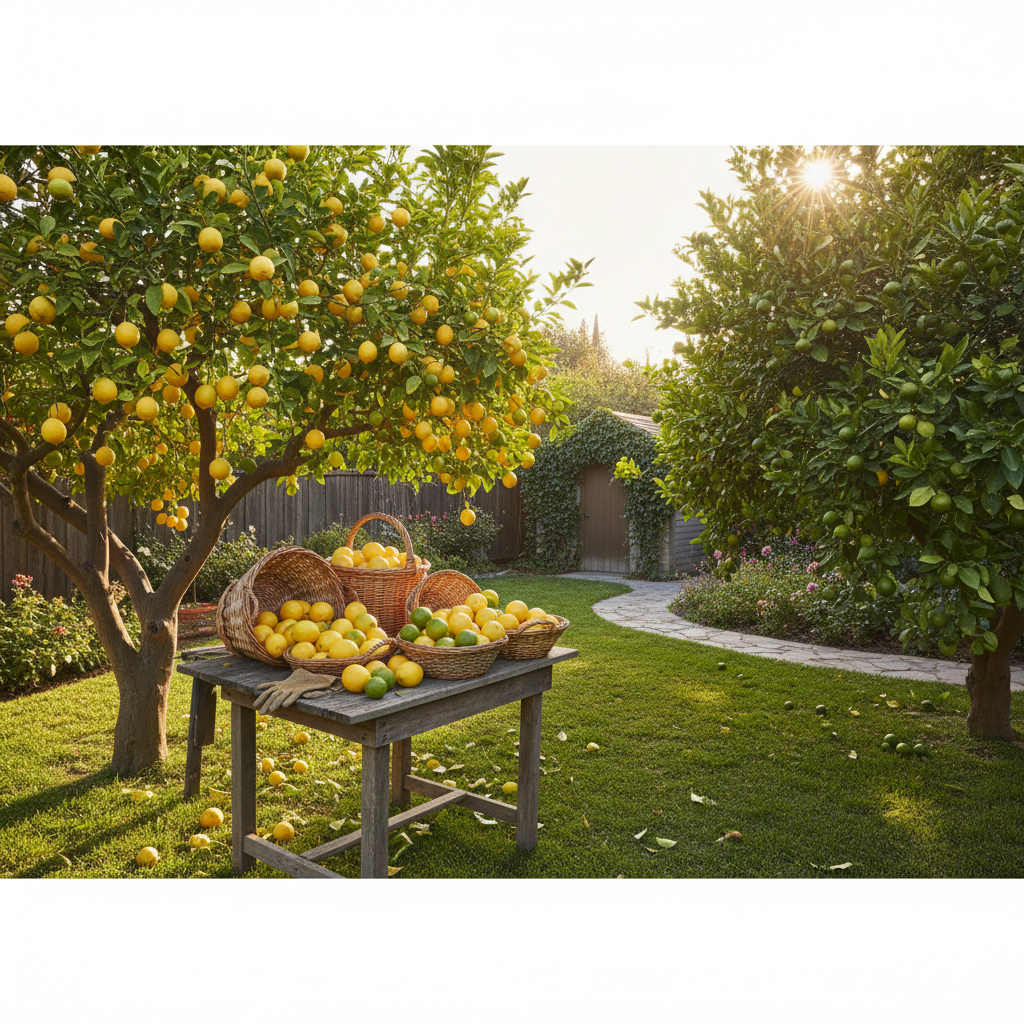
How Long Can Meyer Lemons Stay on the Tree? Fall Guide
If your backyard citrus is loaded this fall, you’re not alone. Many growers ask the same seasonal question: how long can Meyer lemons stay on the tree without losing quality? When fruit ripens together, it’s tempting to use the tree as a natural “storage shelf,” but timing matters for flavor, safety, and yield.
In this guide, you’ll learn exactly how long Meyer lemons and their frequent companion, Bearss (Tahiti) limes, can hang on the tree, how weather affects ripeness, and how to stagger future crops so you’re not swimming in citrus all at once. You’ll also get practical ways to store, preserve, and use a big fall lemon haul—just in time for holiday cooking and gifting.
Meyer vs. Bearss: What’s Actually on Your Tree?
Meyer lemons and Bearss limes often grow side by side in home gardens and can ripen in the same window in late fall through winter.
- Meyer lemon: Thin-skinned, slightly round fruit with deep yellow to orange hue when fully ripe. Sweeter, less acidic, with floral aroma. Typically ripens late fall to early spring.
- Bearss (Tahiti) lime: Larger, seedless lime that’s dark green when mature-green and turns yellow if left on the tree. Juicy, high-acid, and a common grocery-store lime. Often ripens late summer to fall, with extended picking into winter in mild climates.
Note: Some growers mention “Bearss lemon,” but in most home orchards, Bearss refers to lime. The guidance below calls out differences where it matters.
How Long Can Meyer Lemons Stay on the Tree?
Citrus is unusual because many varieties can hold on the tree after ripening—buying you time. That said, there are limits.
Meyer lemons (general rule)
- On-tree holding: 1–3 months after full color, sometimes longer in mild, frost-free climates.
- What happens if you wait too long: Lower acidity, puffy rind, drier segments (granulation), and muted aroma. Fruit remains usable but less vibrant.
- Cold risk: Fruit is more cold-sensitive than leaves. Extended exposure below about 28°F (-2°C) can damage fruit. If a hard freeze is forecast, pick ripe and nearly ripe lemons.
Bearss limes (general rule)
- On-tree holding: 3–6 weeks at best once mature-green. Quality declines as they yellow; acidity drops and flavor becomes “limier-lemony.”
- Cold risk: Similar principle—harvest ahead of a freeze. Limes are particularly sensitive to cold.
A quick decision framework
- Fruit color and taste: For Meyers, wait until uniform deep yellow to orangey-yellow, then taste. If sweet-tart and aromatic, your harvest window is open.
- Weather: If overnight lows may dip below 28°F (-2°C) for several hours, harvest or protect. In coastal or frost-free zones, you can hold longer.
- Tree load: Very heavy crops can stress branches and reduce next year’s bloom. If limbs are sagging, harvest in stages.
Pro tip: Mark 3–4 fruits and sample one each week after full color. When you notice a drop in zest aroma or juiciness, your tree’s “hold window” is closing.
Harvest Timing and Handling for Top Quality
Picking at peak and handling fruit gently will preserve flavor and shelf life.
When to pick
- Color break: Meyer lemons should be mostly or fully deep yellow. A slight green blush can be fine if flavor is there.
- Firmness: Fruit should feel heavy for its size. Lightweight fruit suggests dryness.
- Timing in the day: Morning after dew dries is ideal—cool fruit holds better than sun-warmed fruit.
How to pick
- Clip vs. twist: Use pruning snips to clip close to the fruit button. Twisting can tear the rind’s oil glands, causing peel injury and faster spoilage.
- Avoid drops: Bruising shortens storage life. Use a basket with a soft towel or harvest apron.
After-harvest storage
- Short-term (kitchen): Room temperature, away from sun, up to 5–7 days.
- Extended (refrigerator): In a breathable produce bag, lemons hold 3–4 weeks; Meyers are thinner-skinned, so check weekly. Limes typically 2–3 weeks. Avoid crushing.
- Maximize freshness: Store unwashed; rinse just before use. Zest dries out first—if you plan to zest, do it within the first week and freeze the zest.
Stagger Next Year’s Crop (So Everything Doesn’t Ripen at Once)
One big flush is common, but you can encourage a more spread-out harvest over time with a few cultural tweaks.
Spread bloom and fruit set
- Balanced fertilizing: Feed citrus in late winter/early spring and again in late spring. Avoid heavy nitrogen in late summer, which can sync blooms and delay ripening.
- Consistent watering: Irregular irrigation can trigger synchronized flowering. Keep soil moisture even during bloom and fruit set.
- Strategic thinning: After fruitlets set (pea to marble size), thin clusters so fruits are spaced 4–6 inches apart. This reduces competition and can spread ripening.
Manage plant structure
- Light pruning: Open the canopy in late winter to improve light penetration, which helps even out ripening. Avoid heavy summer pruning that stimulates one big flush.
- Branch support: Use soft ties or props under heavily loaded branches so you can harvest gradually without breakage.
Container-grown citrus
- Pot size and root health: Root-bound trees often flower all at once after a stress event (like drought). Repot every 2–3 years, refresh soil, and maintain steady moisture.
Alternate bearing alert: A very heavy crop this fall can mean a lighter crop next year. Thinning in heavy years helps stabilize production.
Put a Big Lemon Haul to Work: Storage & Preserving
If your tree delivered all at once, preserve the peak so nothing goes to waste—perfect for holiday cooking and gifting in November and December.
Simple, fast wins
- Freeze juice in trays: Squeeze, strain, and freeze in ice-cube trays. Transfer cubes to a bag—great for weeknight sauces, tea, and lemonade-on-demand.
- Freeze zest: Microplane zest from firm fruit, pack loosely into small jars or bags, and freeze. Use directly from frozen.
- Dehydrated slices: Thinly slice, lay on racks, and dry at low heat until brittle. Store airtight. Beautiful in cocktails, tea, and decor.
Flavor builders
- Preserved lemons (salt-cured): Quarter lemons almost through, pack with kosher salt, and submerge in their own juice in a jar. Ready in 3–4 weeks. Use the peel in tagines, salads, and dressings.
- Lemon curd: Rich, tart spread that freezes beautifully in small containers for up to 3 months.
- Citrus salt or sugar: Pulse zest with coarse salt or sugar; spread to dry, then bottle. A quick gourmet gift.
Batch beverages and mixers
- Lemonade concentrate: 2 parts juice to 1 part sugar, heat just to dissolve, chill, and freeze. Dilute to taste.
- Limoncello-style infusion: Zest (no pith) soaked in neutral spirits for 7–10 days, strain, and sweeten to taste. Great for gifting.
Smart produce rotation
- Eat-first list: Use any fruit with blemishes, sunburn, or soft spots within a few days.
- Hold-back fruit: Thick-skinned, heavier lemons with perfect peel can be your longer-keepers in the fridge.
Regional and Seasonal Considerations (November Focus)
- Mild coastal or Zone 9–10 climates: You can often hold Meyer lemons on the tree into winter. Taste weekly; harvest before a cold snap or heavy wind event.
- Frost-prone interiors (Zone 8–9): Plan staged harvests ahead of early-winter lows. Protect trees with frost cloth; pick ripe fruit if lows below 28°F are forecast.
- Holiday timing: Leverage your haul for Thanksgiving brines and desserts, then preserve the rest for December gifting.
Quick FAQ
- Do Meyer lemons continue to ripen off the tree? Not significantly. They can color slightly but won’t sweeten much. Pick close to peak.
- Can I leave Bearss limes until they’re yellow? You can, but they’ll be less acidic and more lemon-like. For classic lime flavor, pick at mature green.
- Why did all my fruit ripen at once? A single strong bloom, synchronized by irrigation or weather patterns, plus heavy fruit set leads to a one-time glut.
The Bottom Line
Meyer lemons can stay on the tree for roughly 1–3 months after full color in mild conditions, but quality slowly declines and freeze risk rises as winter deepens. Bearss limes hold for just a few weeks before flavor shifts. Taste often, watch the weather, and harvest in waves for best results.
Ready to make the most of your citrus? Download our free Citrus Harvest Planner and get weekly tips on tropical fruit care, preserving, and recipes. What will you make first with this season’s lemon haul?