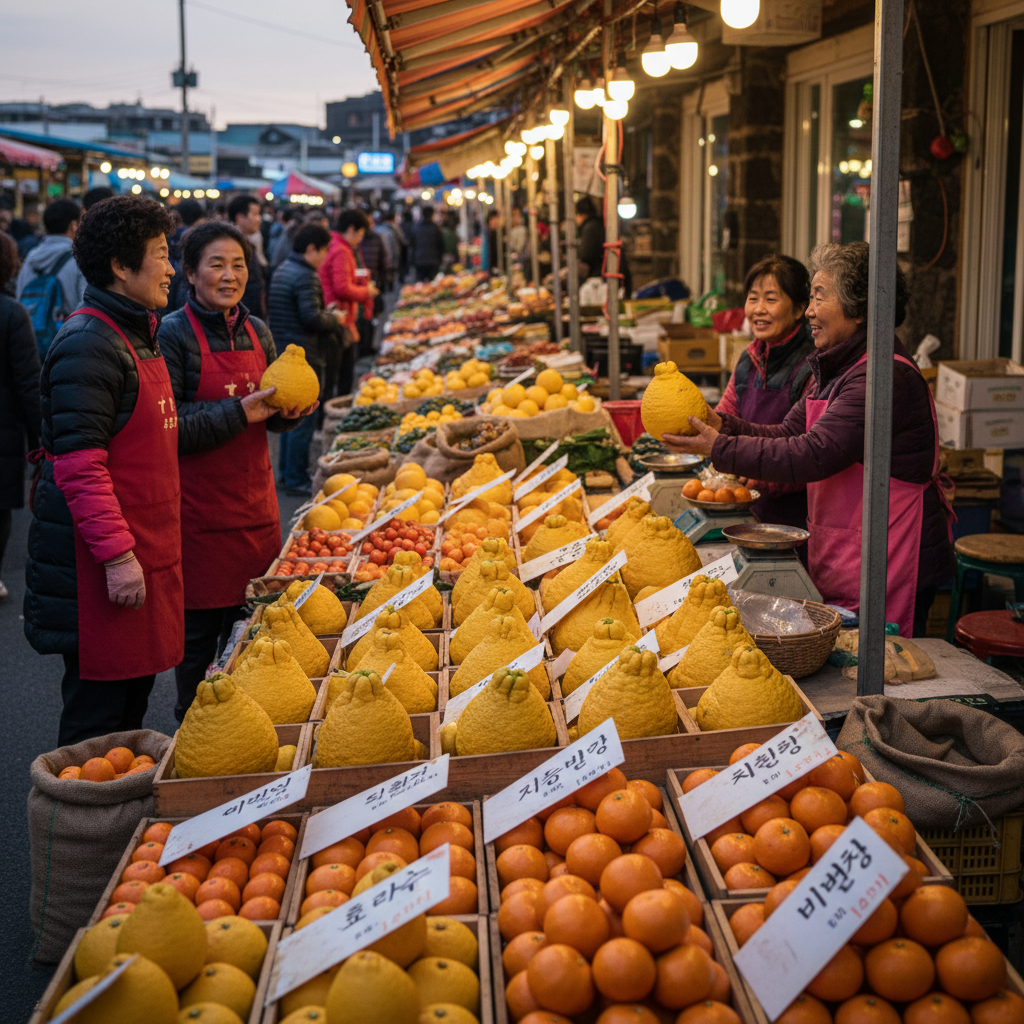
Identify Jeju Citrus Varieties: A Smart Buyer’s Guide
If you’ve wandered a Jeju market and spotted piles of bright “yellow balls” labeled simply as “citrus” or “Jeju tangerine,” you’re not alone. Many stalls use generic names, which makes it tough to identify Jeju citrus varieties with confidence—especially if you’re hunting for that perfect fruit for gifting, juicing, or menu development.
This guide solves that problem. We’ll show you how to read visual cues, understand seasonal windows, and ask the right questions so you can identify Jeju citrus varieties quickly and buy the best fruit for your needs. Whether you’re a traveler filling a tote bag or a buyer sourcing for a program, you’ll walk away with practical, field-tested tips.
As we head into peak winter citrus season, consider this your pocket field guide to Jeju’s most sought-after mandarins and hybrids—plus smart moves to avoid generic-labeled pitfalls.
Why Variety Names Disappear at the Market
In Jeju’s bustling stalls, sellers often prioritize speed and familiarity over varietal precision. Here’s why you’ll see so many generic labels:
- Consolidated supply: Smallholders bring mixed lots to middlemen. By the time fruit reaches street-level sellers, it may be pooled without full traceability.
- Consumer shorthand: Shoppers recognize “Jeju tangerine” (감귤,
감귤) faster than specific hybrid names. Simpler labels move fruit quickly. - Space and signage limits: Tiny displays leave little room for full variety names, harvest dates, or Brix.
- Farm shops are the exception: On-farm stores typically label varieties precisely and may display harvest date, sugar content, and size codes.
Actionable steps to reclaim clarity:
- Ask: “What variety is this?” and listen for names like
한라봉(Hallabong),천혜향(Cheonhyehyang),레드향(Redhyang),황금향(Hwanggeumhyang),유자(Yuja), or감귤(Gamgyul/mandarin). - Request the harvest date and farm area. Sellers proud of origin will share.
- If buying volume, ask for the Brix (sugar) range and size grade.
Rule of thumb: If the fruit has a tidy “topknot” at the stem, it’s almost certainly Hallabong.
A Field Guide to Jeju Citrus (What That “Yellow Ball” Might Be)
Use these quick IDs to match look, season, and flavor.
Gamgyul (Jeju Mandarin) — 감귤
- Look: Small to medium, deep orange peel, easy to peel, slightly flattened.
- Season: Broadest window; abundant late autumn through winter.
- Taste: Balanced sweet-tart, juicy, generally seedless or few seeds.
- Best for: Everyday snacking, juicing, salads.
Hallabong (Dekopon-Type Hybrid) — 한라봉
- Look: Large, pronounced stem bump (“topknot”), pebbled peel.
- Season: Winter into early spring; peaks after main mandarins.
- Taste: Very sweet, low acid, tender segments, minimal seeds.
- Best for: Gift boxes, desserts, premium table fruit.
Cheonhyehyang — 천혜향
- Look: Medium-large, smooth bright orange skin, more oval than round.
- Season: Winter; often overlaps with Hallabong but slightly earlier.
- Taste: Perfumed aromatics, higher acidity than Hallabong, excellent balance.
- Best for: Scent-driven dishes, cocktails, fresh eating.
Redhyang — 레드향
- Look: Medium-large, deeper red-orange hue, smooth peel.
- Season: Deep winter; later than basic mandarins.
- Taste: Rich, sweet, concentrated; can be lower acid.
- Best for: Premium snacking, colorful segments for plating.
Hwanggeumhyang (Golden Hybrid) — 황금향
- Look: Bright yellow to golden skin, smooth, spherical—often the mysterious “yellow ball.”
- Season: Winter; overlaps with other premium hybrids.
- Taste: Aromatic, sweet with gentle acidity; firmer segments.
- Best for: Eye-catching fruit platters, gifting, upscale retail.
Yuja (Yuzu/Citron) — 유자
- Look: Bumpy, thick rind, vibrant yellow; feels heavy for its size; many seeds.
- Season: Late autumn into winter.
- Taste: Intense oils and fragrance; juice is sour and limited. Used more for zest and aroma than fresh eating.
- Best for: Marmalades,
yuja-cha(citrus honey tea), dressings.
Cheonggyul (Unripe Green Mandarin) — 청귤
- Look: Small, green skin (intentionally unripe), very firm.
- Season: Early autumn (pre-winter); often bottled as syrup later.
- Taste: Highly acidic, aromatic; not for straight snacking.
- Best for: Syrups, cocktails, marinades.
Kumquat — 금귤
- Look: Tiny oval fruit, smooth skin; eaten peel and all.
- Season: Winter.
- Taste: Peel is sweet, interior is tart.
- Best for: Candying, garnishes, whole-fruit snacking.
Quick ID cheat sheet:
- Yellow, smooth, spherical: likely Hwanggeumhyang or Yuja (Yuja is bumpier and more aromatic on the peel; Hwanggeumhyang is smoother and great for eating fresh).
- Orange with a topknot: Hallabong.
- Deep orange-red, smooth: Redhyang.
- Oval, smooth, perfumed: Cheonhyehyang.
- Small, easy-peel orange: Gamgyul (Jeju mandarin).
Seasonality, Quality, and Price Signals
Understanding timing helps you buy at peak quality and value.
Seasonal rhythm
- Late autumn: Gamgyul floods the market; Yuja appears for tea and preserves.
- Early to mid-winter: Premium hybrids (Hallabong, Cheonhyehyang, Hwanggeumhyang, Redhyang) arrive and command higher prices.
- Late winter to early spring: Hallabong and Redhyang often persist, with concentrated sweetness.
Quality cues to trust (even with generic labels)
- Weight-to-size: Heavier fruit tends to be juicier and sweeter.
- Skin tension: Slight give without puffiness; overly puffy can signal dryness.
- Aroma: Strong, varietal-specific scent, especially around the stem.
- Skin condition: Avoid large soft spots; fine scarring is often cosmetic and harmless.
Interpreting display signals
- Gift boxes: Often premium grades and specific varieties, even if the loose fruit is generically labeled.
- Cut samples: Taste before you buy; ask which crate the sample came from.
- Price bands: Premium hybrids usually cost more than basic mandarins. If a “yellow ball” is priced above standard gamgyul, it’s likely a named hybrid.
How to Pick, Store, and Use Jeju Citrus
At the stall: a 30-second selection routine
- Scan color uniformity; avoid dull, brown patches near the stem.
- Lift two fruits of similar size; choose the heavier one.
- Press gently—seek firmness with a slight spring.
- Smell the stem end; richer aroma suggests better flavor.
- Ask the variety and harvest date; note any Brix sign.
Storage
- Counter (cool room): 3–5 days for mandarins; premium hybrids similar.
- Refrigerator: 1–2 weeks in a breathable bag; keep dry to prevent mold.
- Yuja: Stores well chilled due to thick rind; zest before juicing.
Quick uses by variety
- Hallabong: Segment for salads with fennel and mint; supreme for desserts.
- Cheonhyehyang: Shake into cocktails; its perfume elevates spritzes.
- Redhyang: Snack or juice for a sunset-hued sorbet.
- Hwanggeumhyang: Slice into golden carpaccios with olive oil and sea salt.
- Yuja: Make a small-batch marmalade or a soothing
yuja-chawith honey. - Gamgyul: Everyday snacks, vinaigrettes, and breakfast bowls.
For Buyers and Importers: Traceability and Specs
Generic market labels don’t have to derail quality programs. Standardize your intake with a simple spec sheet and verification routine.
Minimum spec checklist
- Variety declaration: Require labeled variety and Korean name (e.g.,
한라봉,천혜향). - Brix + acid: Target a Brix range appropriate to variety; record lot averages.
- Size/grade: Request size codes and defect tolerance ranges.
- Harvest and pack dates: Essential for shelf life and rotation.
- Post-harvest: Coating, fungicide use, and cold-chain details.
Verification moves
- Cut-test on arrival: Check juice yield, seed count, peel thickness, and aroma.
- Photo catalog: Keep reference images per variety to train staff.
- Vendor questions: Farm location, cultivar clone/line if known, and seasonal peak window.
- Documentation: Phytosanitary and origin statements; label translations if retail-facing.
When in doubt, a quick side-by-side cut and smell often resolves variety confusion faster than paperwork—especially between Hwanggeumhyang vs. Yuja and Cheonhyehyang vs. Redhyang.
Bringing It All Together
Navigating Jeju markets doesn’t have to be guesswork. With a few visual cues, a quick smell-and-weight test, and the right questions, you can identify Jeju citrus varieties accurately and choose fruit that matches your purpose—be it a holiday gift set, a cocktail program, or weeknight snacking.
If you’d like a one-page buyer’s checklist and seasonal calendar, contact our team and ask for the “Jeju Citrus ID Card.” We’ll help you source with confidence this winter and beyond.
The next time you spot a mysterious “yellow ball,” you’ll know exactly what to look for—and how to identify Jeju citrus varieties like a pro.