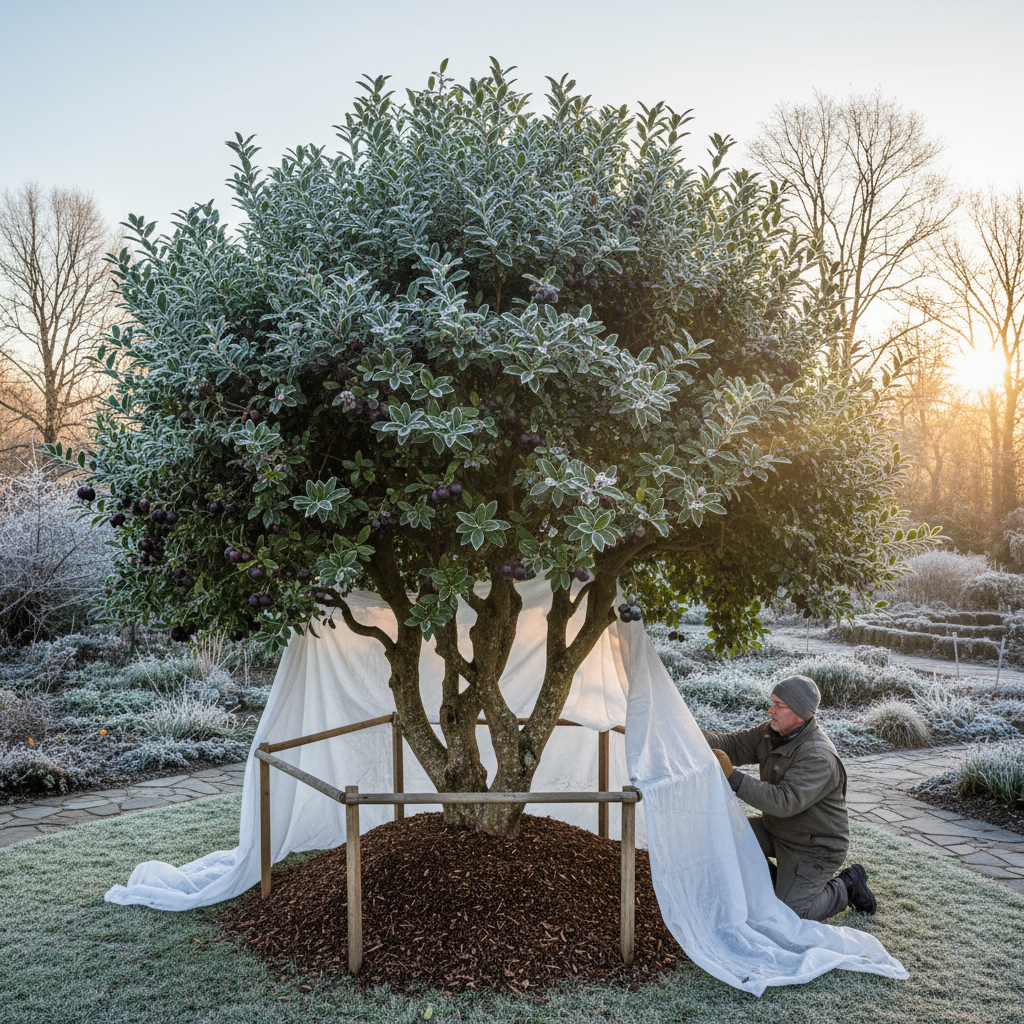
As night temperatures dip and early winter fronts roll through, many growers start worrying about jaboticaba cold damage. The good news: jaboticabas are often more cold-tolerant than they look. The bad news: cold snaps can still injure tender growth, and symptoms are easy to misread.
This guide will help you quickly distinguish true jaboticaba cold damage from mechanical breakage or disease, outline proven frost protection strategies, and share a recovery plan if your tree takes a hit. Whether you’re growing in-ground in a mild climate or managing containers on a patio, you’ll find practical steps to safeguard your harvest.
Quick insight: What looks like freeze injury is sometimes just a branch snapped at the base during pruning or harvest. Get the diagnosis right before you react.
Why Jaboticaba Seems to “Handle Cold”—and When It Doesn’t
Growers often report that mature jaboticaba (Plinia species) endure short dips near freezing surprisingly well, especially when healthy and well-hydrated. Older trees with thicker bark and established root systems shrug off brief cold better than young plants with tender cambium.
Still, there’s a threshold. Short exposures around the upper 20s °F can scorch new growth, defoliate tips, and injure blossoms. Prolonged freezes, wind-chilled nights, or multiple back-to-back events compound stress. Container plants are particularly vulnerable because roots chill faster than in-ground soil.
- Younger trees are more sensitive, showing leaf bronzing or blackened tips first.
- Late-season flushes are tender; they’re typically the first to burn.
- Dry or wind-exposed trees cool more quickly and sustain more damage than well-hydrated, sheltered trees.
Species and selections vary
Jaboticaba isn’t one plant but a group of Plinia species and hybrids. While all benefit from protection, anecdotal grower experience suggests some variability:
- Common types like Sabara and Red Hybrid are often considered moderately cold-tolerant once established.
- Certain selections can be more sensitive or more resilient depending on origin and growth rate.
Treat these as guidelines, not guarantees. Microclimate, soil moisture, and wind exposure often matter more than the name on the tag.
Diagnose: Cold Damage vs. Mechanical Breakage vs. Disease
Before you prune or spray, diagnose accurately. Different problems call for different fixes.
Signs of cold damage
- Leaves: Water-soaked patches that turn bronze, gray, or black within 24–72 hours. Margins curl and crisp. Damage is often more severe on the windward or sky-exposed side.
- Shoots: Tender tips wilt, then darken and dry. New green flushes collapse first.
- Bark/cambium: On younger wood, a tangy, off-green or brown cambium under the bark indicates injury. Severe events can cause longitudinal bark splits.
- Timing: Symptoms may worsen over a week as tissues oxidize. Some twig dieback shows up only when spring growth fails to push.
Signs of mechanical damage
- Break point: A clean snap or crushed fibers at the branch base, often from reaching into the canopy to harvest the trunk-borne fruit.
- Pattern: Localized—one limb fails while adjacent wood is fine. Leaves beyond the break wilt rapidly but other branches remain unaffected.
- Bark: Abrasion or tearing is concentrated where the branch meets the trunk or scaffold.
Signs of disease or root stress
- Progressive dieback not tied to a cold event, sometimes accompanied by cankers, oozing, or foul odor at the crown.
- Uniform leaf yellowing or drop from saturation or root rot (especially in poorly drained containers)
- Sunscald on exposed trunks after defoliation (patchy, bleached bark), which can follow a freeze but is not the freeze itself.
Quick field checks
- Scratch test: Lightly scrape bark on suspect twigs. Green = alive. Brown/tan = dead; prune later to live wood.
- Symmetry: Cold often affects the canopy broadly or on an exposed face. A single-limb failure often points to breakage.
- Timeline: Mechanical break = immediate wilt beyond the break. Cold damage evolves over days.
Immediate Recovery Steps After a Frost Event
When a cold snap hits, resist the urge to prune right away. Instead, stabilize the plant and wait for clear signals.
First 72 hours
- Hydrate the root zone: Water deeply if soil is dry; moist soil stores heat and supports recovery.
- Hold fertilizer: Avoid nitrogen until new, healthy growth resumes in warmer weather.
- Sanitize: Remove fallen, mushy fruit and leaf litter to reduce fungal pressure.
- Sun protection: If defoliation exposes bark, use shade cloth on the hottest post-freeze afternoons to limit sunscald.
Pruning strategy
- Wait until late winter or early spring to prune, when you can see which wood has re-sprouted.
- Cut back to green cambium; avoid leaving stubs.
- Sterilize pruners between cuts on suspect tissue.
Disease prevention
- Improve airflow and avoid overwatering during cool spells.
- Where dieback is present and conditions are wet, consider a preventive sanitation spray approach appropriate for fruit trees.
Winter Protection Playbook for Jaboticaba (Zones 8b–10)
A little preparation dramatically reduces risk. Use this checklist before and during frost nights.
Microclimate and siting
- Plant near a south- or east-facing wall that radiates stored heat.
- Avoid low-lying frost pockets. Slight slopes or raised beds drain cold air better.
- Create windbreaks: Hedges, fencing, or shade cloth barriers reduce convective heat loss.
Root-zone care
- Mulch 3–4 inches with wood chips or shredded bark, keeping mulch a few inches off the trunk.
- Water the day before a predicted freeze if soil is dry. Moist soil holds heat better than dry soil.
Canopy protection on frost nights
- Frost cloth or breathable blankets: Drape to the ground and secure. The goal is to trap radiant heat from the soil.
- Simple frames: Use stakes or tomato cages to keep fabric off foliage and fruit.
- Heat sources: In severe events, some growers add safe, low-intensity warmth under covers. Always use outdoor-rated, safe equipment and avoid fire hazards.
Container playbook
- Stage containers near a bright window, garage, or patio alcove you can access quickly.
- Roll plants indoors or under cover when forecasts dip near freezing, especially for young trees.
- Insulate pots with wrap or place into slightly larger decorative containers with straw gaps.
Seasonal timing (Northern Hemisphere)
- Late fall (Nov–Dec): Slow growth with reduced nitrogen; tidy canopy; refresh mulch.
- Freeze windows: Cover at sunset, uncover late morning after temps rise.
- Late winter (Feb–Mar): Assess damage, prune to live wood, and resume feeding as nights warm.
Pruning, Structure, and Harvest Technique to Avoid Breakage
Jaboticaba is cauliflorous—fruit emerges along the trunk and main wood. That means you’ll often reach into the tree to harvest, which is when accidental breaks happen.
Reduce stress on joints
- Train early: Encourage a strong, open structure with well-spaced scaffolds.
- Support young limbs: Use soft ties where branches meet the trunk to reduce leverage during harvest.
- Harvest gently: Twist fruit off rather than pulling hard on clusters. Use small pruners if needed.
After a break
- Make a clean cut back to a collar or junction to speed healing.
- Avoid sealing compounds; focus on good cuts and sanitation.
- Monitor for pests or canker development at the wound site.
Variety and Site Factors That Change the Equation
No two backyards are identical, and no two jaboticabas respond exactly the same to cold.
- Variety differences: Some selections harden off earlier or develop thicker bark sooner, helping with brief cold spells. Others maintain tender, fast growth deeper into fall and need more protection.
- Rootstock and container size: Larger, well-rooted containers buffer temperature swings better than tight, undersized pots.
- Soil and irrigation: Even, moderate moisture supports cold resilience; waterlogging before a cold front increases risk.
- Exposure and aspect: A tree tucked against a warm wall acts like it’s a zone warmer compared to one in an open lawn.
Example scenarios
- Zone 9b backyard, brief 29°F: Tender tips bronzed but main framework fine; recovery with minimal pruning.
- Windy 8b edge, two consecutive freezes: Defoliation on exposed side, minor twig dieback; needs cover on subsequent events and delayed spring pruning.
- Small container, 31°F for several hours: Root-chill stress causes leaf drop despite air temps just below freezing; move containers sooner next time and insulate pots.
Putting It All Together
A thoughtful plan reduces jaboticaba cold damage, and a calm recovery approach prevents over-pruning or unnecessary fertilizer that can set trees back. Diagnose accurately, protect proactively, and prune only once you can see what’s truly alive.
If you’d like a simple reminder for winter, build a one-page “freeze night” checklist and keep it with your frost cloth and ties. Want more support? Join our grower community for seasonal tips, cultivar notes, and step-by-step care guides tailored to tropical fruit trees.
What’s the lowest temperature your jaboticaba has bounced back from? Share your experience—and let this winter be the one where preparation beats the forecast.