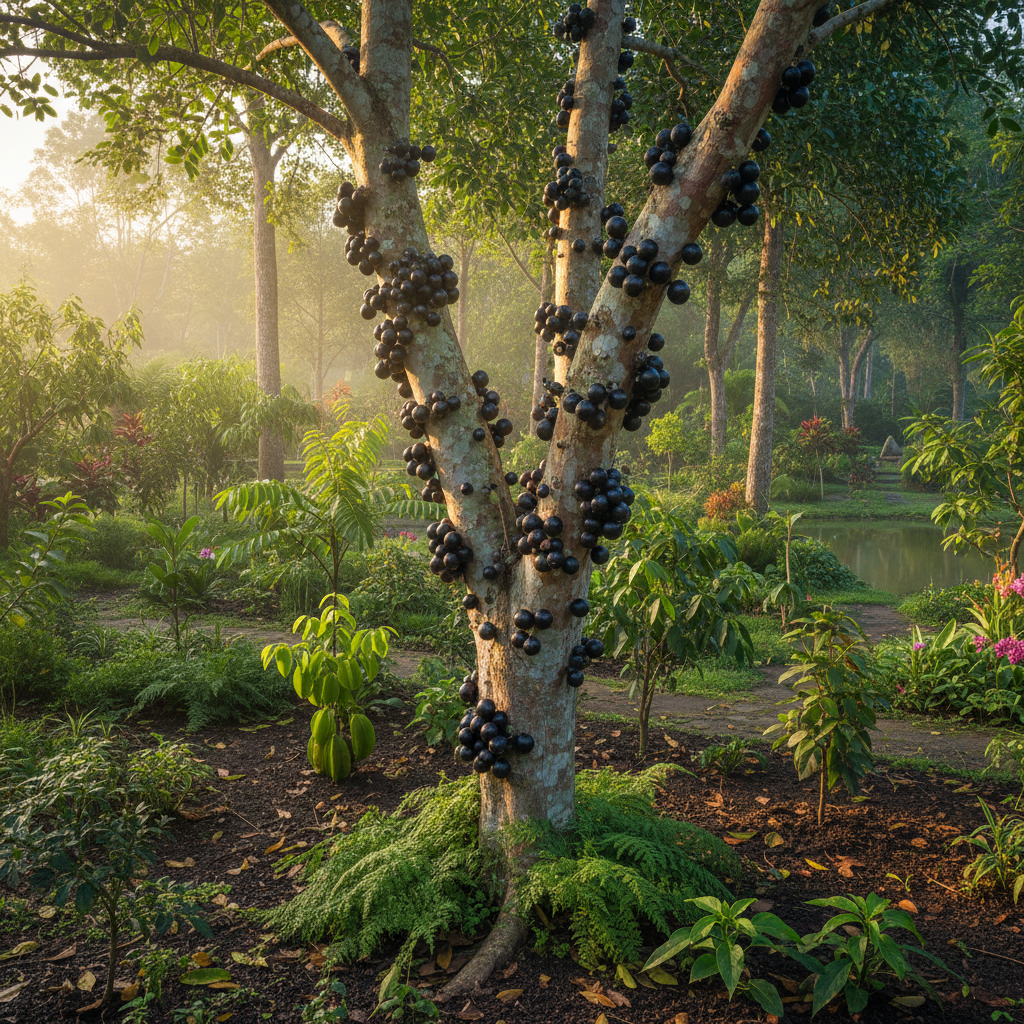
The 14-Year Wait: Turning Patience into Peak Flavor
If you’re growing rare tropicals, you’ve likely heard stories of patience—like waiting over a decade for a Jaboticaba de Cabinho to flower. For many enthusiasts planning 2026 plantings this November, the question is simple: how do you nurture a collection so it rewards you sooner, and more reliably?
Jaboticaba de Cabinho, a collector-beloved type within the Plinia/Jaboticaba group, is notorious for extended juvenility. Yet with the right mix of genetics, nutrition, and environment, you can shorten the timeline and set your trees up for heavy, regular crops. In this guide, we’ll break down practical strategies that move your tree from foliage to flowers—and we’ll profile five intriguing companion species (Chrysophyllum gonocarpum, Melicoccus sp., Eugenia umbrosa, Eugenia sp. “Essência Negra,” and Mouriri sp. “Nova Provisão”) to round out a high-performing tropical fruit collection.
Expect actionable steps, realistic timelines, and a seasonal checklist you can put to work today.
Why Jaboticaba de Cabinho Takes So Long to Flower
Jaboticabas are famous for cauliflory—fruit borne directly on the trunk. The “de Cabinho” type is known among collectors for fruits that typically have a noticeable little stem (a “cabinho”), and many report it as a slower bloomer compared to faster selections.
The main drivers of delayed flowering
- Genetics and seedling origin: Seed-grown jaboticabas often need 8–15+ years to reach maturity; named cultivars on mature rootstock can fruit dramatically sooner.
- Root environment: Jaboticabas love consistently moist, organic-rich, slightly acidic soil (pH ~5.2–6.2). Alkaline conditions or compacted media can keep trees vegetative.
- Nutrition balance: Excess nitrogen pushes leaves at the expense of blooms. Steady potassium, phosphorus, calcium, and micronutrients (especially iron and manganese) support flower initiation.
- Light and heat: Warmth and bright light fuel carbohydrate reserves that prime bloom. Cool, shaded, or wind-stressed sites often delay the transition.
From vegetative to reproductive
Juvenility isn’t only about time—it’s about energy and signals. A well-fed tree with stable moisture, active mycorrhizae, and strong root mass stores the carbohydrates needed to flower. If your Cabinho is still acting “young,” the issue is usually a sum of small stresses rather than a single flaw.How to Nudge a Mature Jaboticaba Toward Bloom
If your tree is over 8–10 years from seed (or 3–5 years from a graft/air-layer) and still hasn’t flowered, focus on subtle, cumulative levers.
Soil and nutrition tune-up
- Rebuild the root zone: Top-dress 5–10 cm of fine composted bark/leaf mold plus biochar and well-aged compost. Maintain year-round mulch.
- Correct pH: If leaves show chlorosis in alkaline water/soil, use chelated iron and acidifying inputs (e.g., elemental sulfur) gradually.
- Rethink NPK: Pivot from high-N feeds to balanced or bloom-forward formulas. Favor slow-release organics. Maintain steady K (potassium) and adequate P.
Water and container strategy
- Moist, never waterlogged: Jaboticabas hate drought swings. Install drip or a moisture-retentive mulch layer. In containers, use a high-porosity mix with fine bark.
- Right-sized pot: Overly tight rootballs can stall. Up-pot methodically; if roots circle heavily, gently tease and prune before repotting.
Structural and environmental cues
- Light: Give as much bright light as possible without leaf scorch. In marginal climates, a cold frame or greenhouse boost can be decisive.
- Pruning: Light thinning to open the canopy improves airflow and light penetration. Avoid heavy structural cuts during pre-bloom.
- Stress techniques: Some growers experiment with light girdling or drought cycling to induce bloom; these carry risk. Prioritize steady, healthy growth first.
Building a Collector’s Bed: 5 Rare Companions to Jaboticaba
Diversity increases your odds of harvesting something delicious every season. Here’s a quick-reference profile for five intriguing species often grown alongside jaboticabas.
Chrysophyllum gonocarpum (var. “BIG Itacaré”)
- Growth: Medium to large evergreen tree; adaptable in humid tropical/subtropical climates.
- Fruit: Small, sweet-to-subacid fruits (Chrysophyllum genus is famed for star-apple relatives). Selected “BIG” types aim for larger size.
- Culture: Deep organic mulch, regular moisture, wind protection when young.
Melicoccus sp. “Bahia”
- Growth: Related to Spanish lime/quenepa group (Melicoccus). Can form a handsome canopy.
- Fruit: Typically grape-like arils around a large seed; texture varies by type—some are more melting, others fibrous.
- Culture: Needs warmth and sun; good drainage; pruning to shape. Seed to fruit can be lengthy—seek grafted material if available.
Eugenia umbrosa
- Growth: Shade-tolerant Eugenia capable of thriving under taller canopies.
- Fruit: Many Eugenias produce cherry-sized berries with aromatic pulp; umbrosa is valued for flavor complexity by collectors.
- Culture: Moist, organic soil; partial shade; regular micronutrients to keep foliage glossy.
Eugenia sp. “Essência Negra”
- Growth: Compact to medium; selected for dark-skinned fruit.
- Fruit: Richly pigmented berries with sweet-aromatic notes; good for fresh eating and preserves.
- Culture: Container-friendly; responds well to gentle pruning and consistent moisture.
Mouriri sp. “Nova Provisão”
- Growth: From the Mouriri genus (sometimes called nance-berry relatives or tropical “blueberry” types). Often medium-sized with glossy leaves.
- Fruit: Typically small, colorful berries; selections prized for balanced sweetness and novelty.
- Culture: Warmth, humidity, and excellent drainage; mulch to protect shallow roots.
Propagation Paths and Realistic Timelines
Choosing the right propagation method is the single best way to manage expectations—and harvests.
Seed
- Pros: Genetic diversity, vigor, and availability.
- Cons: Long juvenility (8–15+ years for many jaboticabas).
- Tip: Start multiple seedlings and cull to the best performers by year 3–4.
Grafted plants
- Pros: Known cultivar on established rootstock; flowering can occur in 3–5 years.
- Cons: Availability and skill required for reliable grafts.
- Tip: Ask for scion wood provenance and age; older scion material can reduce juvenility.
Air-layering (marcottage)
- Pros: Produces a clone of mature wood; often fruits 2–4 years after establishment.
- Cons: Root systems can be initially weaker; meticulous aftercare required.
- Tip: Pot-up with high-oxygen media; stake and protect from wind the first season.
Cuttings
- Pros: Clonal uniformity.
- Cons: Many Plinia/Jaboticaba types are stubborn from cuttings; success rates are low without specialized setups.
A Seasonal Care Calendar for Late 2025
Leverage the calendar to stack small wins. November is strategic planning season in many regions.
November–January
- Subtropics (Zone 9–10): Frost protection plan; wrap trunks, prepare covers, and set thermostats for heat mats/greenhouses.
- Tropics: Maintain irrigation and mulch; foliar micronutrients after rainy bursts to correct washout.
- All regions: Soil test and pH adjustments; refresh mulch; inspect for scale and sooty mold.
February–April
- Begin balanced feeding as temperatures rise. Increase light exposure gradually for greenhouse plants.
- Prune lightly to open canopies; sanitize tools to prevent dieback.
May–August
- Peak growth. Maintain consistent moisture; use slow-release K and Ca to support bloom potential.
- Monitor for nutrient chlorosis; apply chelated iron/manganese as needed.
September–October
- Ease off high-N feeds. Focus on K and trace minerals. Keep roots cool with deep mulch as heat lingers.
Troubleshooting: 9 Reasons Your Jaboticaba Won’t Flower
Run this checklist before making big changes.
- It’s still juvenile for its propagation type.
- Soil pH above ~6.5 causing iron/manganese lockout.
- Irregular watering or periodic drought stress.
- Excess nitrogen vs. insufficient potassium and phosphorus.
- Insufficient light or chronic wind exposure.
- Rootbound in a tired, compacted container mix.
- Cold snaps stalling carbohydrate accumulation.
- Pest pressure (scale, mealybugs) sapping energy.
- Poor mycorrhizal activity in sterile or over-disturbed soil.
If you correct three or more of the above at once, expect noticeable changes within a season or two as the tree rebuilds reserves and sets spurs.
Bringing It All Together
Jaboticaba de Cabinho rewards patience—but patience works best when paired with smart strategy. Choose propagation that matches your timeline, engineer the root zone for constant comfort, and shift nutrition away from leaf-first growth to bloom support. A diversified collection—featuring Chrysophyllum, Melicoccus, Eugenia, and Mouriri—keeps your garden productive while you wait for your Cabinho’s big moment.
Ready to accelerate your collection? Request our free pre-flowering checklist and a personalized culture plan for your climate. Share your goals and current setup, and we’ll help you map a clear path from juvenile growth to a trunk loaded with flowers and fruit.
This season, make Jaboticaba de Cabinho the pride of your orchard—and the anchor of a tropical fruit collection that ripens into 2026 and beyond.