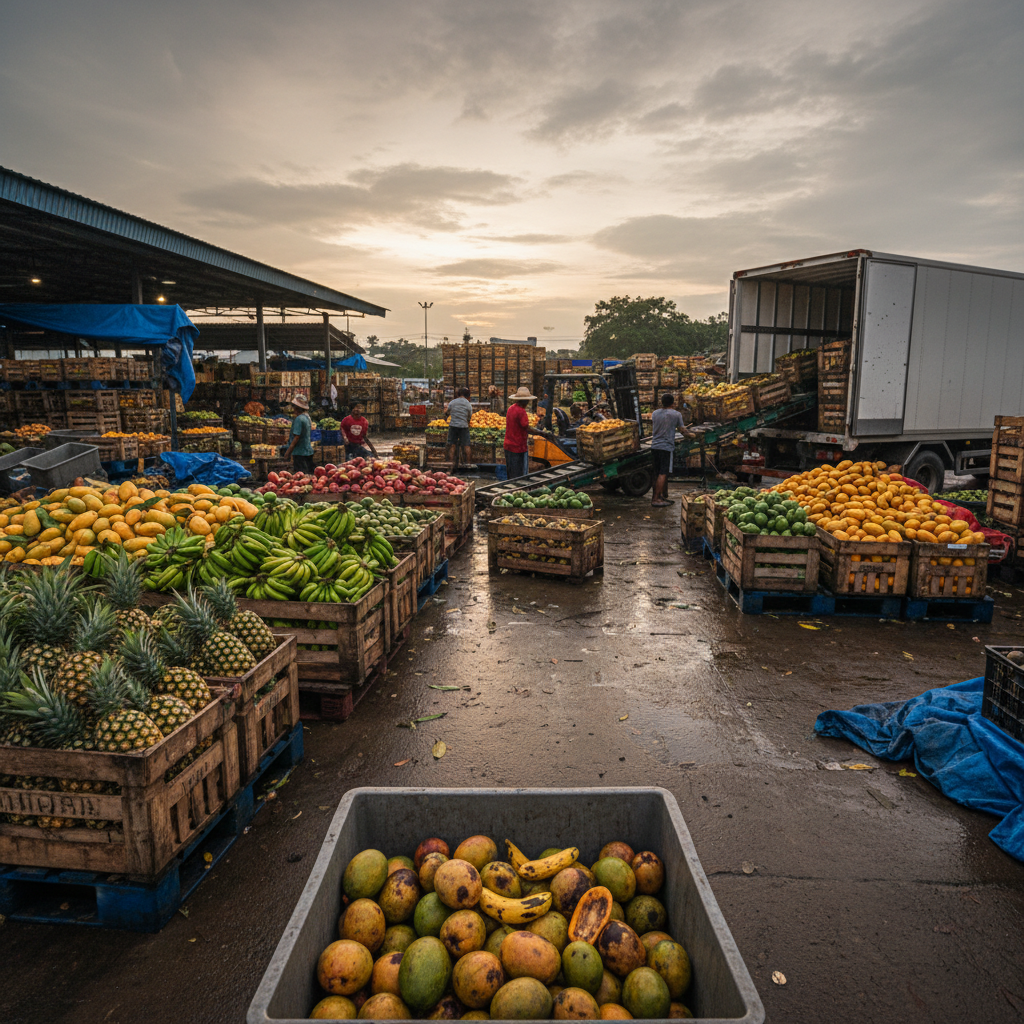
As year-end demand for gift hampers and festive menus ramps up—and the northeast monsoon brings heat, humidity, and transport disruptions—there’s an uncomfortable truth we must confront: Malaysia fruit supply chain losses are staggering, and they are avoidable.
Up to 20%–50% of fruits and vegetables are lost across Malaysia’s supply chain, according to the Draft NFSB 2030.
Beyond the shock factor, these losses erode farm incomes, inflate retail prices, and deprive families of essential nutrients. With land and water constraints limiting agricultural expansion, the fastest “new acreage” we can unlock is the portion of harvest we currently waste. This article breaks down where those losses happen, why they persist, and the specific, practical steps growers, traders, retailers, and foodservice operators can take now to protect quality and margins—especially for tropical fruits.
Why 20–50% Goes Missing—and Why It Matters
Malaysia’s fruit and vegetable ecosystem faces dual pressure. On the supply side, land and water scarcity cap expansion. On the demand side, consumers expect peak freshness, year-round availability, and competitive prices. The gap between those expectations and physical realities is where loss creeps in.
- Economic impact: Every percentage point of loss compounds costs—extra labor, fuel, packaging, and shelf space for units that never sell. Shrink at retail also drives higher prices to recover margins.
- Nutritional impact: Fewer fruits and vegetables reach households at optimal quality. For school meals, hospitals, and low-income families, that translates to fewer vitamins, minerals, and fiber.
- Climate impact: Wasted produce means wasted water, fertilizer, and energy—and additional emissions as spoiled goods decompose.
Trade policy also plays a quiet role. Malaysia’s free trade agreements often prioritize efficiency and market access but do not explicitly elevate nutrition or public health outcomes. That can limit incentives and standards that would encourage investments in cold chain, safer handling, and quality assurance for perishables.
Where Tropical Fruits Are Lost in the Chain
Losses accumulate as tropical fruits move from field to fork. Understanding the hotspots is the first step to fixing them.
Farm and harvest
- Picking at the wrong maturity (too early or too late) increases rejection rates and shortens shelf life.
- Fruit left in direct sun while awaiting pickup suffers heat stress and bruising.
- Rough handling into sacks or non-vented containers damages skins and accelerates decay.
Aggregation and first mile
- Delays before pre-cooling allow field heat to remain, especially for mango, papaya, rambutan, and banana.
- Mixed-lot stacking (ripe with green) triggers ethylene exposure and uneven ripening.
- Monsoon rains complicate loading and road access, prolonging time-to-cool.
Transport and distribution
- Non-refrigerated trucks on long routes raise pulp temperature and moisture loss.
- Poor airflow from over-stacking or using solid-walled crates encourages hotspots.
- Temperature abuse during cross-docking shortens remaining shelf life.
Wholesale, retail, and foodservice
- Overly strict cosmetic standards reject edible “imperfect” fruit.
- Warm displays for aromatics (pineapple, jackfruit) and soft-skinned fruits (mango, papaya) increase shrink.
- Lack of dynamic pricing or markdown systems leads to unsold, overripe stock.
Quick Wins You Can Implement This Month
These actions deliver outsized benefits during the monsoon and holiday rush without large capital outlay.
Harvest discipline and shade
- Define harvest maturity indices per crop (Brix for pineapple, peel color charts for mango/banana, fruit firmness for papaya).
- Move harvested fruit into shade within 15 minutes; use breathable, vented field crates instead of sacks.
“Cold chain lite” for the first mile
- Pre-cool with low-cost solutions: evaporative coolers, shaded airflow tunnels, or ice-assisted insulated liners inside trucks.
- Use pallet covers or reflective thermal blankets during loading and at roadside stops.
- Route planning for monsoon: schedule pickups earlier, avoid known flood-prone corridors, and build 10% time contingencies.
Smarter packaging and handling
- Switch to vented, nestable crates with corner protection; add cushioning pads for delicate fruit.
- For export or longer hauls, trial modified-atmosphere liners that reduce respiration and decay.
- Separate lots by ripeness and variety; never stack ripe ethylene producers with greens.
Grade-for-purpose, not just appearance
- Channel off-grade fruit to processing partners (juicers, jam makers, puree producers, bakers). A “seconds” outlet can convert 8–12% potential waste into revenue.
- Build standing orders with hotels, cafes, and cloud kitchens that can absorb ripe fruit within 24–48 hours.
Data you can act on
- Use low-cost button temperature loggers in 1 out of every 10 pallets for a week; identify the “hottest leg” and fix it first.
- Implement QR or batch codes at harvest so problem lots can be traced back to the specific farm block and shift.
- Track shrink by SKU and day; set auto-triggers for markdowns when age crosses a threshold.
Medium-Term Investments for 2026
If you’re planning CAPEX or grants for next year, prioritize assets and partnerships that directly cut loss.
Packhouses and ripening rooms
- Centralize washing, grading, and forced-air pre-cooling to remove field heat fast.
- Controlled ripening (e.g., for bananas and mangoes) increases consistency and reduces reject rates at retail.
Water- and climate-smart production
- Drip irrigation and mulch reduce water use and improve uniformity—critical when land and water cannot expand.
- Shade nets and windbreaks mitigate sunscald and storm damage.
- Trial heat-tolerant or disease-resilient cultivars and rootstocks suited to local microclimates.
Contracts, finance, and risk
- Off-take agreements aligned to grades (fresh, processing, puree) secure outlets for each quality tier.
- Insurance and contingency plans for heavy rain periods keep cash flow steady when logistics stall.
- Cooperative models can pool volume to justify shared cold rooms and reefers.
Policy and trade levers
- Nutrition-sensitive provisions in trade agreements can incentivize cold chain standards, quality assurance, and reduced barriers for perishable-handling tech.
- Public procurement (schools, hospitals) can specify freshness and loss reduction targets, rewarding compliant suppliers.
- Tax incentives for donations of safe, unsold produce encourage food rescue instead of disposal.
Measure What Matters: FLW and ROI
You can’t improve what you don’t measure. Establish a simple food loss and waste (FLW) baseline and track it monthly.
A practical FLW checklist
- Define the boundary: farm gate to retailer backroom, or full chain to consumer.
- Select loss points to measure: cull rates at grading, temperature at arrival, shrink at shelf, and returns.
- Standardize units: kilograms lost, percent of inbound weight, and value in RM.
- Assign owners: harvest lead, packhouse manager, transport coordinator, store ops.
Sample ROI math
- Scenario: A wholesaler moves 1,000 tonnes of tropical fruit annually with a 25% loss rate (250 tonnes lost).
- Target: Cut loss to 15% (100 tonnes saved).
- If average landed cost is RM2,800/tonne, savings from reduced loss = 150 tonnes × RM2,800 = RM420,000/year.
- Even a modest investment—RM200,000 in pre-cooling, crates, and training—can pay back in under 12 months.
The math will differ by commodity and channel, but in most cases, trimming just 5–10 percentage points of loss produces a faster payback than expanding acreage.
What Retailers and Consumers Can Do
Loss reduction isn’t only a farm or wholesaler issue. Retailers and households play a pivotal role in keeping tropical fruits edible and affordable.
For retailers
- Implement dynamic markdowns and “ripe today” zones to accelerate turnover.
- Calibrate display temperatures and humidity; rotate stock with strict FIFO (first-in, first-out).
- Offer “imperfect but delicious” sections—especially effective for pineapples, mangoes, papayas, and bananas.
For households
- Store bananas, mangoes, and papayas at room temperature until ripe, then refrigerate to extend life by 2–3 days.
- Separate ethylene-sensitive produce from ethylene producers to prevent premature ripening.
- Buy “ready-to-eat today” and “ready in 3 days” bundles for staggered consumption.
In a season defined by monsoon challenges and festive demand, shaving waste is the most immediate lever to boost supply, stabilize prices, and improve nutrition. Malaysia fruit supply chain losses don’t have to sit at 20%–50%. With better harvest discipline, first-mile cooling, smarter packaging, and grade-for-purpose channels, many operators can halve shrink within months.
If you’re ready to cut loss and lift margins, request a free 30-minute post-harvest assessment and our 10-step Tropical Fruit Loss Reduction Checklist. We’ll help you design a monsoon-ready plan to bring more fruit from field to fork—fresh, safe, and profitable.