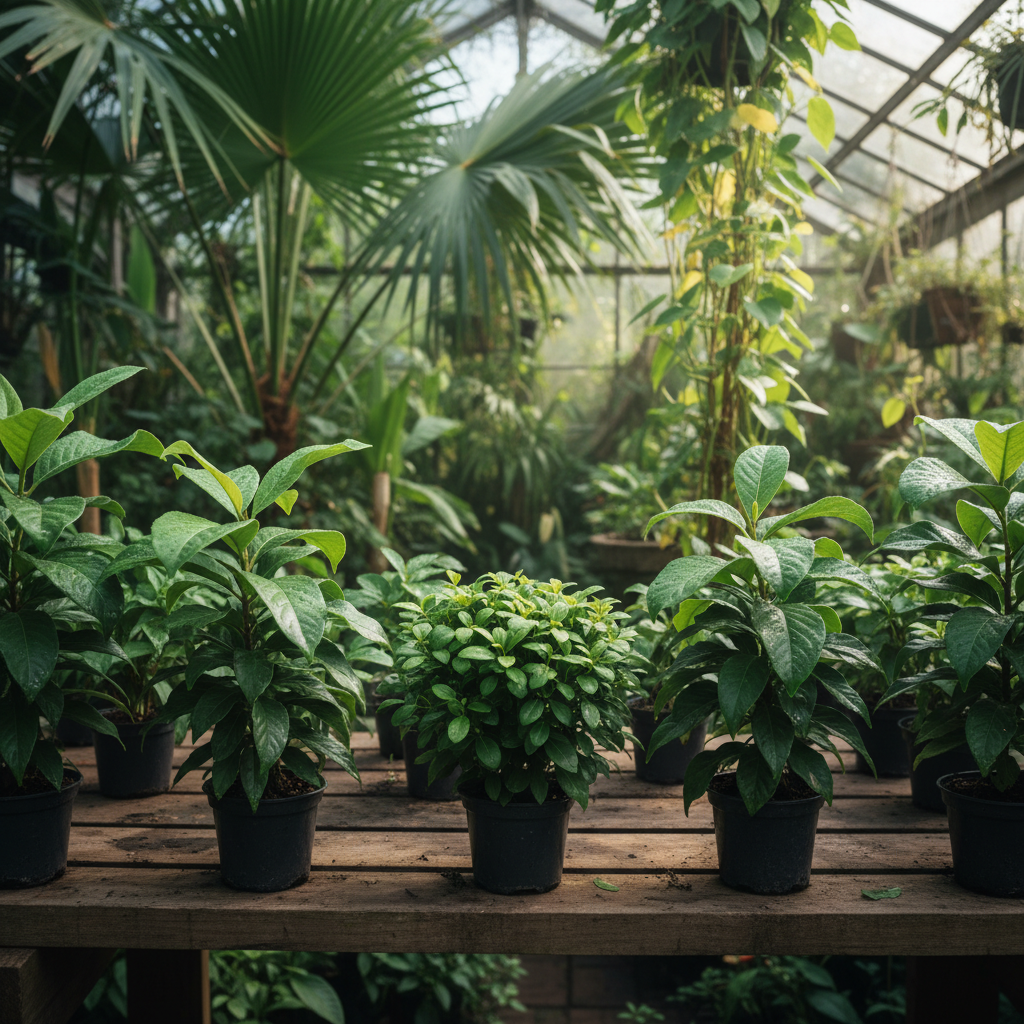
If you’re deep into the world of jaboticabas and their cousins, you’ve likely seen it: one seedling from a batch suddenly shoots up with a lush “head of hair” while a sibling nearby holds tighter, smaller leaves. It’s both fascinating and maddening—and it’s the perfect doorway into mastering Myrciaria cuspidata care.
In late fall, when many growers are shifting tropicals indoors or into protected spaces, small details matter most. This guide unpacks why leaf size differs among seedlings, how to tune soil, water, light, and nutrition for year‑round vigor, and what to do now—November—so your Myrciaria and Eugenia species hit spring running.
Expect practical tactics, diagnostic checklists, and a seasonal playbook tailored to help you grow healthier plants and move them steadily toward flowering and fruiting.
Myrciaria vs. Eugenia: Why One Seedling Looks Different
Myrciaria and Eugenia (both in the Myrtaceae family) are beloved for their glossy foliage, coppery new flushes, and diverse fruit flavors. They’re also notorious for variability, especially when grown from seed. Two plants from the same seed batch can look like different species.
What drives leaf-size differences?
- Genetic diversity: Most seed-grown Myrciaria and Eugenia aren’t clones. Differences in vigor, internode length, and leaf size are normal.
- Microenvironment: Light intensity, pot size, watering frequency, and root health can create visible differences in days.
- Nutrition and pH: Myrtaceae favor slightly acidic conditions. When pH drifts high, you get micronutrient lockout—often showing up as smaller, paler leaves.
- Root dynamics: A plant with a denser, better-aerated root mass will support tighter, more frequent flushes.
Callout: A plant with “much smaller leaves” isn’t always weak. Compact, small-leaf phenotypes can signal sun adaptation, higher light, or inherently shorter internodes—traits many growers prize for container culture.
Myrciaria cuspidata Care Essentials
Dialing in the basics pays off fast, especially as temperatures drop and daylength shortens.
Soil and pH
- Use a fast-draining, moisture-retentive mix: roughly 40% fine pine bark, 30% coarse perlite or pumice, 20% peat or coco, 10% composted material.
- Target pH 5.2–6.2. If water is alkaline, buffer with acid-forming fertilizers or occasional citric acid. Use EDDHA chelated iron if you notice interveinal chlorosis in cool or high‑pH conditions.
- Refresh the top 2–3 cm of mix quarterly for container plants to maintain structure and microbial life.
Water and humidity
- Keep media evenly moist—not soggy. Allow only the top 1–2 cm to dry between irrigations.
- In winter rooms, aim for 50–60% relative humidity to deter spider mites and reduce leaf-edge crisping.
- Consider bottom-watering trays for larger pots in dry, heated homes; remove excess water after 30 minutes.
Light and temperature
- Light: Bright, filtered sun. Indoors, 12–14 hours under full-spectrum LEDs can sustain steady flushes through winter.
- Temperature: 60–85°F (16–29°C) is comfortable. Brief dips to the mid-40s°F (7–9°C) are stressful; protect roots from cold.
- Airflow: Gentle circulation reduces fungal issues on tender flushes without desiccating leaves.
Nutrition plan
- Base: Slow-release fertilizer (balanced, with micros) at label rate every 4–6 months.
- Supplemental: Monthly light feeds with fish/seaweed or a mild acid-loving liquid fertilizer.
- Micronutrients: Iron, manganese, and zinc are critical for rich, green flushes; apply chelates if leaves pale or vein patterns lighten.
Small Leaves: Red Flag or Superpower?
When one M. cuspidata seedling has leaves half the size of its siblings, consider both genetics and care variables.
When it’s likely a good trait
- Leaves are small but thick and glossy.
- Internodes are short, creating a dense, tidy canopy—ideal for containers.
- Plant flushes frequently, with vibrant copper or lime-green new growth.
When it hints at a problem
- New leaves are small, thin, and pale yellow or exhibit interveinal chlorosis.
- Growth is sporadic; flushes stall or distort.
- Media stays overly wet, or roots are circling and pot-bound.
Quick diagnostic checklist
- pH and EC: Test a leachate sample. Adjust to pH 5.2–6.2; avoid overfertilizing.
- Light: Increase by 10–20% if internodes elongate without leaf size gains; maintain distance from LEDs to prevent scorch.
- Water pattern: Move to smaller, more frequent irrigations if the root zone swings between extremes.
- Pot fit: Up-pot only when roots have colonized the container; avoid jumping multiple sizes at once.
- Micronutrient pulse: Apply chelated Fe and Mn if new growth is pale.
- Root check: Gently slip the plant from its pot; prune circling roots and repot in refreshed mix if necessary.
Training, Pruning, and Container Strategy for Faster Progress
Myrciaria and many Eugenia species respond well to deliberate structure. Your goal: a stable framework that supports frequent flushes and, eventually, flowers.
Container progression
- Start small: 0.5–1 gallon for young seedlings to encourage root density.
- Step up gradually: 1 → 3 → 5 → 7 gallons as roots fill. Large jumps slow momentum.
- Use tall pots (when possible) to promote deep, oxygenated root columns.
Pruning and canopy management
- Tip prune lightly after a flush hardens to encourage branching without stalling.
- Remove crossing or overly shaded interior shoots to improve airflow.
- Stake early for straight leaders, then allow lateral scaffolds to develop at 6–9 inch intervals.
Feeding for momentum
- “Little and often” wins: modest, frequent nutrition supports continuous, compact growth.
- Supplement calcium and magnesium, particularly under LED lighting, to prevent weak growth tips.
Propagation and improvement
- Grafting: If you have a known vigorous or early-fruiting Myrciaria, consider grafting scions onto your most robust rootstock after winter dormancy pressure eases.
- Clonal attempts: Cuttings can be challenging in Myrciaria; success is variable. Focus on optimizing the seedling you have while you trial propagation.
What Eugenias Teach Us (and How to Apply It)
Eugenia species—from Surinam cherry to cherry of the Rio Grande and pitangatuba—show similar variability in leaf size, flush color, and growth habit.
- Sun vs. shade leaves: Smaller, thicker leaves often appear on plants grown in higher light; larger, thinner leaves in shade. Transition plants gradually to brighter conditions to avoid scorch.
- Flush color as a guide: Coppery or bronze flushes that harden to deep green suggest balanced micronutrients. Dull, pale flushes often point to iron or manganese issues.
- Water sensitivity: Many Eugenias dislike prolonged saturation. The same fast-draining, slightly acidic media used for Myrciaria works well here.
Apply these patterns across your collection to standardize care while still observing each plant’s unique responses.
Seasonal Playbook: November Tasks for Tropical Fruit Growers
Heading into winter, keep growth moving while preventing setbacks.
Protect and prepare
- Consolidate under lights: Position Myrciaria cuspidata and sensitive Eugenias where they receive consistent, bright light.
- Humidity control: Group plants and add trays to keep RH steady around 50–60%.
- Pest patrol: Inspect undersides of new flushes weekly for mites, scale, and mealybugs. Treat early with horticultural soap or oil at label rates.
Root and media management
- Mid-winter repots are risky. Instead, top-dress with fresh mix, re-apply slow-release prills, and correct pH.
- If a plant is severely pot-bound and declining, perform a careful root prune and step up one size—then stabilize under high humidity and moderate light for two weeks.
Plan for spring success
- Keep a simple log: Date each flush, note light levels, fertilizer additions, and any leaf-size changes.
- Shortlist candidates for grafting in late winter/early spring.
- Mix and store media components now so you’re ready for March/April upsizing.
Pro Tip: Photograph the canopy every 2–3 weeks from the same angle. Visual records make it easy to compare leaf size, flush frequency, and internode spacing over time.
Putting It All Together
Myrciaria cuspidata care isn’t about chasing a single formula—it’s about reading the plant. Small leaves can be a strength when paired with dense branching and regular flushes; they can also flag pH drift, micronutrient gaps, or root constraints. Use the diagnostics above, keep conditions slightly acidic, and prioritize steady, moderate inputs over heavy swings.
If you’re finalizing your winter setup, now is the moment to tune lights, refresh top-dressings, and stabilize humidity. Want a simple next step? Compile a one-page “Winter Care Card” for your collection with your target pH, watering cadence, and monthly micronutrient plan. If you’d like our Tropical Fruit Grower’s Fall Prep Checklist and species spotlight updates, request the free resources and join our grower community.
What’s your current puzzle plant—compact powerhouse or mystery struggler? Share your observations this season, and let’s decode Myrciaria cuspidata care together so 2026 brings your best flushes yet.