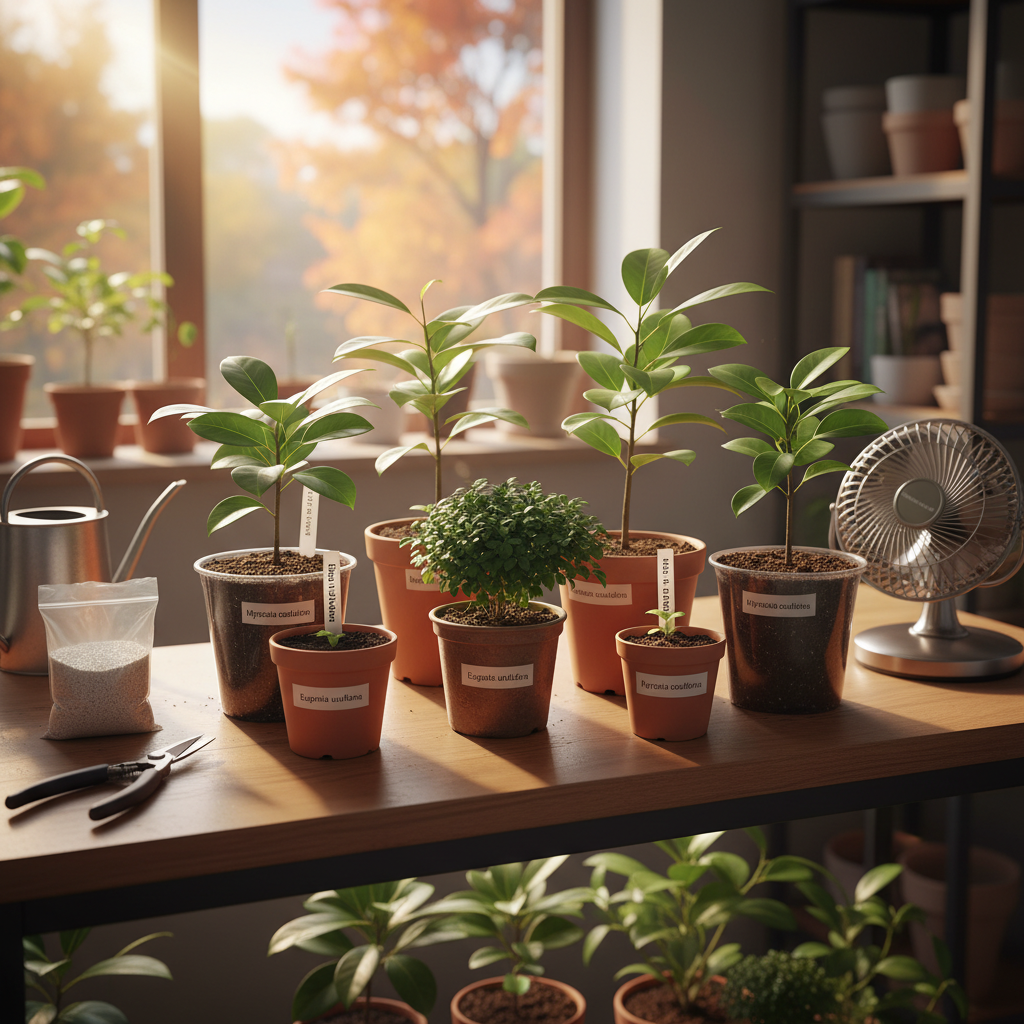
If you’ve sprouted a handful of seeds and discovered that one Myrciaria cuspidata looks nothing like its siblings—smaller leaves, denser growth, a wild “head of hair”—you’re not alone. Seedling variation is normal in this jabuticaba-relative, and with the right care you can turn those differences into an advantage.
As we head into late fall 2025, many growers in cooler climates are moving tropical fruit trees indoors. That seasonal shift magnifies what your plants are already telling you: growth habit and leaf size reflect genetics, microclimate, and nutrition. In this guide, we’ll unpack what those signals mean and how to dial in care—so your Myrciaria and Eugenia seedlings thrive through winter and explode in spring.
You’ll learn why siblings from the same seed batch can look so different, how to optimize light, water, soil, and humidity, and when to prune, graft, or simply observe. We’ll finish with a practical troubleshooting checklist you can use today.
Meet the plant family: Myrciaria cuspidata and Eugenia cousins
Myrciaria cuspidata sits in the Myrtaceae family alongside famous cauliflorous and berry-bearing relatives. For growers, it’s best approached like a jabuticaba cousin: steady moisture, acidic, well-draining media, and patient, observation-first horticulture. Eugenia species—like Surinam cherry, cherry of the Rio Grande, grumichama, and uvaia—share many cultural needs and respond similarly to seasonal changes.
Not all siblings look alike—and in tropical fruit seedlings, that’s a feature, not a flaw.
Why this matters now: November’s shorter days and cooler nights can compress internodes, intensify leaf color, and slow overall growth. Those changes can exaggerate natural differences between seedlings. Recognizing what’s genetic versus environmental helps you make smarter care decisions.
What that “head of hair” really means
A dense flush of small, tender leaves often signals a healthy push of new growth, not a problem. New flushes in Myrtaceae tend to emerge soft and compact; leaf size typically increases as tissue hardens. If the plant remains vigorous, internodes are tight, and color is rich, small leaves can simply be an early growth-stage trait—or a desirable compact phenotype worth keeping.
Why seedling variability happens (and how to use it)
Even from the same fruit, seed-grown Myrciaria cuspidata are genetically unique. Environmental micro-differences then amplify those traits.
- Genetics: Sexual reproduction reshuffles traits, so leaf size, internode spacing, and vigor will vary.
- Microclimate: One pot gets slightly more light or airflow; another dries faster. Over time, these small differences compound.
- Root development: Early taproot success can set the pace for months, influencing leaf size and branching.
- Nutrition and pH: Myrtaceae are sensitive to high pH; micronutrient lockout can present as small, pale, or distorted leaves.
Turn variation into selection
Use your seedling batch as a living trial garden.
- Tag and track: Label each plant and log monthly notes on leaf size, internodes, flush frequency, and color.
- Favor the compact doers: Dense branching and tight internodes are ideal for container culture.
- Keep a diverse bench: Give outliers at least one full growth season; juvenile traits can normalize.
- Propagate the winners: Once a seedling shows consistently superior traits, consider cloning or grafting to capture them.
Practical care for Myrciaria and Eugenia: the dial-in checklist
Healthy, consistent culture will let the genetics shine—and reveal true keeper plants.
Light
- Young plants: Bright, indirect light or gentle morning sun; avoid harsh midday beams on tender flushes.
- Indoors (winter): 12–14 hours under full-spectrum LEDs at moderate intensity. Aim to light leaves evenly to prevent stretching.
- Signal to watch: Leaves that stay very small and thick under high light may be expressing a compact, sun-acclimated habit; very large, thin leaves often indicate insufficient light.
Water and humidity
- Moisture: Keep evenly moist but never waterlogged. Myrtaceae dislike dry-down to dust or soggy roots.
- Humidity: 50–70% supports clean flushes and reduces edge crisping on new leaves.
- Winter shift: With lower transpiration, reduce watering frequency while keeping the root ball uniformly damp.
Soil and pH
- Mix: A chunky, acidic, fast-draining media works best—think fine pine bark or other aged bark, coarse perlite or pumice, plus peat or coir for moisture retention.
- pH target: Slightly acidic, roughly 5.5–6.5. Above that, iron and manganese uptake declines.
- Refresh cadence: Repot or top-dress annually to maintain structure and prevent compaction.
Nutrition
- Baseline: Use a gentle, balanced, slow-release fertilizer plus periodic low-dose liquid feeds.
- Micronutrients: Ensure iron, manganese, and zinc are available; chelated iron can correct emerging chlorosis.
- Rate: Lighter, more frequent feeding beats heavy single doses—especially in containers.
Overwintering in November: protect momentum, not just survival
For many growers, November is move-in month. Myrciaria and most Eugenia seedlings are happiest above cool-room temperatures.
Temperature and airflow
- Targets: 65–75°F (18–24°C) by day; avoid extended dips below 50°F (10°C) for seedlings.
- Air movement: A gentle fan reduces fungal pressure and strengthens stems, but avoid drying gusts on new flushes.
Light management indoors
- Maintain daylength: 12–14 hours keeps metabolism steady.
- Distance: Start lights higher, then lower gradually to avoid scorching fresh flushes.
- Cleanliness: Wipe dust from leaves and fixtures monthly to maximize PAR reaching the canopy.
Pest vigilance
- Common culprits: Mites, thrips, and fungus gnats.
- Prevention: Quarantine new arrivals, use yellow sticky cards, bottom-water occasionally to discourage gnats, and prune tight congestion where pests hide.
Training, pruning, and grafting: shaping for containers
Myrciaria and many Eugenia species adapt beautifully to container culture with thoughtful structure.
Structure choices
- Multi-stem vase: Encourages cauliflorous-style fruiting access and balances vigor in small spaces.
- Central leader: Good for tight footprints; prune for lateral branching at set heights.
Pruning principles
- Timing: Prune lightly right after a flush hardens. Avoid heavy cuts before winter, when recovery is slow.
- Goals: Improve light penetration, reduce pest harborage, and encourage strong, well-spaced scaffolds.
Grafting notes
- Use grafting to fix a superior seedling’s traits onto robust rootstocks once compatibility is confirmed within the same genus.
- Keep expectations realistic: Grafting can standardize vigor and canopy form, but juvenile period and fruiting timelines still vary.
Troubleshooting small leaves and “odd” growth
One seedling from your batch has leaves half the size of its siblings—what now? Diagnose before you intervene.
Quick diagnostic flow
- Environment: Is the compact plant in brighter light or higher airflow? That can naturally shrink and thicken leaves.
- Pot and roots: Is it root-bound or in a smaller container? Up-potting can increase leaf size and internodes.
- pH and nutrients: Check for subtle chlorosis. If present, adjust pH downward and supply chelated iron/manganese.
- Pests: Inspect undersides with a loupe for mites or thrips. Distortion or stippling suggests intervention.
Actionable fixes
- Equalize conditions: Rotate positions so each seedling gets comparable light and airflow for two weeks.
- Water rhythm: Switch to smaller, more frequent irrigations to maintain even moisture without saturation.
- Feed smart: Apply a mild balanced feed plus a micronutrient supplement. Reassess in 10–14 days.
- Record results: Note changes in leaf size and color on the next flush—decisions follow data.
When small leaves are a plus
If the plant is vigorous with tight internodes and clean color, you may be looking at a naturally compact keeper—gold for indoor growers. Tag it, observe through winter, and reassess in spring before making selection or propagation decisions.
A simple case study you can copy
- Starting point: Five Myrciaria cuspidata seedlings from one seed batch.
- Observation: One plant shows half-size leaves and a dense “head of hair.”
- Intervention: Up-pot that seedling, move it 20–30% farther from the light than its lankier siblings, and add a gentle micronutrient drench.
- Outcome to watch: If leaf size modestly increases while compact habit remains, you’ve likely found a container-friendly phenotype worth keeping or propagating later.
Conclusion: grow smarter, not harder
Seed-grown Myrciaria cuspidata will surprise you—and that’s the point. With a steady hand on light, water, soil, and nutrition, you can separate transient environmental effects from valuable genetic traits and make confident keeper calls.
If you’d like a quick win, start a simple seedling tracker today and standardize your winter conditions. Want help choosing cultivars and dialing in a substrate? Request our Tropical Myrtaceae Starter Checklist to shorten your learning curve. What variation are you seeing in your seedlings right now—and which one looks like your future standout?