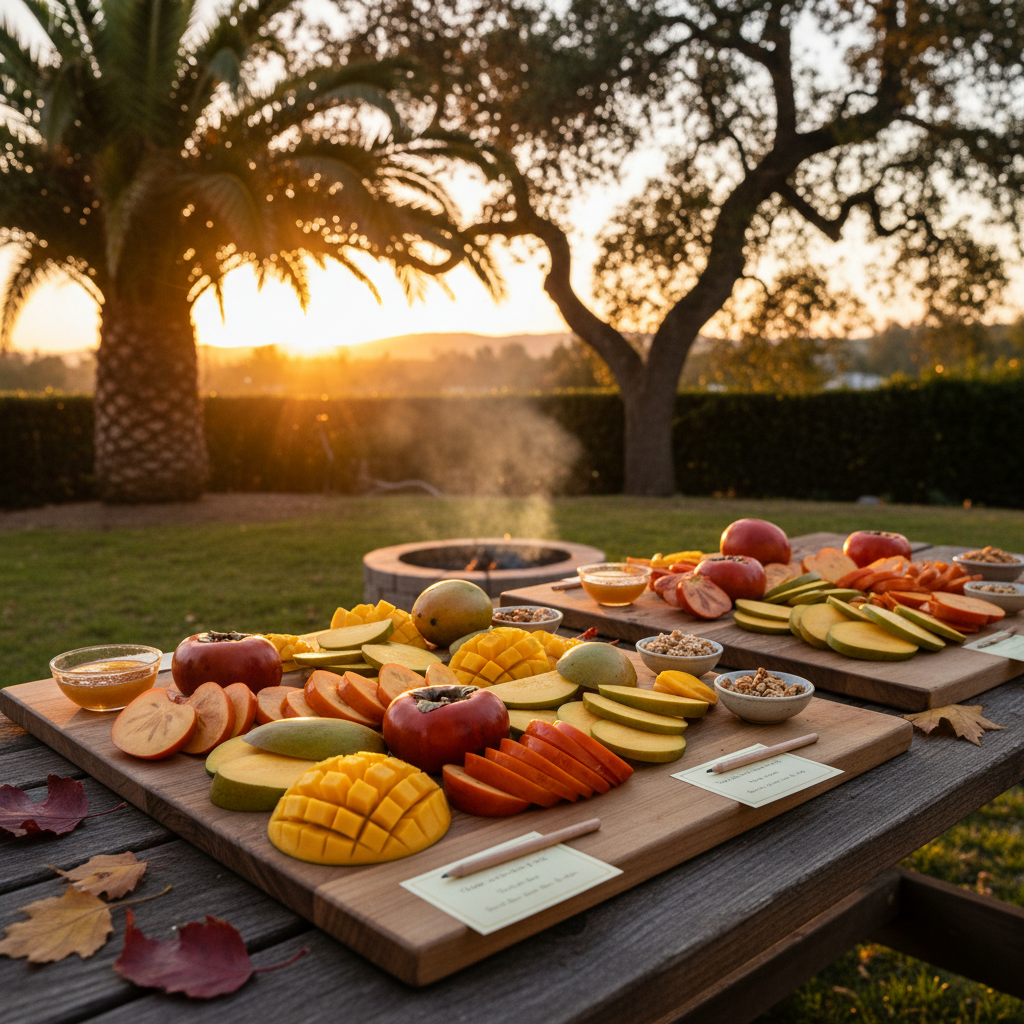
Why a Persimmon and Mango Taste Test Now
Southern California is entering peak persimmon season right as late-season mangoes taper off and imported varieties reappear—perfect timing for a persimmon and mango taste test. Whether you’re curating a Friendsgiving board, hosting a holiday open house, or building a tropical fruit club in your neighborhood, a side-by-side tasting helps you discover what you truly love and how to serve it best.This guide gives you a professional, at-home framework to compare flavors, textures, and ripeness across popular persimmon and mango varieties. You’ll learn how to pick fruit like a pro, set up a scoring system, and turn your findings into crowd-pleasing dishes for fall and winter gatherings. By the end, you’ll have everything needed to run a memorable persimmon and mango taste test—and impress your guests with smart pairings and seasonal recipes.
Persimmon and Mango Varieties You’ll Find in SoCal
Southern California’s microclimates and excellent markets mean great access to both homegrown and imported fruit. Here’s what you’re most likely to encounter this time of year.Persimmons: crisp to custardy
- Fuyu (non-astringent): Pumpkin-shaped, eaten firm like an apple or slightly soft. Flavor is honeyed, mild, and floral with a pleasant snap when firm.
- Hachiya (astringent): Acorn-shaped and inedible until jelly-soft. Fully ripe Hachiya delivers a spoonable, custard-like texture with intense honeyed apricot and date notes.
- Chocolate/Maru (pollination-variant): Can be astringent when unpollinated; when properly pollinated, the flesh turns brown and tastes of cocoa, maple, and spice. Best slightly soft.
- Saijo (astringent, smaller): Exceptionally sweet when soft, with delicate perfume and thin skin—lovely for spooning straight from the fruit.
Mangoes: late-season and imports
- Keitt (often late-season California, then imports): Large, mostly green even when ripe. Smooth, low fiber. Flavor is sweet-lime with melon and gentle tropical notes.
- Kent (imports in winter): Buttery, low fiber with rich, balanced sweetness and subtle pineapple accents.
- Ataulfo/Honey (imports): Curvy shape with golden skin, velvety flesh, and creamy texture. Notes of vanilla, mango nectar, and citrus.
- Home grower favorites (SoCal gardens): Nam Dok Mai, Valencia Pride, and Glenn can show up at local swaps; expect varied textures and perfumed aromas.
Pro tip: For a true comparison, include at least two persimmon and two mango varieties at different ripeness levels—firm, ready-to-eat, and very soft.
How to Run a Pro-Level Fruit Tasting at Home
A great tasting is equal parts sourcing, setup, and simple scoring.Sourcing and ripeness cues
- Fuyu: Choose bright orange fruit with a glossy skin. For a crisp bite, pick firm. For deeper sweetness, allow to soften slightly at room temperature.
- Hachiya: Only eat when they yield completely and feel like a water balloon—no shortcuts. Any firmness means lingering astringency.
- Keitt/Kent: Judge ripeness by gentle give at the shoulders and a sweet, fruity aroma at the stem end. Keitt can stay green when ripe.
- Ataulfo: Skin turns deep yellow with slight wrinkles when perfectly ripe; should yield softly to pressure.
Mise en place and slicing
- Wash and dry all fruit. For persimmons, trim the calyx. Slice Fuyu into thin rounds or wedges; scoop Hachiya like pudding.
- For mangoes, slice cheeks along the pit, score in a crosshatch, and invert; or peel first for cleaner cubes.
- Offer neutral palate cleansers: water, plain crackers, and cucumber slices.
Create a simple scoring card
Score each sample 1–5 (low to high) in these categories:- Aroma (intensity and pleasantness)
- Sweetness (perceived sugar, balance)
- Acidity (brightness, refreshment)
- Texture (crisp, juicy, creamy, or fibrous)
- Overall appeal (would you buy again?)
Add a notes field for descriptors like “honeyed,” “floral,” “vanilla,” “date-like,” “lime zest,” or “spicy cocoa.” Tasting with eyes closed can help focus on aroma and texture.
Safety and inclusivity
- Label samples for those avoiding latex-like proteins (some people with latex sensitivity react to mango sap/skin). Peel mangoes fully if unsure.
- Use separate knives for astringent and non-astringent persimmons to avoid transferring tannic residues.
Flavor Science: What You’re Actually Tasting
Understanding the “why” behind flavors helps you buy and serve fruit at its best.Sweetness and Brix
What your tongue perceives as sweetness generally tracks with dissolved sugars (Brix). Late-season Keitt and fully soft Hachiya often measure high in Brix, translating to jammy sweetness. Firm Fuyu feels less sweet but can taste brighter due to lower water content and crisp texture.Astringency and tannins
Unripe Hachiya contains tannins that cause mouth-puckering dryness. As the fruit ripens, enzymes reduce tannins, turning the flesh into a smooth, jelly-like dessert. If you accidentally cut a Hachiya too early, let it continue to ripen at room temp in a paper bag until completely soft.Aroma compounds and texture
- Persimmon aromatics lean honeyed, floral, and date-like; pollination-variant types add cocoa/maple complexity.
- Mango aromatics span tropical nectar, citrus zest, and melon. Low-fiber types (Keitt, Kent) read creamier and cleaner; Ataulfo brings a custardy silkiness.
Pairings and Menus That Win Holiday Tables
Turn tasting notes into dishes your guests will remember.Bright and fresh
- Fuyu Carpaccio: Paper-thin Fuyu rounds, olive oil, lime zest, sea salt, and shaved manchego.
- Mango-Citrus Salad: Keitt or Kent cubes with grapefruit segments, mint, and a pinch of chili-lime seasoning.
Cozy and comforting
- Hachiya Spoon Dessert: Scoop into bowls with Greek yogurt, honey, and toasted pecans.
- Persimmon Baked Oat Crumble: Layer soft Hachiya puree under an oat, cinnamon, and almond topping.
Savory with a twist
- Mango-Persimmon Salsa: Diced Fuyu and Kent with red onion, cilantro, jalapeño, and lime—serve over roasted salmon or tacos.
- Charcuterie Upgrade: Pair Fuyu with prosciutto and aged gouda; pair Ataulfo with burrata and basil.
Beverage ideas
- Zero-Proof: Sparkling water with muddled mint and a squeeze of Ataulfo, topped with crushed ice.
- Entertaining: Light white or pét-nat with Fuyu; late-harvest riesling with Hachiya; keep mango pairings crisp and citrusy.
Buyer’s Guide and Storage Tips (Reduce Waste)
Make your tasting budget work harder with smart shopping and storage.At the market
- Weight and feel: Heavier fruit usually means juicier. Avoid bruises and splits.
- Seasonality: In November, expect abundant local persimmons; mangoes may be late-season Keitt or imports—ask vendors which.
- Purpose-driven buying: Choose firm Fuyu for slicing boards; choose deeply soft Hachiya for desserts.
At home
- Counter vs. fridge: Ripen both persimmons and mangoes on the counter; refrigerate only when they reach desired ripeness to slow softening.
- Bag trick: A paper bag with a ripe banana speeds ripening. Check daily to avoid overripening.
- Cut fruit: Store in airtight containers with a squeeze of citrus to preserve color. Eat within 2–3 days.
- Freezing: Mango cubes freeze beautifully for smoothies. Persimmon pulp (especially Hachiya) freezes well for baking and sauces.
Host a Taste Test: Step-by-Step
Use this blueprint for a seamless event that’s equal parts educational and fun.- Choose 4–6 fruits total: at least two persimmon and two mango varieties.
- Stage ripeness: firm, ready-to-eat, very soft (where appropriate).
- Prep a tasting board: label samples A–F to prevent bias.
- Provide scorecards and pencils; set a 2–3 minute window per sample.
- Discuss results: vote on winners by category (sweetest, most aromatic, best texture, best overall).
- Serve a signature board: mix your winners with cheeses, nuts, and breads.
- Send guests home with recipe cards or a seasonal buying checklist.
If you’re gathering data for a club or shop, tally scores and note the top three crowd-pleasers. Repeat mid-winter to compare imported mangoes against late-season persimmons.
Turning Insights Into Action (For Buyers and Hosts)
- For markets and clubs: Stock more of your top-scoring varieties and provide simple ripeness signage. Offer sample spoons for Hachiya and pulp-forward mangoes.
- For home hosts: Pre-slice Fuyu and chill lightly; let Hachiya sit at room temp before serving for maximum aroma.
- For meal prep: Freeze leftover mango cubes and Hachiya pulp in half-cup portions to streamline smoothies and baking.
Ready to lead your own persimmon and mango taste test? Request our free Tropical Fruit Tasting Scorecard and a seasonal SoCal buying calendar to make planning effortless.
Conclusion: Make This Season Your Sweet Spot
A well-run persimmon and mango taste test turns fall and early winter into a flavorful adventure—right on time for holiday entertaining in Southern California. By choosing the right varieties, dialing in ripeness, and using a simple scoring method, you’ll pinpoint the profiles you love and serve them with confidence.Host your tasting this week, capture scores, and build a signature board for your next gathering. To get started fast, ask for our free scorecard and buying calendar—and tag your results from your persimmon and mango taste test so others can learn from your picks.