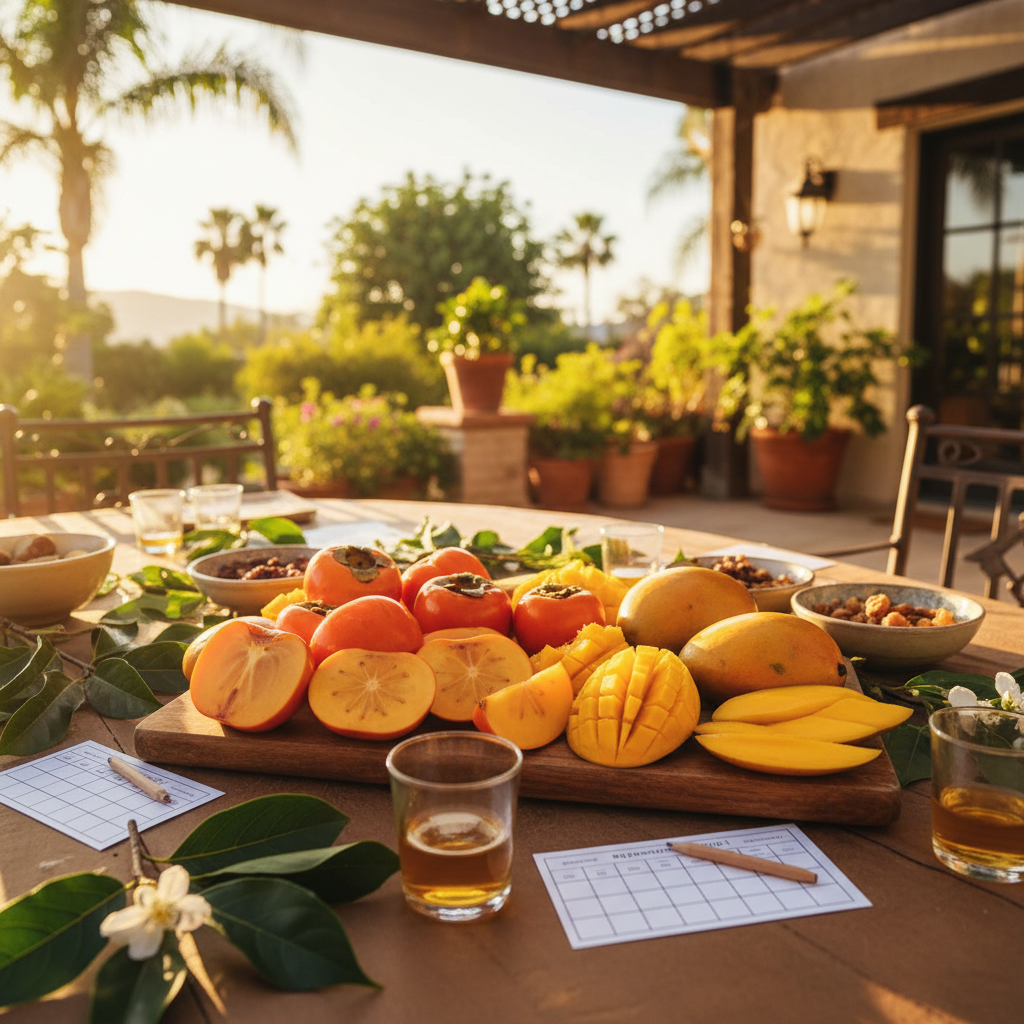
As late fall settles over Southern California, farm stands brim with flame-orange persimmons while markets stock honeyed, imported mangos. If you’ve ever wondered which fruit truly shines at your holiday table, a persimmon and mango taste test turns curiosity into a delicious, data-driven celebration. It’s seasonal, social, and surprisingly insightful.
In this guide, you’ll learn how to choose the right varieties, ripen them to peak sweetness, and run a fair, repeatable tasting at home. You’ll also get pairing ideas for gatherings—from Friendsgiving to New Year’s—plus buying tips tailored to SoCal shoppers. Whether you’re team mango or team persimmon, you’ll end the night with clear favorites and new ways to serve them.
Why a Persimmon and Mango Taste Test Belongs on Your Fall Table
Southern California’s market mix in November is unique: local persimmons are at their peak, while premium mangos arrive from late-season and Southern Hemisphere sources. Bringing both fruits into the same tasting flight highlights how texture, aroma, and sweetness evolve across climates and cultivars.
- Conversation starter: Comparing crisp, spice-kissed Fuyu or custardy Hachiya with silky, tropical mangos creates instant buzz.
- Health-forward dessert: Both fruits deliver natural sweetness with fiber and phytonutrients—no heavy baking required.
- Seasonal flexibility: Persimmons are local and abundant now; mangos add a sunny, tropical counterpoint when days get shorter.
Nutrition snapshot (typical ranges):
- Persimmon: rich in fiber, vitamin A (beta-carotene), and manganese.
- Mango: excellent vitamin C, vitamin A precursors, and polyphenols like mangiferin.
The upshot: Your tasting doubles as a colorful centerpiece and a lighter, nutrient-forward course.
Meet the Varieties: Fuyu, Hachiya, and SoCal-Friendly Mangos
Persimmons to include
- Fuyu (non-astringent): Eaten when firm-ripe to slightly soft. Flavor: honeyed apple, brown sugar, cinnamon notes. Typical sweetness: often 14–18 °Brix when prime.
- Hachiya (astringent): Must be jelly-soft before eating. Flavor: date, apricot jam, custard-like texture. Typical sweetness: 16–20+ °Brix at peak.
- Optional wildcards: Chocolate/Maru (brown-fleshed) with cocoa-caramel notes when pollinated; Giant Fuyu for a larger, ultra-juicy slice.
Mangos available in late fall for SoCal
Depending on supply, you’ll most commonly see:- Kent (often from Peru late fall–winter): Low fiber, juicy, mellow tropical flavor with vanilla-pine nuance. Typical sweetness: 14–18 °Brix.
- Palmer or Tommy Atkins (often Brazil): Palmer skews cleaner and less fibrous than Tommy; Tommy is durable but can be firmer and milder. Typical sweetness: 12–16 °Brix.
- Keitt (occasionally late-season): Large, green-skinned even when ripe; low fiber, refreshing acidity. Typical sweetness: 12–16 °Brix.
Note: Brix ranges reflect typical retail experiences; actual sweetness varies by farm, season, handling, and ripeness.
Ripeness, Prep, and Presentation for a Fair Test
A great persimmon and mango taste test starts with ripeness. Underripe fruit favors texture over flavor; overripe fruit muddies aroma and balance.
How to judge ripeness
- Fuyu: Deep orange, glossy skin. Firm-ripe with a slight give at the shoulders. Avoid significant green patches.
- Hachiya: Wait until it’s jelly-soft and almost translucent under the skin. If it’s still firm, astringency will overwhelm the tasting.
- Mango (all varieties): Fragrance at the stem end and a gentle give when pressed near the shoulder. Color varies by cultivar; don’t rely on blush.
Speed up ripening
- Room temperature on the counter; nest fruit in a paper bag with an apple or banana to add ethylene.
- Refrigerate only after ripe to hold peak for 1–3 days (persimmons can hold slightly longer when uncut).
Prep for tasting
- Wash and dry all fruit. Bring to cool room temperature (not cold) for fullest aroma.
- Fuyu: Trim leaf cap, slice into thin rounds or wedges.
- Hachiya: Halve and spoon into small tasting cups, or freeze 1–2 hours for a semifreddo texture.
- Mango: Slice off the cheeks, score into cubes, or slice lengthwise for clean, uniform pieces.
- Plate each variety on separate sections or boards. Label discreetly (A, B, C) to reduce bias during blind tastings.
A Step-by-Step Tasting Method (With Scorecard)
What you’ll need
- 3–5 varieties total (e.g., Fuyu, Hachiya, Kent, Tommy Atkins)
- Small plates or cups, tasting forks/spoons
- Palate cleansers: sparkling water, plain crackers, or cucumber slices
- Napkins and a simple scorecard
The method
- Blind first pass: Taste each sample without knowing the variety. Note first impressions.
- Second pass (revealed): Re-taste with variety names. Add detail to your notes.
- Score on five factors (0–5 each):
- Discuss as a group: Which fruit excels as a snack, in salads, or in dessert?
Flavor cues to listen for
- Fuyu: Brown sugar, pear, baking spice; best when crisp-tender with juice.
- Hachiya: Persimmon pudding vibes—date, apricot jam, vanilla custard.
- Kent mango: Silky, low fiber, tropical-vanilla with gentle acidity.
- Tommy Atkins/Palmer: Clean, sometimes firmer; great chilled in salsas.
- Keitt: Refreshing, citrusy lift, especially good in savory dishes.
Common pitfalls (and fixes)
- Hachiya still firm? Let it ripen further or freeze-thaw to reduce astringency.
- Mango tastes flat? Give it another day on the counter; aroma should intensify.
- Samples too cold? Allow 15–20 minutes at room temp to open aromas.
Pro tip: If you’re hosting for the holidays, prep a small “calibration” bite everyone tastes first—something neutral-sweet like sliced Bartlett pear—to align palates.
Pairings, Menus, and Buying Tips in Southern California
Pairing ideas that shine
- Cheese: Burrata or fresh chèvre with Fuyu; mascarpone or vanilla yogurt with Hachiya; salty cotija with Keitt.
- Spice & herbs: Chile-lime and Tajín for mango; cardamom and nutmeg for Hachiya; mint or basil for both.
- Textures: Toasted pistachios or almonds; cocoa nibs for crunch.
- Beverages: Sparkling water with a citrus twist, lightly sweet Riesling, or chilled jasmine tea.
Menu applications
- Appetizer board: Fuyu slices, mango spears, soft cheeses, prosciutto, and spiced nuts.
- Salad: Fuyu, arugula, shaved fennel, and lemon-honey vinaigrette.
- Dessert: Hachiya semifreddo cups with crushed amaretti; mango-lime sorbet with mint.
- Savory: Mango-avocado salsa over grilled shrimp; Fuyu and burrata crostini with balsamic glaze.
Buying smart in SoCal
- Seasonality: Persimmons (Sept–Dec locally); late fall mangos often from Peru/Brazil. Choose fruit that feels heavy for its size.
- Visuals: Small skin blemishes are fine; avoid deep bruises or shriveled shoulders.
- Storage: Counter-ripen; refrigerate only when ripe. Keep cut fruit covered and chilled; eat within 24–48 hours for best texture.
- Budget: Mix premium (Kent/Keitt) with value options (Tommy Atkins). For persimmons, consider a farmers market flat to save on per-fruit cost.
If you’re shopping for a group, buy a few extra pieces at different ripeness stages so at least one hits peak on tasting day.
Bringing it all together: a persimmon and mango taste test is equal parts fun and practical. You’ll discover which fruits to buy again, how to serve them, and how ripeness transforms flavor. Ready to host yours? Request our free printable tasting scorecard and variety cheat sheet to guide your next persimmon and mango taste test—and join our seasonal fruit list for SoCal sourcing updates and new pairing ideas.
As you prep for holiday gatherings, let this persimmon and mango taste test be your centerpiece. May your plates be colorful, your notes insightful, and your favorites undeniable.