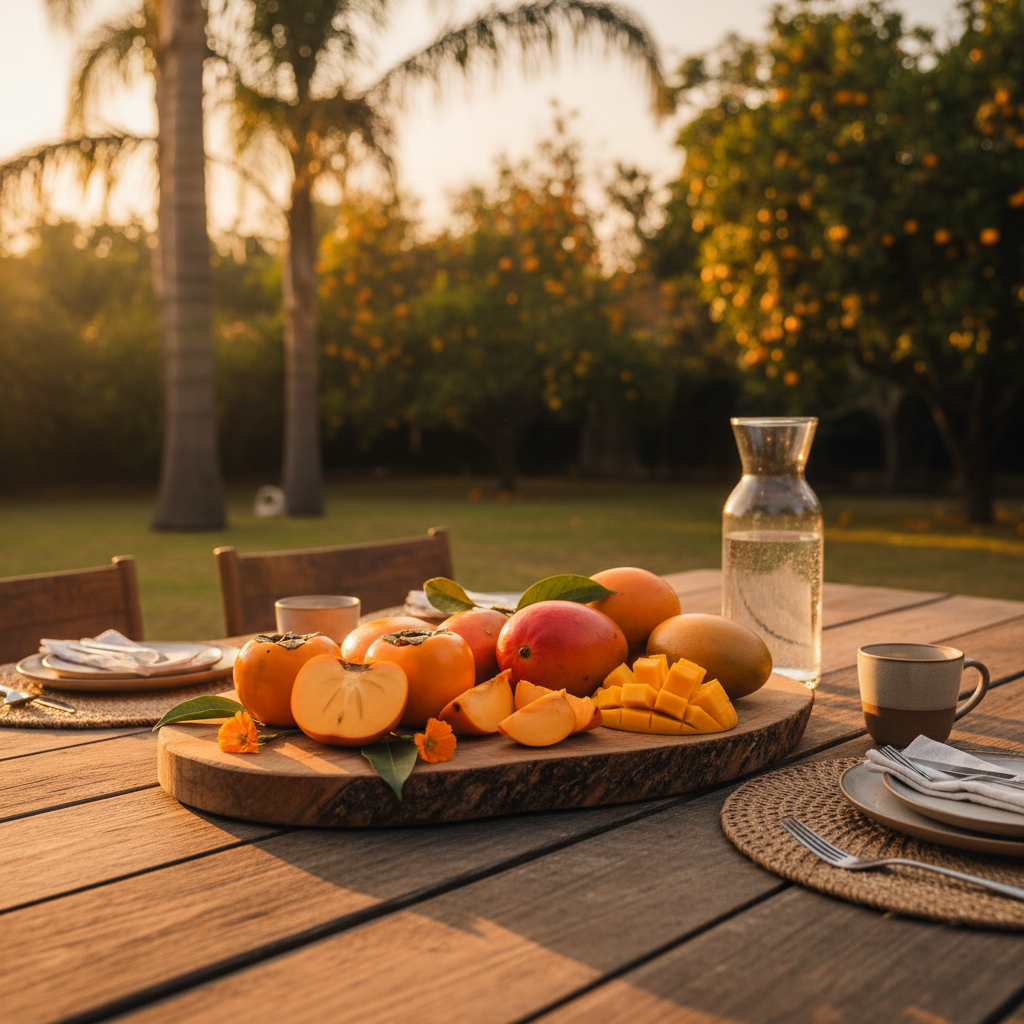
Autumn in Southern California brings a unique crossover moment: peak persimmon season meets the tail end of local mango harvests and a steady stream of imports. It’s the perfect time to host a persimmon and mango taste test, and this year a new name entered the chat—Kumamoto persimmon—a backyard selection that’s turning heads for its balance of sweetness and texture.
In this guide, we’ll walk you through how to run a professional-feeling persimmon and mango taste test at home, what to look for in flavor and texture, how to buy and store fruit for holiday menus, and what it takes to grow both trees successfully in SoCal. Whether you’re a culinary creative, a market shopper, or a backyard grower, this persimmon and mango taste test will sharpen your palate and your seasonal planning.
Meet the contenders: Kumamoto vs mango
The newly named Kumamoto persimmon has the kind of story fruit lovers adore: a SoCal-grown selection, shared within a community, and now earning its own identity. While details of its parentage are private, you can evaluate it by the same framework used for well-known persimmons like Fuyu (non-astringent, crisp when firm) and Hachiya (astringent until fully soft, custardy when ripe).
- Non-astringent types (e.g., Fuyu) are enjoyable when still firm, with a honeyed, cinnamon-apple vibe.
- Astringent types (e.g., Hachiya) must soften completely; ripe fruit becomes jelly-like with rich date and apricot notes.
If you’re unsure which camp Kumamoto falls into, use the simple test: taste a tiny slice while still firm. If there’s mouth-drying astringency, let it soften fully before sampling again. Either way, expect aroma intensity, peel thickness, seed presence, and Brix (perceived sweetness) to define the experience.
On the mango side, late fall in SoCal often features the last of local Keitt (large, low-fiber, bright-citrus profile) alongside imported options like Ataulfo/Honey (buttery, tropical) and Tommy Atkins (firmer texture, moderate sweetness). Mango sweetness typically lands in the mid-teens to low 20s Brix when properly ripened; persimmons commonly hit the mid-teens, with astringent types tasting even richer once fully soft.
What to expect from the lineup
- Kumamoto (early impressions): balanced sweetness, a clean finish, and a texture that holds up in slices—ideal for salads and cheese boards if non-astringent; lush and spoonable if astringent and fully ripe.
- Keitt mango: juicy, low fiber, citrus-green undertone with pear and melon notes.
- Ataulfo mango: ultra-creamy, deeply tropical, often the sweetest of the group when perfectly ripe.
How to run a persimmon and mango taste test
A structured tasting turns a simple snack into a learning experience you’ll reference all season long.
Step 1: Select fruit and confirm ripeness
- Persimmons: For non-astringent types, choose fruit with full color and a slight give; for astringent types, wait until the fruit is jelly-soft all the way through. Avoid cracked calyxes or deep bruises.
- Mangoes: Pick fruit that smells fragrant at the stem end and yields slightly to pressure around the cheeks. Color is variety-dependent; rely on aroma and gentle give.
- Quantity: Plan on 3–5 varieties total. Include at least one non-astringent and one astringent persimmon (if available), plus 1–2 mango types.
Step 2: Set up a simple scoring sheet
Score each fruit on a 1–5 scale for:- Appearance (color, uniformity)
- Aroma (intensity, attractiveness)
- Texture (crisp vs. creamy, fiber, juiciness)
- Sweetness/Acidity balance
- Flavor length/complexity (how long the taste lingers)
Pro tip: If you have a handheld refractometer, note a Brix reading for fun comparison. Not essential, but it adds a data point to your impressions.
Step 3: Taste thoughtfully
- Start with milder flavors (firm non-astringent persimmons) and move toward richer, softer fruit (fully ripe astringent persimmons, then mangoes).
- Rinse palate with plain water and neutral crackers between samples.
- Record notes immediately—first impressions fade fast.
Flavor notes and texture: what to expect
Flavor is more than sweetness. The interplay between aroma compounds, acidity, and texture dictates how a fruit reads on the palate and how it performs in recipes.
Persimmon profiles
- Non-astringent style (e.g., Fuyu-like): crisp bite, subtle spice (cinnamon/nutmeg), honeyed sweetness, thin skin, seedless or few seeds. Excels in salads, crostini, and carpaccio-style slices.
- Astringent style (e.g., Hachiya-like): fully soft custard texture, dates and dried apricot notes, jammy sweetness. Perfect for baking, puddings, and spoon desserts.
Where might Kumamoto land? Early tastings suggest an emphasis on clarity and balance. If your sample holds slice integrity when gently pressed and shows sweetness without puckering, treat it as non-astringent and leverage its structure in raw applications. If it slumps softly and perfumes the room, embrace its dessert potential.
Mango profiles
- Keitt: light acidity keeps it refreshing; green-lime zest and melon tones, minimal fiber—great for clean cubes and sashimi-style pairings.
- Ataulfo: velvet texture with potent tropical aromatics (pineapple, vanilla), highly spoonable; ideal for purees, lassis, and quick sauces.
- Tommy Atkins: firmer, slightly more fibrous; holds shape in salsas and grilling.
Pairing insights
- Contrast crisp persimmon with creamy cheeses (burrata, chèvre) to create balance.
- Match rich, soft persimmon with warm spices (cardamom, clove) and toasted nuts.
- Let mango’s acidity brighten fatty dishes (salmon, pork shoulder) or complement heat (chile, ginger).
Buying, storing, and serving for the holidays
As gatherings ramp up from Thanksgiving through New Year’s, fruit-forward dishes deliver color and freshness to heavier menus.
Smart buying and storage
- Persimmons: Store firm fruit at cool room temp away from sunlight. To hasten ripening, place in a paper bag with an apple or banana for 1–2 days. Refrigerate ripe, cut fruit in sealed containers for up to 3 days.
- Mangoes: Ripen at room temp until fragrant and slightly yielding; then refrigerate to pause ripening and preserve texture for 3–4 days. Peel just before serving to avoid oxidation.
Easy showstoppers
- Shaved Persimmon Salad: Thinly slice non-astringent persimmon on a mandoline. Dress arugula with lemon, olive oil, and flaky salt. Add persimmon, shaved fennel, pistachios, and chèvre.
- Warm Spiced Persimmon Spoon: For soft, astringent types, fold pulp with a pinch of cardamom, orange zest, and a drizzle of honey. Serve over Greek yogurt or vanilla ice cream.
- Chile-Lime Mango Cups: Toss mango cubes with lime juice, a whisper of salt, and chile powder. Finish with cilantro for a bright appetizer.
- Mango-Persimmon Carpaccio: Alternate thin slices of mango and firm persimmon on a platter; finish with olive oil, lemon, cracked pepper, and shaved aged cheese.
Plating and service tips
- For color contrast, pair orange persimmon with deep greens, pomegranates, or ruby grapefruit.
- Keep textures intentional: crisp next to creamy, juicy next to crunchy.
- Slice right before service to preserve aromatics.
Growing persimmons and mangoes in Southern California
If your taste test sparks the grower’s itch, SoCal’s climate can accommodate both trees with thoughtful placement.
Persimmon basics
- Climate: Persimmons are surprisingly tough, tolerating winter chill and summer heat.
- Site: Full sun, well-drained soil; mulch to retain moisture.
- Water: Deep, infrequent watering once established; avoid standing water.
- Bearing: Many trees produce within 3–5 years; fruit hangs into late fall, making them prime for holiday harvests.
Mango basics
- Climate: Mangoes love heat but dislike frost. Inland valleys with hot summers excel; coastal areas can succeed with reflective warmth and wind protection.
- Site: Full sun, excellent drainage; raised mounds help in heavier soils.
- Protection: Shield young trees from cold snaps; consider frost cloth and south-facing walls.
- Containers: Dwarf/select varieties thrive in large containers where cold can be managed.
Backyard success checklist
- Choose varieties matched to your microclimate.
- Prioritize soil drainage and consistent, deep watering during establishment.
- Use light, frequent pruning to shape canopy and manage size.
- Thin fruit on young trees to strengthen limbs and improve fruit size.
Bringing it all together
A well-run persimmon and mango taste test does more than crown a winner—it teaches you how to select, ripen, serve, and even grow your favorites. The newly named Kumamoto persimmon adds a memorable chapter to SoCal’s fall lineup, offering either crisp, sliceable elegance or custardy decadence depending on its ripeness style.
Ready to host your own tasting or plan a holiday fruit menu? Request our fall tasting checklist, compare your notes with friends and family, and explore planting options tailored to your microclimate. What fruit tops your board this season—and why? Your answers will shape your next orchard addition and your best holiday menu yet.