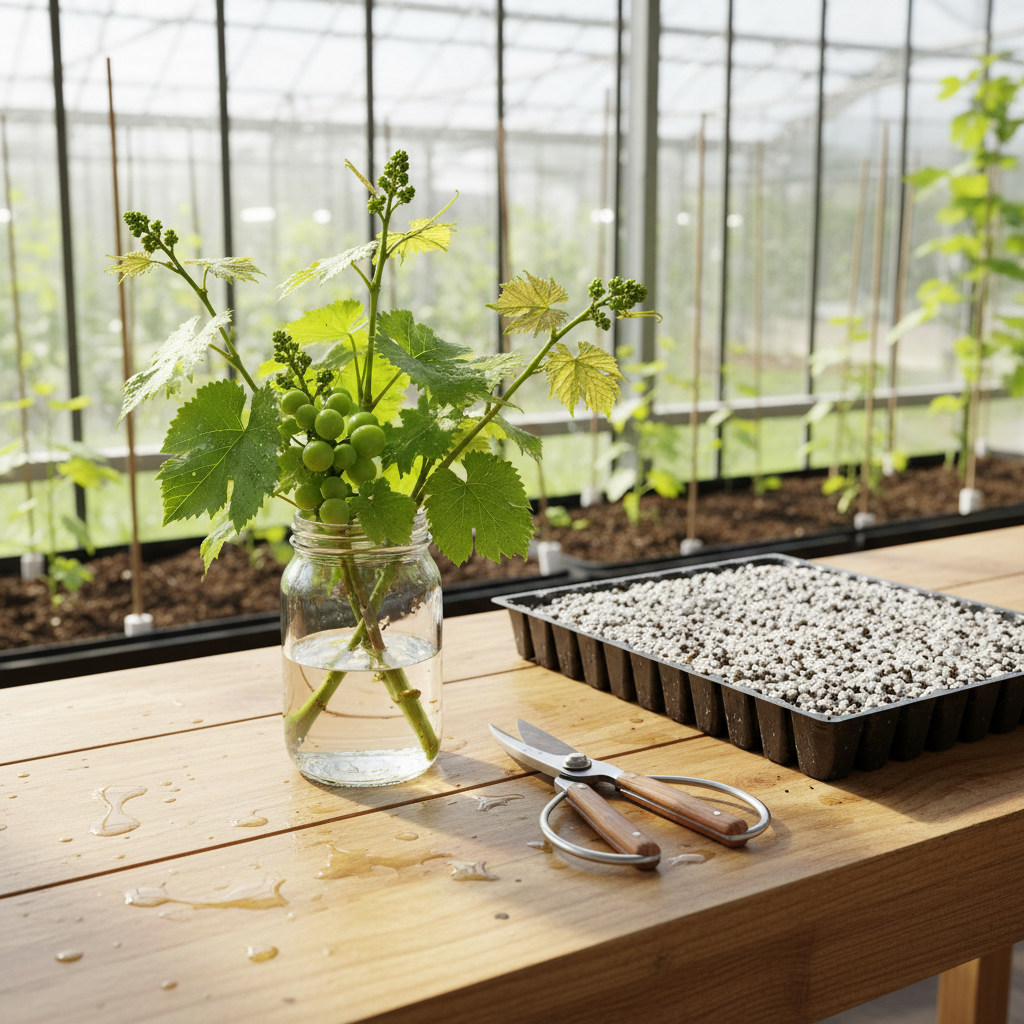
Shine Muscat Cuttings: Grow Premium Grapes at Home
If you’ve been watching late‑season plant swaps and marketplace listings, you’ve likely noticed a surge in Shine Muscat cuttings. That’s no accident—November is prime time to secure dormant wood and start planning next year’s vines. In this guide, we’ll show you how to choose, root, and grow Shine Muscat cuttings so you can enjoy café‑quality, crisp, aromatic grapes at home.
Why the fuss about Shine Muscat cuttings? This Japanese-bred table grape is prized for its perfume-like muscat aroma, crunchy texture, and edible skin—traits that command premium prices at markets and make it a star in home vineyards. With the right cuttings and a clear plan, you can establish vines that pay dividends for years.
Below, you’ll find a practical buyer’s checklist, step‑by‑step rooting methods, care strategies for warm and subtropical climates, and a realistic timeline from dormant stick to your first harvest.
Why Shine Muscat Is Worth Growing
Shine Muscat stands out from typical backyard grapes. It combines dessert‑grade eating quality with a relatively low‑to‑moderate chill requirement, making it suitable for many warm regions and protected patios.
- Flavor and texture: Intense muscat bouquet, high brix potential, crisp bite, and edible skin.
- Visual appeal: Large, uniform clusters with a glossy green hue—great for gifting or specialty sales.
- Home‑grower friendly: Performs well on trellises or in large containers with attentive pruning.
Pro tip: In humid climates, cluster bagging (common in East Asia) helps preserve bloom and minimize blemishes, elevating fruit to gift‑box quality.
Seasonal Advantage in November
Late fall through winter is hardwood cutting season. Dormant wood is easier to ship and store, and it roots reliably with proper handling. If you’re sourcing Shine Muscat cuttings now, you’re right on schedule for spring planting.
How to Buy Quality Shine Muscat Cuttings
Not all cuttings are equal. Use this checklist to maximize take‑rates and ensure true‑to‑type vines.
Buyer’s Checklist
- Bud count: 2‑ to 3‑bud cuttings are ideal for most home setups.
- Length: 20–25 cm (about 8–10 inches) is standard and easy to handle.
- Diameter: Pencil‑thick wood (or slightly thicker) roots and heals well.
- Age of wood: Current season’s mature canes that have fully hardened.
- Sanitation: Clean cuts, no mold, no soft or darkened tissue at nodes.
- Labeling: Clear variety labels per bundle to avoid mix‑ups.
Many community sellers offer mixed bundles of thick and thin pieces at accessible prices per cutting. If you’re choosing among lots, prioritize consistent thickness and plump, intact buds.
Storage on Arrival
- Keep dormant: Refrigerate in a breathable bag with slightly moist paper.
- Avoid desiccation: Don’t let cut ends dry out; reseal after inspection.
- Root or graft within 6–10 weeks for best vigor.
How to Root Shine Muscat Cuttings (Step‑by‑Step)
Shine Muscat roots well from hardwood cuttings with clean technique, steady moisture, and warmth at the callus zone.
Tools and Materials
- Sharp bypass pruners and a clean razor for trimming
- Rooting hormone (powder or gel, auxin-based)
- Well‑draining medium: 1:1 perlite and peat/coir (or coarse sand/perlite)
- Deep cell trays or tall pots (air‑pruning helps)
- Heat mat or warm spot (target warm media, cool air)
- Alcohol or bleach solution for tool sanitation
Preparation
- Recut ends to expose fresh tissue. Make a straight cut just below a node for the basal end.
- Orient correctly: Basal end down, distal end up. Angle the top cut to shed water.
- Dip the basal end in rooting hormone; tap off excess.
Planting and Environment
- Insert cuttings so 1 bud is above the medium and 1–2 buds are buried.
- Firm the medium to ensure node contact; water to settle.
- Provide bottom warmth (around room‑temperature media) while keeping air cool to discourage premature bud break.
- Maintain even moisture—not soggy. A humidity dome can help early on, venting daily.
Callusing and Rooting Timeline
- Weeks 1–3: Callus forms at the basal node; keep media warm and oxygenated.
- Weeks 3–6: Initial rootlets emerge. Avoid tugging; check gently by tipping the pot if needed.
- Weeks 6–10: Buds push; begin gradual light increase and light feeding.
Troubleshooting: Blackened bases often indicate waterlogging or contamination. Refresh the medium, improve drainage, and re‑sanitize tools between batches.
Alternative: Grafting to Rootstock
In disease‑prone soils or heavy, wet conditions, some growers graft scion wood (Shine Muscat) onto vigorous rootstocks. For most home gardens, own‑rooted vines are sufficient, but grafting can add vigor and tolerance where needed.
Growing Shine Muscat in Warm and Subtropical Climates
Shine Muscat isn’t strictly tropical, but it performs well in many warm zones and protected patios with a mild winter. Success hinges on sunlight, airflow, and disciplined canopy work.
Site, Trellis, and Containers
- Sunlight: Aim for 6–8 hours of direct sun.
- Trellis: Single or double‑cordon on a horizontal wire; or a pergola for shade and aesthetics.
- Containers: Use a 25–40 L container with free‑draining mix. Stake early for a straight trunk.
Water and Nutrition
- Water deeply, then allow the top layer to dry slightly; avoid chronic wet feet.
- Feed lightly but consistently during active growth: start with a balanced fertilizer, then tilt toward potassium as clusters size.
- Mulch to stabilize moisture and temperature.
Pruning and Canopy Management
- Winter: Establish a trunk, then choose 1–2 cordons. Retain fruiting spurs with 2–3 buds.
- Spring/Summer: Shoot thinning, leaf removal around clusters for airflow, and tuck shoots along wires.
- Cluster management: Thin to a sustainable crop load; bag clusters in humid regions to reduce pests and disease and to preserve bloom.
Pest and Disease Considerations
- Common issues: Powdery mildew, downy mildew, and sap‑sucking pests.
- Cultural controls: Open canopies, morning sun exposure, and tight irrigation discipline.
- Sprays: Many home growers succeed with sulfur or potassium bicarbonate for powdery mildew and copper or phosphorous acid products as part of an integrated schedule. Always follow local guidelines and labels.
From Cutting to First Harvest: A Realistic Timeline
- Months 0–3: Rooting and early establishment in a pot; gentle fertilization.
- Months 4–9: Train a straight trunk; no fruit this first season. Focus on structure.
- Year 2: Light crop possible if vine vigor is strong; prioritize canopy health over yield.
- Year 3 and beyond: Expect meaningful harvests. With good management, Shine Muscat clusters can reach impressive size and quality.
Note: Commercial growers often use plant growth regulators to achieve jumbo, seedless berries. Home growers can still produce delicious, crisp fruit without them—focus on thinning, nutrition, and consistent care.
Common Mistakes (And How to Avoid Them)
- Overwatering cuttings: Leads to rot. Use airy media and water when the surface begins to dry.
- Planting upside down: Mark the basal end on day one; keep orientation consistent.
- Skipping sanitation: Disinfect tools between batches to prevent cross‑contamination.
- Crowded canopies: Encourage airflow; thin shoots and leaves near clusters.
- Overcropping young vines: Limit fruit in year two so the framework matures.
Your Next Steps
- Source quality, dormant Shine Muscat cuttings with 2–3 buds and pencil‑thick canes.
- Set up a simple propagation station with airy media and gentle bottom warmth.
- Map your trellis or container plan now so rooted plants can transition seamlessly in spring.
Ready to plant your own premium green grapes? If you want updates on availability, bundle options, or guidance for your climate, get in touch to discuss Shine Muscat cuttings and an ideal start date for your region.
In short, Shine Muscat cuttings offer a timely, practical path to café‑grade fruit at home. Begin your propagation this season, build a disciplined canopy next year, and you’ll be tasting that signature muscat perfume before you know it.