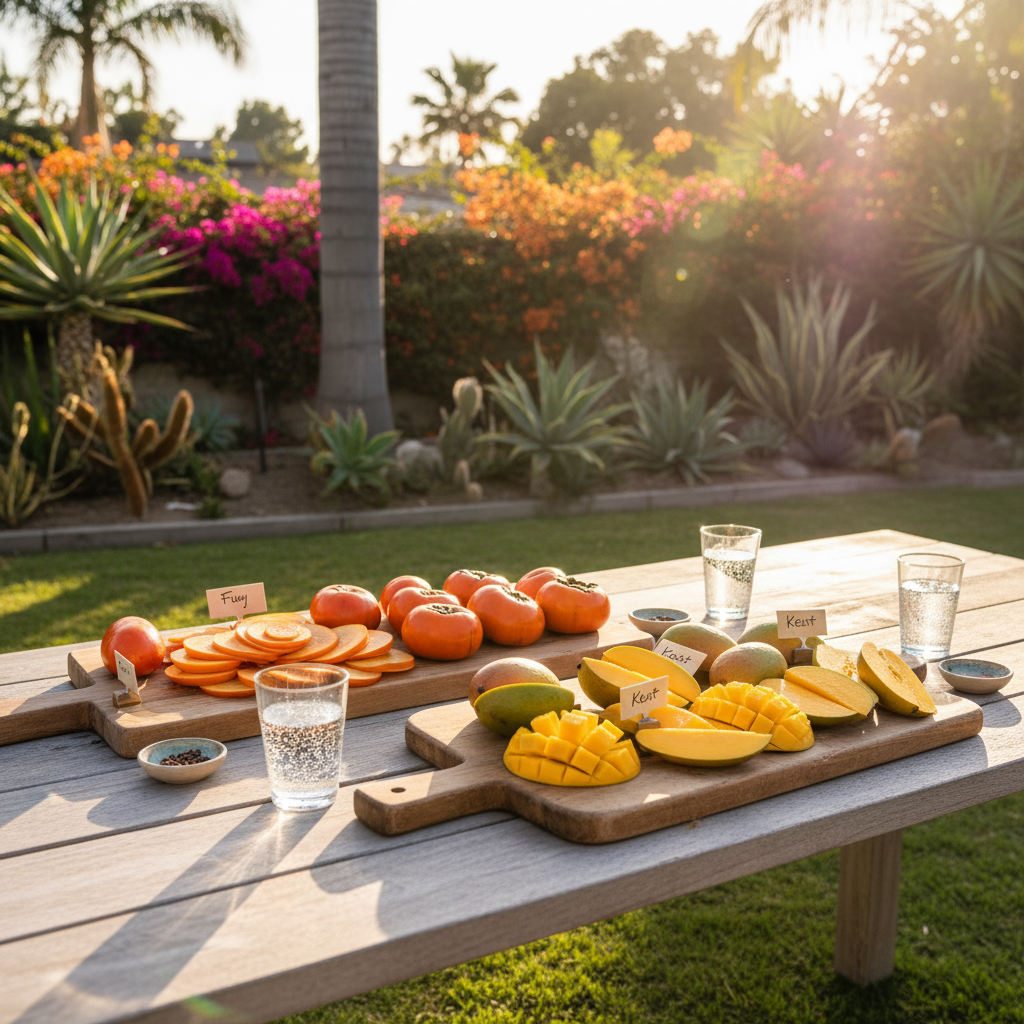
SoCal Persimmon & Mango Taste Test: 2025 Flavor Guide
California fall isn’t just pumpkin spice season—it’s when backyard trees across Southern California light up with persimmons and the last flush of mangoes. If you’ve ever wondered how different varieties stack up, this persimmon and mango taste test is your roadmap to peak-season flavor, right now in November.
Why this matters: the best fruit is often hyper-local and fleeting. In SoCal’s microclimates, late-season mangoes can overlap with prime persimmon harvest, creating a brief but magical tasting window. In this guide, you’ll learn how to set up a proper tasting, how popular varieties compare, and which to buy for fresh eating, baking, and holiday entertaining.
Whether you’re a backyard grower, a market-forager, or a chef planning a holiday menu, you’ll leave with clear notes, practical tips, and a repeatable method for your own persimmon and mango taste test.
Why Fall in SoCal Is a Fruit Sweet Spot
Southern California’s Mediterranean climate—with warm days, cool nights, and bursts of Santa Ana winds—does something special to late-season fruit. Persimmons color up beautifully across October and November, while certain mango cultivars (especially late types and backyard trees in warm pockets) can hang on into November.
- Persimmons peak: non-astringent types like Fuyu and Jiro are crisp and sweet, while astringent types like Hachiya and Saijo turn jammy and honeyed when fully soft.
- Late mango window: Keitt and Kent often carry the late-season baton; in some warm yards, Valencia Pride can linger, too. Backyard picks shared by neighbors are often ripened on-tree, yielding heady aromatics you rarely see in store fruit.
The overlap of crisp persimmons and silky mangoes is a short, delicious season—perfect for side-by-side tasting.
Meet the Varieties: What to Expect Before You Taste
Persimmons (Diospyros kaki)
- Fuyu (non-astringent): Eaten while firm like an apple. Look for deep orange color, mild floral aroma. Flavor profile skews toward brown sugar, pear, and pumpkin spice.
- Jiro / Giant Fuyu (non-astringent): Similar to Fuyu but often larger and slightly denser. Excellent for salads and charcuterie boards.
- Hachiya (astringent): Must be fully soft—think water-balloon soft—before eating. When ready, flesh is custardy with notes of honey, date, and apricot.
- Saijo (astringent): Smaller, elongated fruit. When perfectly soft, it’s intensely sweet with delicate floral and vanilla notes.
- Hyakume / “Coffee Cake” (pollination-variant): When pollinated, can be eaten firm with a unique cinnamon-sugar character; when not, it behaves more like an astringent type. Related types such as Maru (Chocolate) show brown, sweet flesh when well pollinated.
Mangoes (Mangifera indica)
- Keitt (late season): Large, green-skinned even when ripe. Low fiber, balanced sweetness, limey-tropical aroma. A SoCal late-season workhorse.
- Kent (late to mid): Velvety flesh, gentle acidity, often richly aromatic when tree-ripened.
- Valencia Pride (earlier, sometimes lingering): Famous for its perfume and elongated shape; in warm microclimates with generous heat, occasional late fruit can surprise in November.
How to Run a Proper Tasting (At Home or at Your Market)
Set yourself up for success with a simple, repeatable method.
Step 1: Source smart
- Shop farmers markets, neighborhood fruit stands, or swap with backyard growers.
- Choose a range: 3–5 persimmons (mix non-astringent and astringent) and 2–3 mangoes.
- Pick fruit at different ripeness stages so some are ready now and others in a few days.
Step 2: Ripen correctly
- Persimmons: keep non-astringent types at room temp until fully colored; enjoy crisp or slightly yielding. For astringent types, ripen at room temp until jelly-soft. To speed up, store with an apple or banana in a paper bag, or freeze overnight and thaw to reduce astringency.
- Mangoes: ripen at room temp until they yield slightly to gentle pressure and smell fragrant at the stem end. Refrigerate only once ripe.
Step 3: Set the table
- Tools: sharp knife, tasting spoons, palate cleansers (sparkling water, plain crackers), notecards.
- Criteria (score 1–5): aroma, sweetness, acidity/balance, texture/juiciness, finish/complexity. If you have one, a handheld refractometer adds fun Brix data.
- Serve persimmons both ways: crisp slices for Fuyu/Jiro and spoonable pulp for Hachiya/Saijo. For mangoes, slice cheeks, score, and scoop.
Step 4: Capture impressions
Write quick, sensory-first notes: “butterscotch,” “cinnamon,” “lime zest,” “melty,” “snappy,” etc. Circle your top pick for fresh eating and your top pick for cooking/baking.
Tasting Notes & Winners (SoCal, November 2025)
Below are representative results from a recent SoCal tasting using backyard and market fruit. Your mileage will vary with tree age, microclimate, and ripeness, but this will help you calibrate expectations.
Persimmons
- Fuyu
- Jiro (Giant Fuyu)
- Hachiya (fully soft)
- Saijo (fully soft)
- Hyakume / Coffee Cake (pollinated, eaten firm)
Persimmon Winner (Fresh Eating): Jiro edges Fuyu for its dense, juicy crunch. Dessert Winner: Hachiya for spoonable decadence; Saijo a close second on elegance.
Mangoes
- Keitt
- Kent
- Valencia Pride
Mango Winner: Kent took top marks for aromatics and texture, with Keitt the late-season crowd-pleaser for its zippy balance.
Buy, Ripen, Serve: Practical Tips and Holiday Ideas
Smart buying and storage
- Choose weighty fruit for size; avoid persimmons with deep cracks and mangoes with sap burn or bruises.
- Store unripe fruit at room temperature; refrigerate only when fully ripe to extend the window by 2–4 days.
- For astringent persimmons, don’t fight the timeline—set them aside to soften completely. If you need them faster: paper bag + apple, or freeze–thaw.
Quick flavor pairings
- With dairy: persimmon + burrata; mango + Greek yogurt + lime zest.
- With savory: Fuyu carpaccio with olive oil, lemon, Parmigiano; mango salsa with jalapeño, cilantro, and red onion.
- With baking spices: Hachiya pulp + cardamom + ginger for puddings and quick breads.
Holiday-ready recipes (no-fuss)
- Fuyu & Arugula Salad: shaved Fuyu, arugula, toasted walnuts, lemon-honey vinaigrette, shaved pecorino.
- Hachiya Pudding Cups: soft Hachiya pulp, a touch of brown sugar and cinnamon, topped with whipped crème fraîche.
- Mango–Citrus Pavlova: Kent or Valencia Pride slices over crisp meringue, whipped cream, and lime syrup.
- Coffee Cake Persimmon Toasts: thin Hyakume slices, ricotta, honey, and cracked black pepper.
- Keitt Mango Salsa: diced mango, jalapeño, lime, cilantro—serve with fish tacos or chips.
For growers and serious tasters
- Track Brix by variety and date; you’ll learn your microclimate’s sweet window year over year.
- Note pollination effects on Hyakume/Maru types; seeds and brown flesh often signal that signature “coffee cake” flavor.
- Prune mango trees to 8–10 feet for easy netting and harvest; thin heavy persimmon sets to avoid branch breakage.
Plan Your Own Persimmon and Mango Taste Test
Hosting a tasting is a fantastic Friendsgiving or weekend activity. Use the scoring criteria above and invite guests to bring one fruit each. Create two trophies: “Best Fresh Eater” and “Best Dessert Fruit.” Take photos of halved fruit and your notes—you’ll love comparing them next year.
If you’d like a printable tasting worksheet and a seasonal buying checklist, reach out and ask for our free “SoCal Persimmon & Mango Tasting Kit.” It includes scoring sheets, ripening timelines, and a holiday pairing chart.
In a season defined by short days and bright flavors, a simple persimmon and mango taste test helps you buy better, waste less, and celebrate the best of Southern California fruit. Ready to run your own persimmon and mango taste test and crown a winner at your table this month?