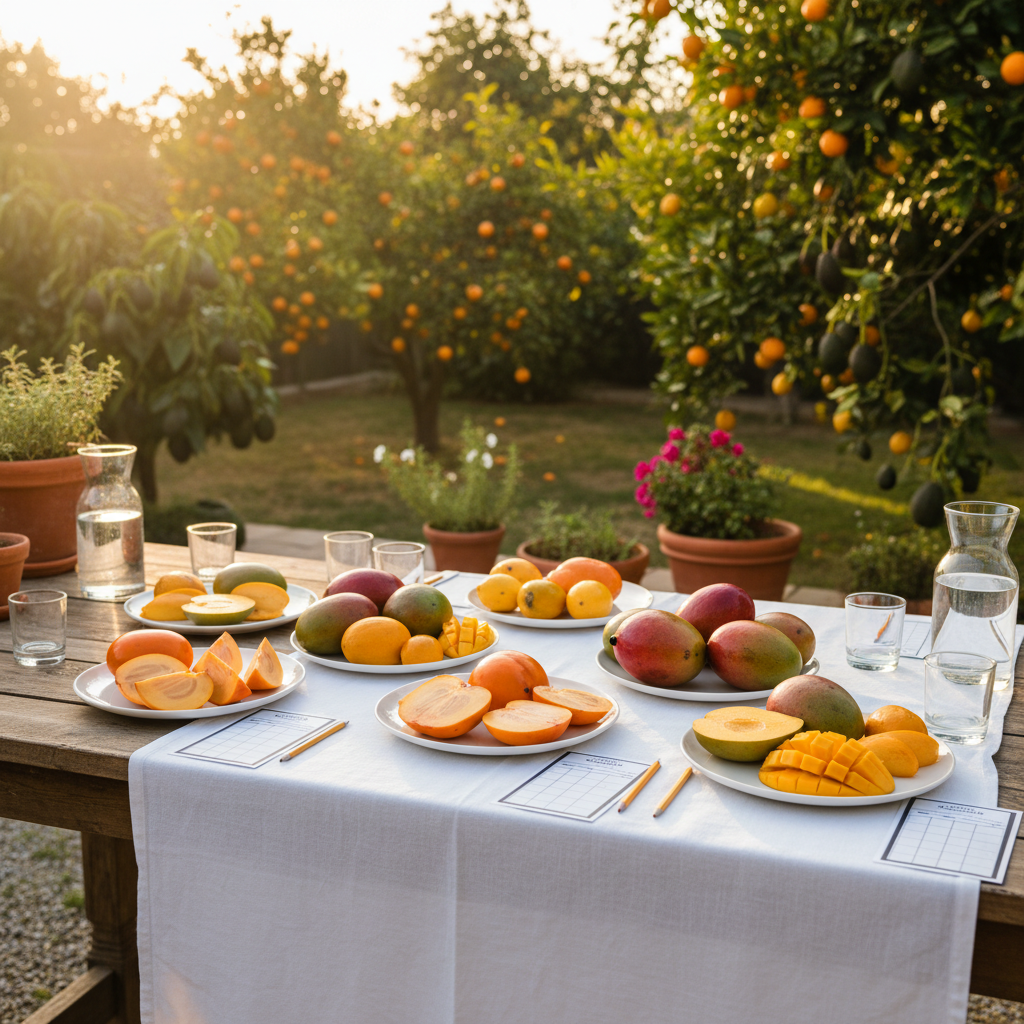
Why a Persimmon and Mango Taste Test Matters Now
Southern California is entering peak persimmon season just as late mango varieties are wrapping up, making this the perfect moment for a persimmon and mango taste test. Whether you’re a backyard grower, a farmers’ market regular, or simply fruit-curious, a structured tasting reveals how ripeness, cultivar, and harvest timing shape flavor.This guide shows you how to capture each fruit at its best, avoid common pitfalls (like judging a cultivar from young-tree fruit), and record tasting notes you can use to choose what to plant or buy next year. Expect practical ripeness cues, step-by-step tasting methods, and SoCal-specific variety insights.
If you’ve ever sampled a small, underripe Saijo persimmon or a mango picked too early and thought, “What’s the hype?”—this article will help you unlock the fruit’s true potential.
Ripeness Rules: The #1 Factor in Flavor
A taste test lives or dies on ripeness. Texture, sweetness, aroma, and even color can be misleading until fruit is physiologically mature.What “ripe” really means
- Persimmons (astringent types like Saijo): Need to reach full physiological maturity and soften fully to jelly-like texture to remove astringency. Any lingering firmness usually means tannins remain, masking sweetness and aroma.
- Persimmons (non-astringent types like Fuyu): Can be enjoyed crisp when fully colored; sweetness continues to develop as they soften.
- Mangoes: Can ripen off tree if picked mature; flavor is best when harvested at or near maturity and finished at room temperature until fragrant and yielding.
Patience is flavor. Let fruit hang longer when weather permits; sugars and aromatics intensify noticeably.
Typical sweetness ranges (Brix)
- Astringent persimmons (e.g., Saijo): 17–22° Brix when fully soft
- Non-astringent persimmons (e.g., Fuyu): 14–18° Brix
- Mangoes (variety-dependent): 15–22° Brix
A simple handheld refractometer helps you verify sweetness and compare notes year to year.
Saijo Persimmon in SoCal: How to Taste It at Peak
Saijo is celebrated for honeyed sweetness and a custard-like texture—when allowed to fully mature. In Southern California, young trees often set small fruit and may ripen unevenly. Don’t judge the cultivar by a first-year crop.Ripeness cues for Saijo
- Skin color: Rich orange, often with slight translucence as it softens
- Texture: Fully soft and delicate throughout; no firm spots
- Feel: Fruit should feel very tender; a spoon can slide in effortlessly
- Timing: Often late October through December in coastal and inland areas, with microclimate variation
Common mistakes to avoid
- Harvesting early because fruit “looks orange.” Color alone isn’t enough.
- Tasting from a young, stressed, or overloaded tree. Thin fruit and support tree health for better quality.
- Refrigerating before full ripeness. Cold can mute aroma and slow final sugar development.
Elevate your tasting
- Compare a fully soft Saijo with a non-astringent Fuyu in both crisp and soft stages to appreciate how texture changes perceived sweetness.
- Record notes for aroma (honey, date, floral), sweetness, and finish (clean vs astringent). If any astringency remains, the fruit needed more time.
Mango in Southern California: Choosing and Tasting
Mango season in SoCal runs primarily July–October, with late varieties lingering into fall. Coastal growers may harvest later, while inland heat can push season earlier. If you’re aiming for a holiday tasting, plan ahead to save late fruit or flash-freeze properly ripened mango in peak season for November flights.Variety considerations for SoCal
- Early to mid-season: Manila seedlings, Valencia Pride
- Mid to late: Keitt (often the most dependable late-season mango in SoCal)
- Specialty/backyard standouts (microclimate-dependent): Lemon Zest, Sweet Tart, Cac, Coconut Cream
Ripeness cues for mango
- Shoulders fill and round out; a slight give under gentle pressure near the stem
- Fruit becomes fragrant at the stem end
- Skin color varies by variety; green mangoes can still be ripe if they meet other cues
Tasting notes to track
- Aroma: floral, resinous, citrusy, tropical candy
- Flavor: balance of sweetness and acidity, presence of “spice” or resin
- Texture: fiber level (low-fiber dessert types vs more fibrous), juiciness, creaminess
Run a Backyard Taste Test: Step-by-Step
A structured tasting turns a casual snack into reliable insight. Use this framework for both persimmons and mangoes.- Plan your lineup
- Standardize preparation
- Score with simple criteria
- Measure Brix (optional but powerful)
- Control the environment
- Discuss and decide
From Tree to Table: Harvest, Storage, and Serving
Dialing in post-harvest handling often makes the difference between good and great.Persimmons
- Harvest astringent types only at full maturity; allow counter-ripening to complete until fully soft.
- Store at cool room temperature; once soft, refrigerate briefly if needed, but serve close to room temp for best flavor.
- Serving ideas: Spoon-soft Saijo over yogurt, drizzle with honey and toasted nuts, or blend into smoothies and sorbets.
Mangoes
- Ripen at room temperature in breathable space; paper bags can speed the process slightly.
- Refrigerate only after peak ripeness to hold for 1–3 days.
- Serving ideas: Side-by-side flights of two mango cultivars; mango–persimmon parfaits for a seasonal contrast of textures.
Troubleshooting: Small Fruit, Bland Flavor, or Astringency
If your tasting disappoints, consider these quick fixes.- Young trees: First 1–3 crops from persimmon or mango trees can be smaller and less flavorful. Thin fruit to reduce stress.
- Nutrition and water: Overwatering near harvest can dilute sugars. Ensure balanced nutrition, especially potassium for fruit quality.
- Sun and heat: In cooler coastal zones, extend hang time where possible; late-season warmth helps sweetness.
- Astringency (persimmon): Any dryness on the tongue means it’s not ready. Wait for full softness or use post-harvest de-astringency methods (e.g., resting with other ethylene-producing fruit) and retest.
Seasonal Timing for SoCal Tastings (November Focus)
Right now, SoCal growers can expect:- Saijo and other astringent persimmons: At or approaching peak—prime for a dedicated tasting.
- Late mango (e.g., Keitt): If stored or recently harvested in warmer inland spots, include one sample; otherwise, feature frozen-at-peak cubes to compare flavors across seasons.
- Holiday-ready flights: Create a Thanksgiving “gold tasting” with Saijo, Hachiya, Fuyu (crisp vs soft), and a late or preserved mango.
Action Steps and Next Moves
- Schedule your tasting: Pick a weekend, collect 3–6 varieties/stages, and print scorecards.
- Calibrate ripeness: Use the cues above—don’t rush Saijo; let mangoes finish at room temperature.
- Record data: Photos, Brix readings, and brief notes turn a fun afternoon into decisions you’ll trust for planting and purchasing.
Looking ahead to spring, use your results to plan new plantings and pruning strategies. And if you want a ready-to-use toolkit, request our Taste Test Scorecard and SoCal Harvest Calendar to guide your next persimmon and mango taste test.