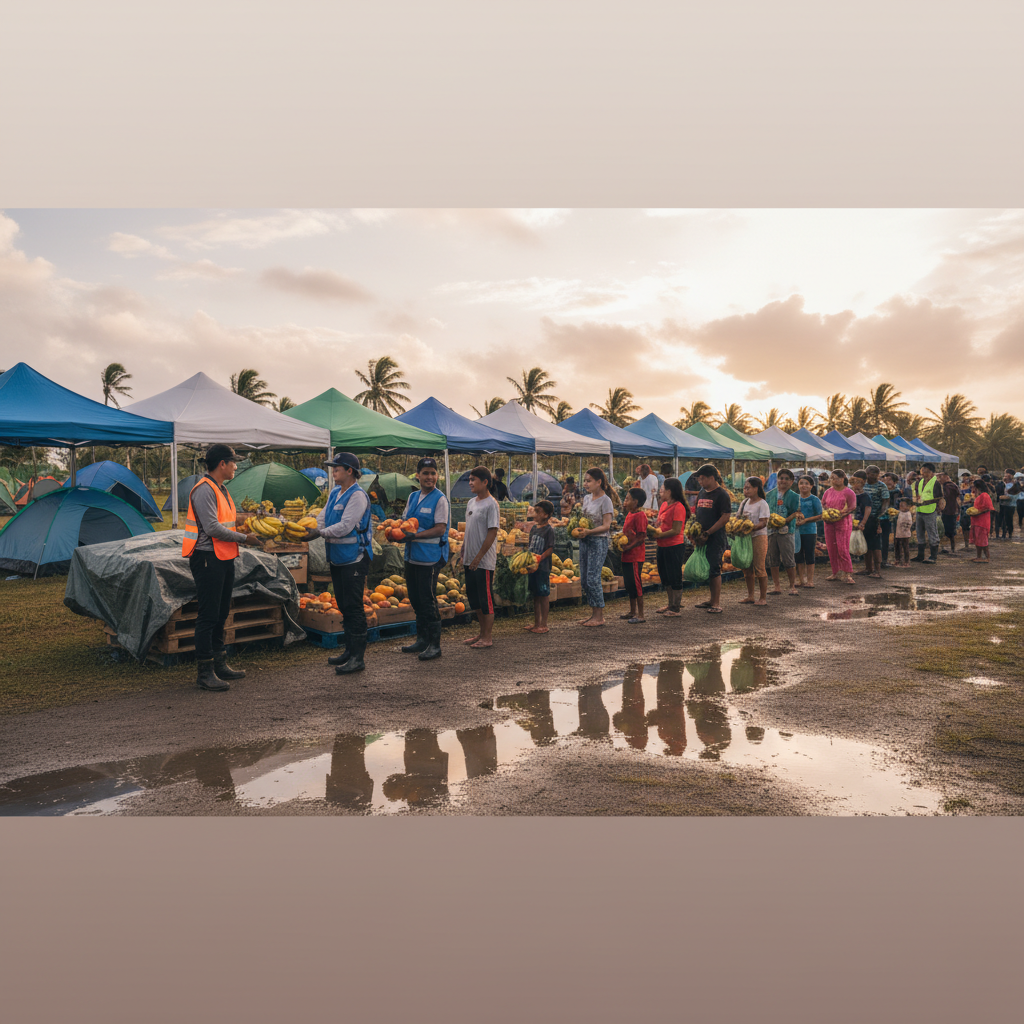
Tropical Fruits in Disaster Relief: A Fresh Lifeline
When food aid is rushed into crisis zones, few expect to see crates of mangoes, bananas, or pineapples. Yet an emerging approach is putting tropical fruits in disaster relief at the center of quick, effective nutrition. Clinician-entrepreneurs like Dr. Douglas Howard have surprised observers by bringing fresh produce directly to affected communities—an innovation that’s practical, humane, and backed by nutrition science.
Why does this matter now? Disasters are growing more frequent and complex, stretching supply lines and exhausting responders and survivors alike. Calories alone won’t rebuild strength or morale. This post explains why produce-forward aid works, how to make it logistically viable, and how your organization can launch a fruit-first plan that complements traditional staples.
We’ll cover the nutrition case, logistics that actually work in the field, adaptable playbooks for different emergencies, and a simple checklist to move from idea to deployment.
Why Fresh Produce Belongs in Crisis Response
Conventional emergency rations prioritize shelf-stability and calories. That’s essential—but it’s not the whole story. Fresh produce delivers hydration, micronutrients, and fiber that support recovery, digestion, and energy, especially when stress and disrupted routines tax the body.
Fresh produce is more than calories; it’s stability you can hold in your hand.
Micronutrients that matter under stress
- Vitamin C (citrus, pineapple, mango): supports immune function and helps iron absorption from staple foods.
- Potassium (bananas, papaya): helps regulate fluid balance and counters high-sodium emergency foods.
- Vitamin A precursors (mango, papaya): support vision and epithelial integrity, important when exposure and smoke irritate airways.
- Natural enzymes and fiber (pineapple, papaya): gently support digestion when diets change abruptly.
Hydration and morale in one bite
- Water-rich fruits aid hydration when clean water access is uneven.
- Colorful, familiar foods provide psychological comfort and a sense of normalcy.
- Easy-to-eat portions reduce preparation burden when kitchens and fuel are limited.
The Case for Tropical Fruits: Nutrition, Hydration, Morale
Tropical fruits are often grown near the very regions most prone to cyclones, floods, and heat waves—making them geographically logical for response. They’re nutrient-dense, well-liked, and versatile across fresh and shelf-stable formats.
Standout choices and why they work
- Bananas: portable, peel-protected, potassium-rich, quick energy without utensils.
- Mangoes: high in vitamin C and carotenoids; puree well for babies and elders.
- Pineapples: vitamin C and helpful enzymes; can be chunked fresh or canned in juice.
- Papaya: gentle on digestion; widely accepted in many cuisines.
- Coconut water (packaged): natural electrolytes for light rehydration in hot climates.
Fresh, dried, or shelf-stable: match the format to the mission
- Fresh whole fruit: best for short deployments (72 hours to 7 days) with local sourcing.
- Dried fruit mixes: compact, no refrigeration; pair with nuts or grains in ration packs.
- Pouches and purees: ideal for children, elders, and clinical settings; easy portion control.
- Freeze-dried fruit: ultra-light, long shelf life; rehydrates in minutes.
Blending formats hedges against uncertainty: distribute fresh bananas and mangoes early, then transition to dried or pouch formats as operations stabilize.
From Orchard to Outpost: Logistics That Make It Work
The perceived barrier to produce in emergencies is spoilage. But with the right sourcing, staging, and packaging, organizations are moving fruit quickly and safely—without building an entire cold chain from scratch.
Sourcing and staging
- Pre-negotiate with regional growers and packhouses for rapid call-ups.
- Stage ripeness: ship firm fruit first, riper fruit last, to create a multi-day window.
- Use stackable, ventilated crates that protect from crushing and allow airflow.
Cold-chain light and practical
- Leverage insulated blankets, pallet covers, and passive cooling packs for 24–72 hours.
- Deploy modular, solar-assist coolers at hubs; prioritize shade and airflow at field sites.
- Separate ethylene emitters (like bananas) from sensitive fruits to slow ripening.
Packaging and last-mile distribution
- Pre-pack family kits: example, 6 bananas, 2 mangoes, 1 pineapple per household, labeled by day.
- Add handwashing guidance and peel-first reminders for food safety in low-sanitization contexts.
- Train volunteers on quick visual quality checks and FIFO rotation at distribution points.
Quality and safety
- Document acceptance criteria (firmness, color, damage thresholds) to speed decisions.
- Use tamper-evident bands or seals on kits to build trust at handoff.
- Track lot codes for traceability, even in austere environments.
Field-Proven Playbooks You Can Adapt
Below are practical scenarios you can tailor to your geography and partners. Each assumes mixed-format sourcing and a 7–14 day operating window.
1) Cyclone landfall, coastal region (first 7 days)
Objective: Deliver fast energy, hydration, and morale boosts while water and power are unstable.
- Day 1–3: Fresh bananas and mangoes; coconut water in sealed cartons for heat stress.
- Day 4–7: Transition to dried mango-pineapple mix and banana chips; introduce vitamin C–rich fruit cups packed in juice.
- Packaging: Family kits sized for 3 days; color-coded labels for simple rationing.
2) Wildfire displacement and smoke exposure
Objective: Support airway comfort and hydration while movement restrictions persist.
- Emphasis: Vitamin C–rich options (pineapple, citrus cups) plus water-heavy fruits where feasible.
- Formats: Shelf-stable pouches for kids; resealable dried fruit packs for shelters with limited storage.
- Add-ons: Guidance cards on gentle hydration and safe snacking during smoke events.
3) Protracted camp or shelter, mixed populations
Objective: Provide steady micronutrients and dietary diversity over weeks.
- Weekly rotation: Fresh delivery day plus two distributions of dried/pouch formats.
- Market-style distribution: Vouchers redeemable for approved fruits from vetted vendors.
- Monitoring: Short surveys on acceptance, waste, and energy levels to refine mix.
How to Launch Your Produce-Forward Relief Plan
You don’t need to overhaul your entire food program to add fruit effectively. Start with a pilot plan you can scale.
A 7-step quick-start checklist
- Map risks and regions: Identify likely hazards and seasonality for local fruit availability.
- Pre-build supplier MOUs: Lock in pricing, volumes, ripeness specs, and 72-hour call-up clauses.
- Define formats by phase: Fresh for the first week; dried, pouches, and cups for weeks two and three.
- Engineer packaging: Crush-resistant, ventilated crates and family-size kits with clear labeling.
- Plan "cold-chain light": Insulation, shade, airflow, and simple ethylene management.
- Train teams: Handling, visual QC, safe distribution, and culturally sensitive communication.
- Measure outcomes: Track acceptance, waste, simple energy/wellbeing indicators, and cost per nutrient delivered.
Budgeting and funding tips
- Compare cost per nutrient delivered, not just cost per calorie.
- Blend donations in kind (bananas, pineapples) with purchased, shelf-stable items.
- Use phased procurement to smooth cash flow and reduce spoilage risk.
Risk management
- Diversify fruit types and suppliers to reduce single-point failures.
- Establish recalls and replacement protocols (lot codes, vendor hotlines, swap rules).
- Coordinate with medical teams for allergen guidance and clinical exceptions.
The Bigger Picture—and Your Next Step
Fresh produce in emergencies sends a message: people deserve dignity, not just survival. By integrating tropical fruits in disaster relief, responders can deliver hydration, micronutrients, and a moment of comfort when it’s needed most. The approach complements grains and proteins, reduces menu fatigue, and supports faster recovery.
If you’re planning 2026 response capabilities, this is the moment to pilot a produce-forward module. Our team helps NGOs, municipalities, and CSR leaders design procurement pipelines, packaging specs, and training to make fruit work in the real world. Request our Rapid Produce Deployment Checklist and schedule a planning session to tailor it to your geography and risks.
When the next storm hits, will your trucks carry only calories—or fresh, tangible hope as well?